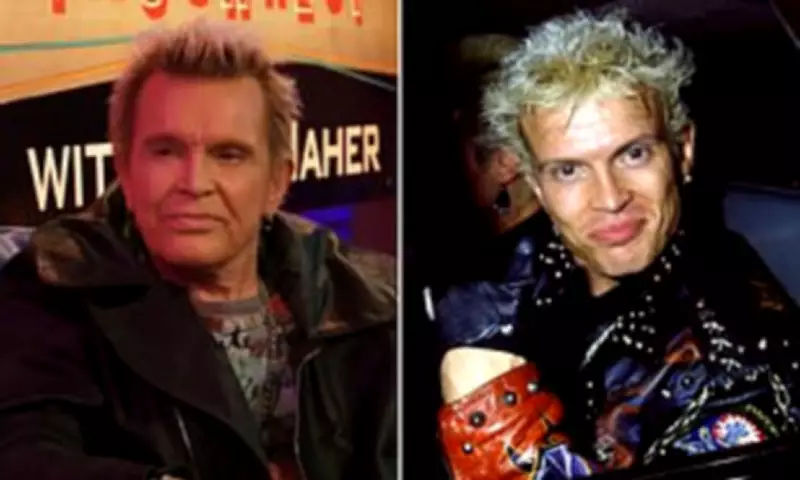
In a startling revelation, iconic rock musician Billy Idol has disclosed the unconventional method he employed to break free from heroin dependency. The 70-year-old 'White Wedding' hitmaker candidly shared that smoking crack cocaine played a pivotal role in his journey to quit heroin during a recent appearance on the Club Random with Bill Maher podcast.
Shocking Admission on Podcast
During the podcast interview, Idol explained his reasoning behind turning to crack as an alternative substance. 'Once you're trying to get off heroin, what do you go to? You go to something else. I started smoking crack to get off heroin,' the veteran rocker stated matter-of-factly. When host Bill Maher expressed disbelief with 'Did you really?' Idol confirmed, 'It worked. It worked.'
Near-Fatal Overdose Experience
This revelation follows Idol's previous disclosure about nearly dying from a heroin overdose just days before his scheduled Top Of The Pops debut in 1984. The incident occurred following the successful release of his hit album Rebel Yell, threatening to derail his burgeoning career at its peak.
Recounting the harrowing experience to The Mirror, Idol described how he encountered particularly potent heroin known as Persian Brown. 'Everybody did a line and they all nodded out except me and a mate and we did a few more lines,' he recalled. 'I was basically dying. I was turning blue. So they put me in an ice bath and walked me around on the roof of the building.'
Documentary Chronicles Extreme Lifestyle
Idol's reflections on his tumultuous past coincide with the release of a comprehensive two-hour documentary titled Billy Idol Should be Dead. The film meticulously examines how the musician survived decades marked by excessive behavior, severe drug addiction, and multiple near-fatal accidents.
The rocker's life during his heyday was characterized by multiple substance dependencies including heroin, marijuana, opium, and alcohol, coupled with what he describes as a sex obsession. His introduction to hard drugs began after relocating to New York with minimal possessions, where record company advances enabled his initial experimentation with 'weak smack' and marijuana.
Turning Point and Recovery
Despite interventions from family members and geographical moves, Idol struggled with maintaining sobriety throughout the years. A significant turning point arrived in 1994 when he collapsed outside a Los Angeles club due to an overdose, prompting him to reconsider his lifestyle for the sake of his children.
In a 2019 interview with DailyMailTV, Idol acknowledged putting his life at risk numerous times during his rock and roll excess period. However, he now emphasizes enjoying his career more without relying on substances during performances. 'For a singer, you need a ton of breath. You have to be fit to be a singer,' he explained, noting the physical demands of his profession.
Current Perspective and Documentary Release
The musician has adopted a healthier approach to his craft, no longer consuming vodka bottles during sets as he did in previous decades. His documentary Billy Idol Should Be Dead premiered at the Tribeca Festival on June 10 before receiving wider release on February 26, offering audiences an intimate look at his survival against considerable odds.
Idol's candid discussion about using one substance to combat addiction to another provides a controversial perspective on addiction recovery methods, while his detailed accounts of near-death experiences underscore the extreme dangers associated with substance abuse in the music industry.