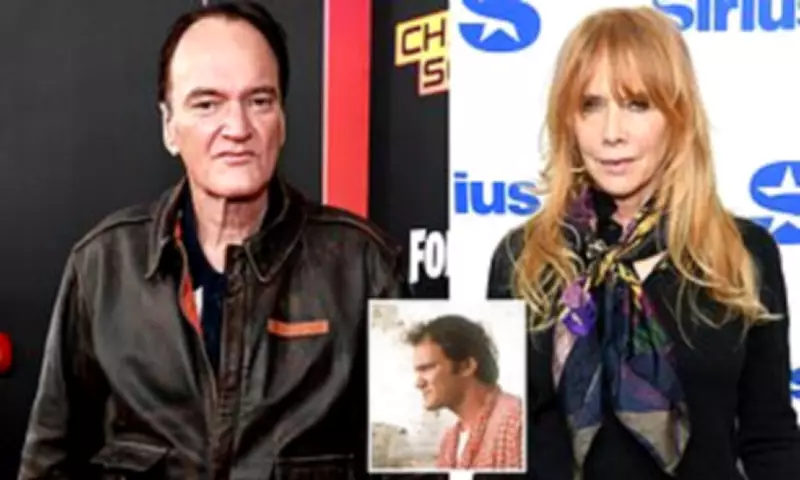
Quentin Tarantino Hits Back at Rosanna Arquette's 'Racist and Creepy' N-Word Accusation
Acclaimed filmmaker Quentin Tarantino has issued a stinging rebuke to actress Rosanna Arquette after she publicly condemned his liberal use of the N-word in his cinematic works, describing it as 'racist and creepy'. The two-time Oscar winner, aged 62, responded via a statement to the Daily Mail, suggesting the 66-year-old actress's remarks were a calculated attempt to garner attention and media coverage.
Tarantino Accuses Arquette of 'Clout Chasing' and Betrayal
In his pointed reply, Tarantino directly questioned Arquette's motives, referencing the extensive publicity her comments generated. 'Dear Rosanna, I hope the publicity you’re getting from 132 different media outlets writing your name and printing your picture was worth disrespecting me and a film I remember quite clearly you were thrilled to be a part of?' he wrote.
The director expressed particular dismay that Arquette, who portrayed Jody, the wife of drug dealer Lance (played by Eric Stoltz) in the 1994 classic Pulp Fiction, chose to criticise the movie more than three decades after its release. 'Do you feel this way now? Very possibly,' Tarantino stated. 'After I gave you a job, and you took the money, to trash it for what I suspect is very cynical reasons, shows a decided lack of class, no less honor.'
Arquette's Critique and Tarantino's Defence of Artistic Camaraderie
Tarantino emphasised the importance of artistic solidarity, invoking the French concept of 'esprit de corps' – defined as a common spirit fostering enthusiasm, devotion, and regard for group honour among colleagues. He implied Arquette had violated this principle. Concluding his statement, Tarantino wrote, 'It would appear the objective was accomplished. Congratulations - Q.'
Arquette's original criticism emerged in an interview with The Sunday Times, where she acknowledged Pulp Fiction as 'iconic' and 'a great film on a lot of levels', but voiced strong objection to the repeated use of the racial slur, which occurs approximately twenty times in the film. 'Personally I am over the use of the N-word - I hate it,' she declared.
The actress argued that Tarantino's esteemed auteur status should not grant him a 'hall pass' to use the word freely. 'I cannot stand that [Tarantino] has been given a hall pass,' Arquette said. 'It's not art, it's just racist and creepy.'
Financial Grievances and Weinstein Allegations Surface
Beyond the linguistic controversy, Arquette also revealed financial discontent regarding her involvement in Pulp Fiction. She claimed to be 'the only person who didn’t get a back end' of the film's substantial profits, linking this to her refusal of sexual advances from producer Harvey Weinstein prior to the movie's release.
Arquette was among the numerous women who accused Weinstein of sexual misconduct during the #MeToo movement in late 2017, leading to his 2022 conviction for sex assault in California. Reflecting on her encounter, she stated, 'I was fortunate because I was not raped. But, boy, was it going there and I paid a price for saying no, and later I paid a price for telling the truth.'
This clash highlights ongoing debates about artistic freedom, racial sensitivity in cinema, and the complex legacies of Hollywood's past, intertwining personal grievances with broader cultural critiques.