The Independent's journalism is supported by our readers. When you purchase through links on our site, we may earn commission.
When Brooklyn Beckham, the eldest son of David and Victoria Beckham, released a six-page statement declaring he had no wish to reconcile with his family, he thrust a deeply personal and often stigmatised issue into the public eye. His accusations of a life dominated by "Brand Beckham" and "inauthentic relationships" resonate with a growing number of people for whom cutting contact with a parent is not an act of spite, but one of self-preservation.
The Hidden Reality of Family Estrangement
While the idea of severing ties with a parent may sound extreme, it is far more common than society acknowledges. Research by the charity Stand Alone suggests around one in five families in the UK may be affected by estrangement. In the US, the Institute for Family Studies claims 6% of adult children are estranged from their mothers.

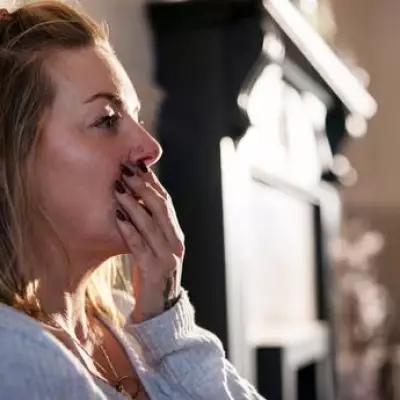
"It was awful but also a fantastic thing to happen to me," says Cara*, a 25-year-old journalist from Bradford who hasn't spoken to her father for three and a half years. For her, a final argument acted as a catalyst. "Something in my brain had switched," she recalls. "I had a gut feeling that I'd done the right thing."
Brooklyn Beckham and Cara are part of a broader, if often silent, cohort. Prince Harry's conscious uncoupling from the royal family, actor Matthew McConaughey's eight-year silence with his mother, and Davina McCall's candid discussions about her alcoholic mother all contribute to a growing conversation. This is further amplified by best-selling memoirs like Jennette McCurdy's I'm Glad My Mom Died and expert-led books such as Eamon Dolan's The Power of Parting.
Understanding the 'Why': Abuse, Values, and Radicalisation
Dr Becca Bland, a leading researcher on family estrangement, identifies recurring themes. These include emotional, physical, or sexual abuse, family ruptures following divorce and remarriage, and polarised morals and beliefs. "If it's rigid, then we don't really have the space to be ourselves and be validated for being ourselves," she notes.
For Angel Cassin, CEO of the support non-profit Together Estranged, estrangement from her mother followed a chaotic upbringing and escalated into stalking, ultimately requiring police involvement. "You end up having to set really firm, clear boundaries that we now call estrangement," she explains.
Sam Morris, a London-based content creator, shared his painful journey with his nearly 350,000 TikTok followers. He cut contact after his mother became radicalised during the Covid pandemic. "I had to accept that the woman I knew was gone – I had to grieve her while she was still alive," he said.
The Stigma and Practical Hurdles of Going No-Contact
Despite its prevalence, a powerful stigma persists, particularly against children who voluntarily step away from their parents. Society's deification of "Family Togetherness" often leaves those who are estranged without a voice or support. Cassin argues the stigma stems from a "misinformed sense that every family is safe and that every parent knows how to love their child."
This judgement is often harshest regarding mothers, influenced by psychological archetypes of the maternal bond and family policies that traditionally favour mother-child relationships. "There's a very high expectation for women to be the 'perfect' mother; but some women just haven't got that capacity," says Dr Bland.
Beyond emotional turmoil, estrangement creates unique practical barriers, or what Cassin terms the "admin of estrangement." From students struggling with housing guarantors to new parents lacking childcare support, society is not structured for those without family networks. Dr Lucy Blake, an academic specialising in the field, points out that raising children while estranged is "a silent one that's often overlooked."
Finding Peace and Moving Forward
Ultimately, for many, estrangement leads to a net positive outcome. Sam Morris has stated he is "the happiest I've ever been." Cara speaks of regaining happiness and confidence that were robbed during her childhood. Dr Blake's research finds many describe finally feeling "safe," while others talk of a profound "lightness" despite the grief.

Support groups run by organisations like Together Estranged and Dr Bland provide crucial community. "It gives you a social space to process the grief of losing someone who's living," Bland says. Professional therapy can also be invaluable in navigating the complex fallout.
The key takeaway for those on the outside, according to advocates, is to replace judgement with empathy. "We need to be a kinder society and understand that people don't make these decisions because they've fallen out over something minor," urges Cassin. "They've probably made a really healthy decision in a really unhealthy situation."
*Name has been changed