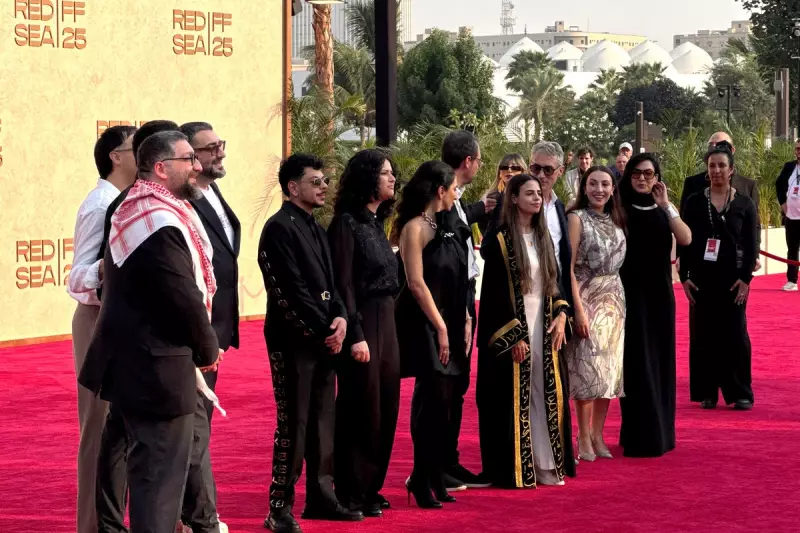
A powerful wave of change is sweeping through Arab cinema, led by a new generation of female directors claiming their space in a traditionally male-dominated industry. This shift was prominently on display at the recent Red Sea Film Festival in Jeddah, where four influential filmmakers presented groundbreaking work, reshaping narratives and pushing for more diverse storytelling.
Breaking Barriers and Telling Untold Stories
The festival, which brought together 38 directors in total, underscores Saudi Arabia's significant investment in film, gaming, and sports as part of its wider Vision 2030 transformation plans. However, some human rights organisations have criticised such cultural initiatives, arguing they divert attention from the kingdom's record on issues like executions and restrictions on free expression. Amid this backdrop, the achievements of these women stand out as a significant cultural milestone.
Palestinian-American director Cherien Dabis premiered her film "All That’s Left of You," which went on to win the Silver Yusr Feature Film award and a $30,000 prize. The multi-generational story traces a family's experience from the 1948 Nakba—the mass expulsion of Palestinians—to the present day. "It gives people context for how we got to where we are today," Dabis explained, highlighting themes of displacement and loss.

Dabis, raised in the US by Palestinian-Jordanian parents, said her drive to become a filmmaker stemmed from a lack of authentic Arab representation in Western media. "I couldn't find us anywhere," she stated. Despite better opportunities in the US, she faced racism and sexism, feeling pressured to adopt a more masculine tone to be taken seriously on set. "A lot of us felt we had to overcome these unfair ideas," she added.
New Voices from Saudi Arabia and Beyond
Saudi filmmaker Shahad Ameen emerged as another standout, winning the Yusr Jury Prize for her film "Hijra." The film follows a grandmother and her two granddaughters on a pilgrimage from Taif to Mecca, and the search when one vanishes in the desert. Ameen, inspired by historical TV dramas from her childhood, believes Arabs must tell their own stories. "We need to make our voices heard by ourselves," she asserted.
She credits the rapid changes in Saudi Arabia and the growth of the Red Sea festival for enabling her career. "Ten years ago, we couldn't have dreamed of this," she said, calling the event a turning point. Yet, she acknowledges the path remains uncertain for Arab women directors, requiring relentless perseverance with no guarantee of success. "Every film is a new beginning," she noted.
Amira Diab took a non-traditional route into filmmaking, leaving a finance career in Manhattan after watching Hany Abu-Assad's Oscar-nominated film "Omar." She later married Abu-Assad and studied film production in Los Angeles. Her short film "As a Husband," part of a Netflix anthology, resonated for capturing the emotional duality of life in the Palestinian territories.
Her feature film, "Wedding Rehearsal," evolved from a Palestinian story to one set in Egypt to broaden its cultural reach. "Egypt has such a rich, diverse social fabric," Diab said. Despite Hollywood experience, she remains committed to centring Arab women's voices. "Of course women see the world differently. That's why our voices matter," she explained.
Personal Journeys and a Push for Inclusion
For Jordanian director Zain Duraie, the passion began aged ten watching "Titanic" in Amman, fascinated by the filmmaking, not the romance. She premiered her first feature, "Sink," at the festival, tackling the often-overlooked subject of a mother caring for a mentally ill son. Duraie started at the bottom, carrying heavy equipment and ignoring those who said it "wasn't a woman's job."
"I worked in everything in filmmaking. I wanted to learn it all," she recalled. Known for exploring mental health and the female experience, Duraie aims to break stereotypes. Despite the progress showcased at the festival, she offers a sobering assessment: Arab cinema is not there yet when it comes to true gender inclusion.

Together, these four directors represent a formidable force driving the evolution of Arab cinema. By telling intimate, culturally specific stories of displacement, faith, family, and mental health, they are not only claiming space but actively redefining what stories get told and who gets to tell them. Their success at a major festival backed by substantial Saudi investment signals a potential shift, though the journey towards full equality and creative freedom within the region's film industry continues.