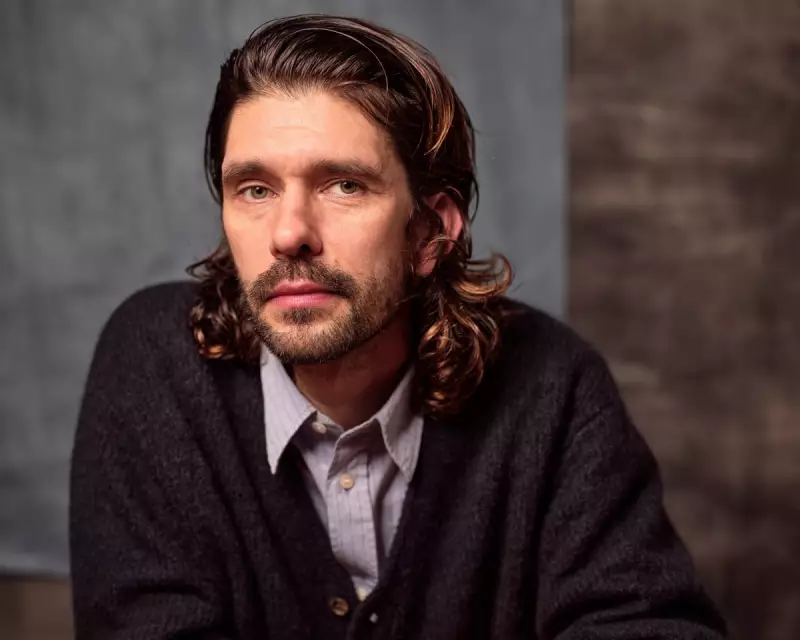
In a new film that tests the very notion of what is compelling, actor Ben Whishaw embodies the legendary photographer Peter Hujar, capturing a single, intimate day in 1970s Manhattan. The project, titled Peter Hujar's Day, offers a poignant window into a queer artistic world decimated by the AIDS crisis.
A Portrait in Monochrome and Mundanity
Directed by Ira Sachs, the film is a minimalist 70-minute conversation, adapted verbatim from a transcript of a day Hujar spent with his friend, the writer Linda Rosenkrantz, on 19 December 1974. Played by Rebecca Hall, Rosenkrantz recorded their meandering chat about a failed photoshoot with Allen Ginsberg, a Chinese takeaway, and unpaid magazine fees. For Whishaw, the challenge was to find the profundity in the prosaic. "Maybe there's no such thing as boring," he muses, a thesis the film explores in depth.
The script was rediscovered in 2019 when Hujar's archives were donated to New York's Morgan Library. The photographer, whose work gained significant recognition posthumously, died of AIDS-related illness in 1987 at the age of 53. Whishaw and Hall filmed at Westbeth, the Manhattan artists' community Hujar documented, striving to recreate the authentic, sun-faded intimacy of the original encounter.

Channeling a Lost World and Its Libido
Whishaw, who first encountered Hujar's work on the cover of Anohni and the Johnsons' album I Am a Bird Now, describes the film as "a portrait of a friendship, almost a love story." He is deeply moved by Hujar's ability to preserve a vanished queer New York demi-monde. "You feel like there's a lot of libido," Whishaw says of the city's enduring energy. "It's something to do with the climate, that island, the people." He frequents historic spots like Julius, the city's oldest gay bar, noting its uniquely accessible atmosphere.
The actor admires Hujar's uncompromising artistic vision and his mastery of psychological portraiture. "He was always trying to preserve the purity of his work," Whishaw notes, contrasting Hujar's desire for genuine intimacy with the commercially "arty." He was particularly struck by the fact that Hujar stopped working entirely after his AIDS diagnosis, leaving his darkroom untouched—a chilling full stop to a creative life.
On Gay Visibility and the Missing Elders
The conversation turns to the contemporary landscape for gay artists. Whishaw, one of the few openly gay actors at his level of success, reflects on the persistent barriers. "I think it's still something to do with the fact that if you want to be really successful, you have to conform... or be sexy in a heterosexual way," he states. He acknowledges the progress made but stresses that homophobia and hatred persist, affecting career trajectories and personal choices about privacy.
Like many of his generation, Whishaw feels the profound absence of the mentors and elders lost to AIDS. "It's like this massive gap, which is still so sad and shocking," he says, highlighting the cultural and personal void left by figures like Hujar, who never had the chance to create the work of their later years.
Peter Hujar's Day, which has been hailed by some critics as a masterpiece for its quiet beauty, is released in the UK on 2 January. For Whishaw, the project was a chance to collaborate again with Sachs after their work on the 2023 film Passages. "To work with a gay person is really nice," he says, underscoring the precious rarity of such opportunities in an industry where queer stories are still often filtered through a heterosexual lens.