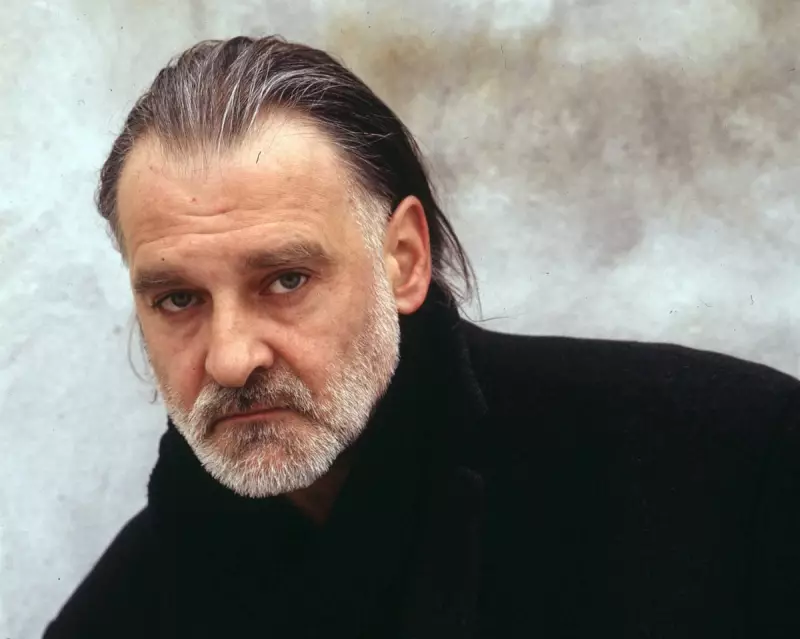
The world of cinema has lost one of its most distinctive voices with the death of Hungarian director Béla Tarr. He was 70 years old.
A Legacy of Cinematic Epics
The Hungarian Film Artists Association confirmed the news, stating Tarr passed away on Tuesday after a long and serious illness. The association relayed that the grieving family has requested privacy and asks not to be contacted for statements during this difficult time.
Tarr gained international acclaim in the 1990s and 2000s for his visually stunning, philosophically dense, and often lengthy black-and-white films. His most famous work, the seven-and-a-half-hour Sátántangó (1994), became a landmark of arthouse cinema, celebrated for its hypnotic, slow-paced portrayal of a collapsing agricultural collective.

Despite the common perception of his work as profoundly pessimistic, Tarr offered a different interpretation in a 2024 interview with the Guardian. "My opinion is that we were doing comedies. You can laugh a lot," he said. He challenged audiences to consider how they felt after watching his films: "I only ask this – how did you feel when you came out of the movie theatre...? Did you feel stronger or weaker? That’s the main question. I want you to be stronger."
From Realist Roots to Stylistic Master
Born in Budapest in 1955 to parents involved in theatre, Tarr began his career making realist documentaries as a teenager. His feature debut, Family Nest (1979), tackled Hungary's housing crisis. He later described his early approach: "We were coming with some fresh, new, true, real things. We just wanted to show the reality – anti-movies."
His style transformed decisively with 1988's Damnation, the first of several collaborations with writer László Krasznahorkai. This film established his signature aesthetic: long, elaborately choreographed takes, stark black-and-white photography, and a haunting, atmospheric score. This partnership peaked with the monumental adaptation of Krasznahorkai's novel Sátántangó.
Tarr's international breakthrough came with Werckmeister Harmonies (2000), a fable about a dead whale arriving in a provincial town, which he co-directed with his long-time partner and editor, Ágnes Hranitzky. Hranitzky worked as his editor from the start and was credited as co-director from this film onwards.
Influence and Final Curtain
Tarr's unique vision influenced a generation of film-makers, from Gus Van Sant to fellow Hungarian László Nemes, who served as his assistant director. His later films, like The Man from London (2007) starring Tilda Swinton, and his final feature, The Turin Horse (2011), continued to explore themes of existential struggle, monotony, and societal decay.
After retiring from directing, Tarr faced difficulties under Hungary's right-wing government led by Viktor Orbán. In 2013, he founded the film.factory, a film school in Sarajevo, dedicating himself to mentoring a new generation of filmmakers.
Béla Tarr leaves behind a body of work that is challenging, immersive, and utterly singular. His films, which he insisted were about resilience, demand and reward patient viewing, securing his place as a true giant of European art cinema.