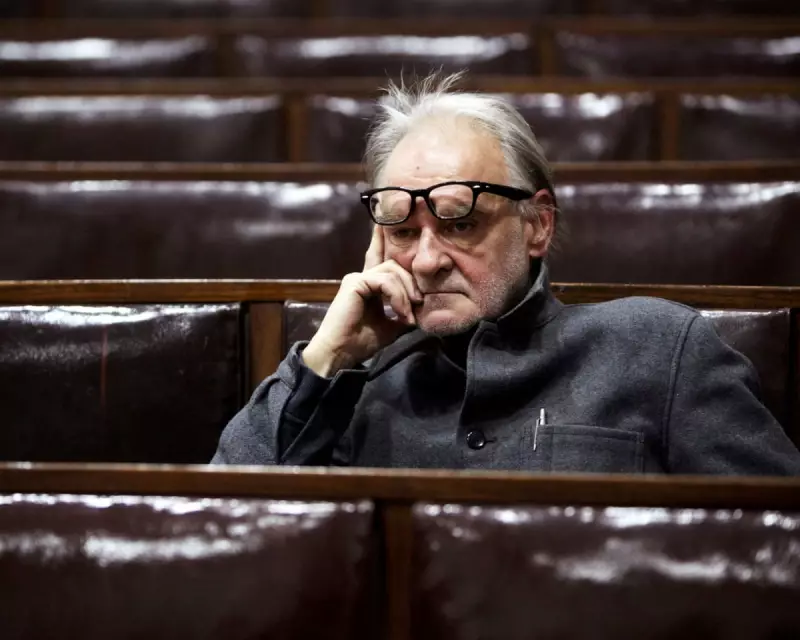
The film world is in mourning following the death of the revered and uncompromising Hungarian director, Béla Tarr, at the age of 70. Tarr, who passed away on 6 January 2026, forged a unique cinematic language defined by poetic narratives, extended black-and-white takes, and a profound exploration of human desolation. His work, including the monumental seven-hour Sátántangó, earned him a cult-like status among cinephiles, even as it defied mainstream conventions.
A Singular Vision: The Art of the Long Take
Tarr's filmography is a testament to patience and meticulous craft. In an era of rapid cuts and fleeting attention spans, he championed the long, unbroken shot, believing it followed "the logic of life." His 1994 masterpiece, Sátántangó, famously opens with an eight-minute sequence of cows trudging through mud, setting the tone for its immersive, seven-hour runtime. The film's average shot length is two-and-a-half minutes, a stark contrast to modern editing techniques.
This formal rigour was not mere gimmickry. Tarr used these protracted scenes to build a powerful sense of place, oppression, and cosmic futility. As critic Susan Sontag once declared, she would be "glad to see" Sátántangó "every year for the rest of my life." His final film, The Turin Horse (2011), a bleak parable inspired by Nietzsche, contained only 30 shots across its 146 minutes, each one a meticulously composed portrait of elemental struggle.

From Social Realism to Poetic Foreboding
Tarr's journey began far from the stylised epics of his later career. Born in Pécs on 21 July 1955 and raised in Budapest by parents in the theatre, he started making socially conscious documentary shorts at 16. His early features, like Family Nest (1979), employed non-professional actors and a vérité style to critique communist housing policies.
His aesthetic transformation began in the mid-1980s. Damnation (1988) marked the first full flowering of his mature style: stark black-and-white cinematography, a screenplay by Nobel laureate László Krasznahorkai, and a world shrouded in rain and melancholy. This collaboration continued with adaptations of Krasznahorkai's novels for Sátántangó and Werckmeister Harmonies (2000), the latter a haunting study of mass hysteria and sinister influence that contained stark warnings about populism.
Legacy, Politics, and Life After Directing
Despite his towering reputation in arthouse circles, Tarr remained a fiercely independent and politically engaged figure. He was an outspoken critic of Hungarian Prime Minister Viktor Orbán, labelling his regime "the shame of our country." After retiring from feature filmmaking following The Turin Horse, he dedicated himself to nurturing new talent.
In 2013, he launched the film.factory school in Sarajevo. He also turned to producing, lending his name to projects like the Icelandic folk horror Lamb (2021). In a 2024 interview, he described filmmaking as a "drug," but remained unsentimental about his retirement: "The work is done," he said, "and you can take it or leave it."
A new generation of viewers, seeking depth beyond the instant gratification of digital media, is increasingly choosing to take it. In the 2022 Sight & Sound critics' poll, Sátántangó was ranked the 78th greatest film of all time. Tarr is survived by his second wife, art curator Amila Ramovic. His marriage to his longtime editor and collaborator, Ágnes Hranitzky, ended in divorce. The march of his "crazy monomania" has ceased, but the profound, challenging worlds he created endure.