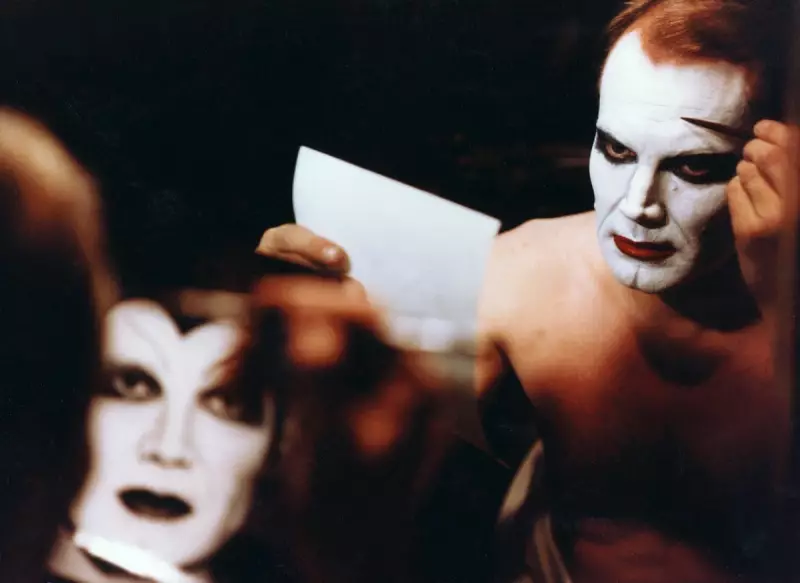
In a significant moment for cinephiles, the landmark Hungarian film Mephisto, winner of the 1982 Academy Award for Best International Feature, has been meticulously restored and rereleased. Directed by the acclaimed István Szabó, now 87, the 1981 masterpiece offers a chilling portrait of moral compromise and ambition amidst the rise of fascism, a theme the director suggests remains painfully relevant today.
A Landmark Film's Return from Obscurity
While Chariots of Fire dominated the 54th Academy Awards, it was Szabó's darkly brilliant Mephisto that secured a historic win for Hungarian cinema. "The moment took me by surprise," Szabó recalls of the Oscar victory. He credits the success to the "electrifying" lead performance by Austrian actor Klaus Maria Brandauer and the talented Hungarian crew.
Despite its Oscar pedigree, the film had largely vanished from public view, with an out-of-print DVD run and absence from major streaming platforms. This December, Second Run, in collaboration with Hungary's National Film Institute, has brought the film back in a restored edition. It is released as part of a limited edition Blu-ray box set alongside Szabó's subsequent 'central European' films, Colonel Redl and Hanussen, which also star Brandauer.

The Faustian Pact of Hendrik Höfgen
Mephisto tells the story of Hendrik Höfgen, a phenomenally talented but ruthlessly ambitious stage actor in 1930s Germany. As the Nazis consolidate power, Höfgen systematically severs ties with his leftist theatrical roots to ingratiate himself with the new regime. "Höfgen is a very talented actor who wants to assert his talent at all costs," explains Szabó. "To stand in the middle of the stage, in the spotlight."
As friends face arrest, exile, or death, Höfgen's complicity deepens, culminating in his appointment by the Nazis as head of the Berlin state theatre. Brandauer's performance is a masterclass in depicting seductive charm, wilful ignorance, and corrosive ambition. Szabó highlights the actor's unique ability to conceal and reveal, stating it was crucial to decide "what to show in close up from Brandauer's secrets."
From Historical Specifics to Universal Warning
The film is loosely based on the real-life figure of Gustaf Gründgens, a celebrated actor whose career flourished under Nazi patronage. His former lover, Klaus Mann, wrote a scathing roman à clef about him, which was later subject to a libel case and ban in Germany. Szabó, however, transforms this specific history into a universal Faustian fable about the allure of power and the human capacity for complicity.
With authoritarianism gaining ground globally, Szabó believes the film's core message is acutely modern. "The desire for self-assertion is a human trait," he notes. "The problem arises when it is used for the sake of a wrong ideology or policy... This still exists in the 21st century, and it does not necessarily require a dictatorship. The power of business is enough. Or some other motive."
While he refrains from commenting directly on Hungary's upcoming parliamentary elections, Szabó contextualises his work within the relentless march of history through central Europe, a theme spanning the fall of empires, the Holocaust, and communist rule.
The Legacy and Future of Hungarian Cinema
This year has seen Hungarian arts in the global spotlight, with literary Nobel and Booker prizes. Szabó, while identifying as a Hungarian director, emphasises a central European perspective. His cinematic legacy, however, remains unique; only 2015's Son of Saul has matched Mephisto's Oscar achievement.
Though pessimistic about the current state of cinema, he praises contemporary Hungarian works like Those Who Remained and Fekete Pont. As for his own future in filmmaking, Szabó is uncertain, citing the physical demands of directing at his age. "I can't say whether I'll have a chance to make another film," he admits.

The rerelease of Mephisto offers a new generation the chance to witness a cinematic masterpiece whose warning—that collusion with corrosive power requires no special regime, only ambition and opportunity—resonates now as powerfully as ever.