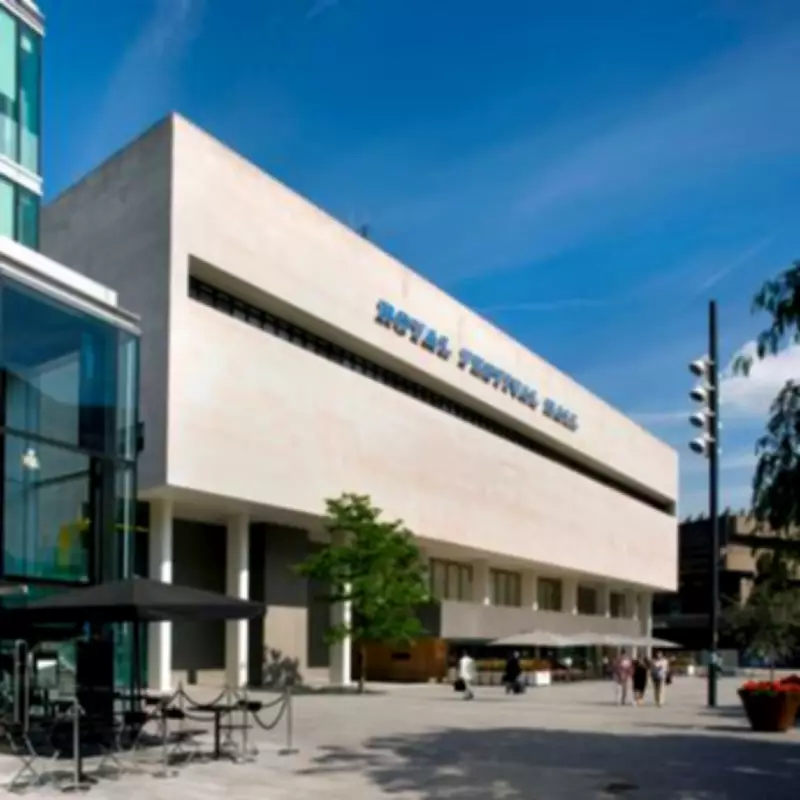
Seventy-five years after London’s Royal Festival Hall became the jewel in the crown of the Festival of Britain, the venue is celebrating its star-studded past while building a future as a beacon of hope. When it opened its doors in 1951, it was intended as a tonic for a nation battered and bruised after years of war and economic instability.
A Vision of Post-War Unity
Mark Ball, Artistic Director of the Southbank Centre, which has the Hall at its centre, says: “The festival in 1951 was an invention of the post-war government—a way to try and bring the nation together after the horrors of World War II and look at how we could live together in the future. We were described as a tonic then and that’s still true today. After all, we are in a world where we need hope and optimism more than ever.”
Now Grade I listed and the only major permanent building remaining from the festival, the Hall will host a series of events in the coming months, with youth culture placed at their heart. In June, pop superstar Harry Styles will both appear at and helm Meltdown, the world’s longest-running artist-curated music festival.

You Are Here: A Celebration of Youth Culture
On May 3, exactly 75 years since the Hall opened, around 7,000 people are expected to attend You Are Here. It is an immersive journey through 75 years of youth culture, masterminded by Trainspotting and Slumdog Millionaire director Danny Boyle—also director of the brilliant 2012 London Olympics opening ceremony. One thousand performers will cover everything from teddy boys to rockers, northern soul to punk, ballroom to Britpop, in a fusion of music, theatre and fashion. Danny says “the whole world” should be heading to the Southbank to enjoy the occasion, calling it an “antidote to the hi-tech curation of our lives today.”
Mark, who has been in post for four years, continues: “You Are Here is hugely ambitious, but we wanted this explosion of different youth cultures.”
A Foundation of Inclusivity
It was Prime Minister Clement Attlee who laid the foundation stone for the Royal Festival Hall in 1949, saying the new concert building—the centrepiece of an 11-acre bomb-damaged site which became the Southbank Centre—would show “we’re not just a nation of shopkeepers, but a people who appreciate and practice the arts.” Designed to cut across class, with no separate bars or entrances for different people, the open foyers were intended to be meeting places for everyone. Mark says of the Hall: “That’s what I love about this place—we're founded on the principle that the arts are for everyone; it’s not about being elitist because culture should be part of everyone's lives.”
A Galaxy of Stars
During its 75 years, the Hall has hosted a galaxy of stars performing very different types of music. Frank Sinatra played a midnight concert in 1962. Two years later, Bob Dylan opened his 18-song set with “The Times They Are A-Changin’.” In 1965, composer Igor Stravinsky gave his final London performance at the Hall; wild applause for the 83-year-old Russian only ended when he returned to the stage in his hat and coat. In 1972, Elton John unveiled his hit “Rocket Man” to the world at the Hall. Wearing a purple sequined top, Elton called his concert an “amazing event.” That same year, David Bowie played the venue—having performed there for the first time in 1968.
Other notable names who have entertained in the 2,700-capacity auditorium include Ray Charles, Nina Simone, and Shirley Bassey, who had the longest Royal Festival Hall solo run of any artist with 10 consecutive concerts, telling the audience she “couldn’t wait” to use her over-60s bus pass to travel there. Then 59, she laughed: “I’m not there yet though!”
Memorable Moments
Mark’s favourite performer was Grace Jones. He says: “She gave the opening concert of Meltdown in 2022. It was incredible. She’s such a larger-than-life cultural force. She’s in her 70s and so full of life and enthusiasm.” Another pinch-me moment came a month ago and involved 600 local primary school children singing on stage for their families. He says: “We do a lot of work in schools and this was the children’s first ever experience of singing in a cultural venue. It was joyous.”

Public Recollections
People have a deep personal connection to the Hall, according to Mark, and as part of its 75th anniversary, the public have been invited to share their recollections, particularly of visiting the Festival of Britain. The event, which took place exactly 100 years after the Great Exhibition, welcomed more than eight million visitors to the capital’s South Bank.
John Laing remembers travelling to the festival from his home in Accrington, Lancashire, saying: “After the bleak, post-war landscape of industrial Lancashire, London itself was a wonder and the Festival of Britain site seemed to be virtually extra-terrestrial. I came across a series of hanging earphones with the invitation to put them on and listen. I was given Samuel Barber’s Adagio for Strings. Most definitely I was not in Accrington.”
Betty Gilbert was 23 in 1951 and working for Cable and Wireless at offices on London’s Victoria Embankment. She watched the site take shape, saying: “Once it opened, I spent a whole week of my holidays there. It was a marvellous time. John (my fiancé and then husband for over seventy years) and I would sit by the river, have lunch or dinner at the Regatta Restaurant, eating food we hadn't seen since before the war. The festival was all about boosting what Britain had achieved. There was so much to see that even after a week, I still hadn't seen it all. I particularly remember the final night of the festivities. Gracie Fields was performing, she was quite old then, but she stood up and sang all her old songs and everyone joined in.”
The Southbank Centre Today
The Southbank Centre, the largest arts venue in the UK, also houses an art gallery, the National Poetry Library, and the Queen Elizabeth Hall, an auditorium focused on contemporary performance. The Southbank Centre is also involved in outreach events across the UK. Mark says: “In 1951 there was an exhibition ship which took aspects of the festival to ports around the country. We don't have a ship, but we do have the National Poetry Library and we’re turning that into a mobile library travelling around the country. There is another project centred around small regional music venues in the offing.”
Mark adds: “This is my dream job. We want all the events this year to convey that sense of optimism and opportunity that comes from being together with people you might not know and sharing something special. Ultimately, culture is a vehicle that allows anybody, no matter who you are, to tell your story.”
Royal Festival Hall: Did You Know?
- The Hall hosted the fifth Eurovision Song Contest in 1960, involving 13 countries and won by France’s Jacqueline Boyer.
- In 1967, Pink Floyd played the Hall. Unfortunately, the band’s bubble-machine-based finale blemished the new leather seats. The band was banned from the venue, only returning in 2016.
- In 2018, almost 60,000 people joined the online queue for tickets to see Michelle Obama at the Royal Festival Hall, discussing her memoir, Becoming.
- The Undercroft at the Southbank Centre is considered to be the birthplace of British skateboarding. Its concrete slopes, banks, and ledges have attracted skateboarders since the 1970s.