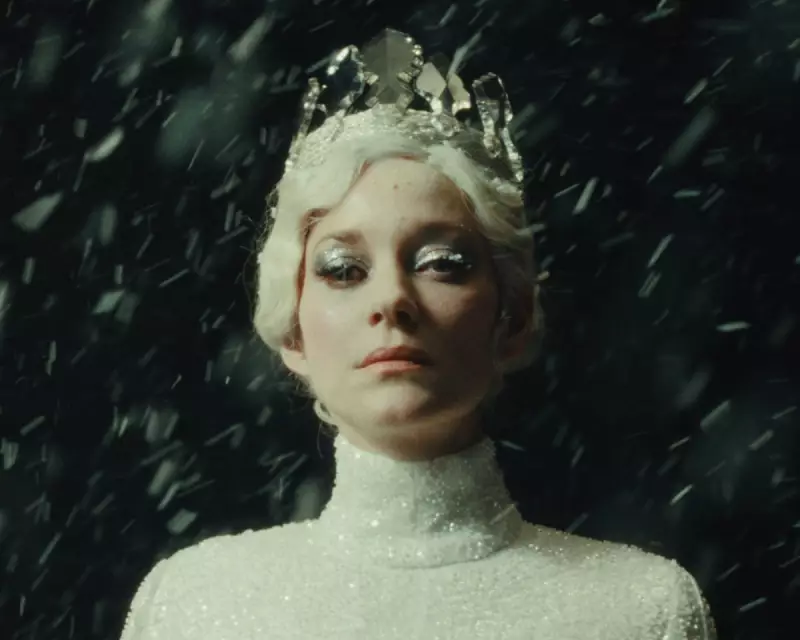
In a striking cinematic achievement, Lucile Hadžihalilović's latest feature, The Ice Tower, has secured the number three spot in the list of the best movies released in the United States during 2025. This mesmerising fable, headlined by the Oscar-winning French actress Marion Cotillard, serves as a profound cautionary tale about the seductive and often dangerous power of fantasy and idolisation.
A Hermetic World of Art and Anxiety
Director Lucile Hadžihalilović, frequently cited as one of the planet's most underrated filmmakers, has built a formidable reputation over two decades. Despite having directed only four features, her work is defined by an obsessive consistency: the creation of exquisitely controlled, hermetic worlds pulsating with biological and psychological unease. From the enigmatic prep school in 2004's Innocence to the unsettling island hospital of 2015's Evolution, her films exist in a rarefied arthouse realm.
The Ice Tower marks a subtle shift, gently glancing towards more familiar narrative territory by weaving its story around Hans Christian Andersen's classic fairytale, The Snow Queen. The film opens with Cotillard's voice lullabying the famous lines, "Vast, immense, glittering like ice was the realm of the Snow Queen." This story is the cherished escape for Jeanne (Clara Pacini), a teenage orphan who flees her foster home. Her journey leads her down a mountain and onto the set of a film adaptation of the very tale she adores.

Between Reality and Reverie
Through Jeanne's awestruck eyes, the film set itself transforms into another of Hadžihalilović's ritualistic microcosms. The backstage world of set dressings, fittings, and loiterings is imbued with latent, almost sacred significance. Jeanne, offering herself as an extra, becomes an initiate into this strange rite. After she poses on set using the alias "Bianca," she captures the attention of the production's imperious lead actress, Cristina van der Berg, also played by Cotillard.
Cristina, a haughty and damaged diva, adopts the star-struck girl as her protégé. Jeanne, utterly enthralled at finally entering her personal magic kingdom, willingly complies. Hadžihalilović masterfully blurs the lines between the artificial and the real, as scenes from the Snow Queen shoot kaleidoscope into Jeanne's daydreams and back again, keeping the audience in a perpetual, crepuscular threshold.
The Perils of Fantasy and a #MeToo Allegory
Beneath its shimmering surface, The Ice Tower is a stern warning. It explores the perils of fantasy and the complex, often destructive nature of idolisation. Guided by her reverie, Jeanne cannot decipher what she truly seeks from her frosty role model: a mother substitute or a deep infatuation. The film suggests a 'madonna-whore' complex, or perhaps an even deeper desire—to become the Snow Queen herself.
Cristina, who shares a similarly forlorn past with the girl, understands the costly price of living inside a fantasia. "You think that is enough for her?" she questions, referring to her character's splendid isolation. Set in an indeterminate analogue 1970s, the film issues a warning to all who become dazzled and entranced by an overwhelming barrage of imagery in our modern digital 'snowglobe'.
The film also invites interpretation as a #MeToo allegory with a distinctly French perspective, reflecting the country's complex and sometimes suspicious embrace of the movement. The monster in this fairytale could be the predatory film director, played by Hadžihalilović's real-life partner, Gaspar Noé. Yet, the true danger may be more insidious: the act of film-making and art itself, which hoards and crystallises beauty—as Hadžihalilović does so expertly—until human desire hits an absolute zero.
With The Ice Tower, Lucile Hadžihalilović has not only crafted one of 2025's most compelling films but has also delivered a haunting meditation on obsession, artistry, and the icy cost of living within a dream.