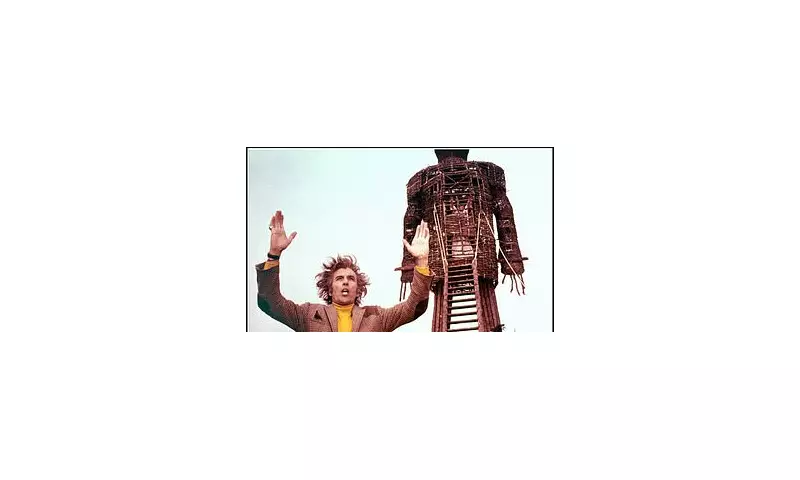
The 1973 British horror film The Wicker Man has achieved legendary status as a must-see cinematic experience, yet its creation and aftermath tell a story far more haunting than the movie itself. A new book by the sons of director Robin Hardy delves into this complex legacy, revealing a tale of artistic struggle and personal cost.
From Commercial Failure to Cult Classic
Upon its release, The Wicker Man was a commercial failure. The film, a collaboration between screenwriter Anthony Shaffer—previously known for Hitchcock's Frenzy—and director Robin Hardy, an advertising man with ambitions, only gradually acquired its reputation as a lost classic. Hardy's subsequent feature films failed to achieve similar success, leaving The Wicker Man as his one-off triumph.
The film's very existence was something of a miracle. Shaffer had overwritten the screenplay, forcing Hardy to make ruthless cuts to the verbiage. Despite these challenging beginnings, the project attracted star Christopher Lee, who was so passionate about the film that he waived his fee to ensure it was made.

A Legacy Discovered in Plastic Bags
Following Hardy's death in 2016 at the age of 86, his legacy was found in a surprisingly modest state. His archive consisted of just a couple of plastic bags discovered in an attic of a house he shared with his third wife, Caroline. Amongst mundane American Express receipts lay a fascinating correspondence with Christopher Lee.
These letters revealed Hardy's ambition to create 'The Wicker Man trilogy', though the final proposed film was too costly and Hardy, described as shambolic, could not bring it to fruition. In one letter, Lee described the film as 'alluring and mysterious', despite what he characterised as 'an underpaid and harassed writer and an overpaid and hostile director'.
The Human Cost of a Cinematic Masterpiece
This story is brought to light in the enthralling book, Children of the Wicker Man, produced by Hardy's sons, Justin and Dominic, now aged 60 and 63. The brothers, two of Hardy's eight children by six different women, have created a companion to a documentary of the same name.
The overall narrative is a profoundly sad one. None of Hardy's various families profited from the film, nor did Hardy himself or Christopher Lee. The brothers state unequivocally that the film ruined their life, with one commenting, 'In many ways, it’s been a very unkind film.'
Despite the personal turmoil it caused, Robin Hardy’s legacy remains a film that people will still be talking about in 100 years. For a director whose other works were overshadowed, and for a film that initially flopped, this enduring cultural impact is a significant achievement. As the author of the original piece reflects, there are far worse legacies to hope for.