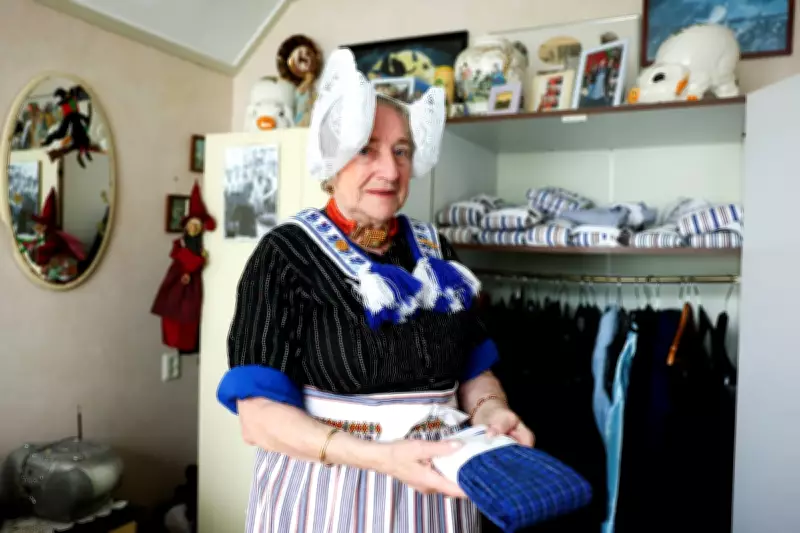
Annie In de Betouw-Kwakman, an 85-year-old resident of Volendam, stands as the last individual in her village to publicly wear the traditional Dutch costume in daily life. This iconic attire, featuring a distinctive high pointed bonnet, has long been a staple on postcards from the Netherlands, symbolising the nation's rich cultural heritage.
The Historical Significance of Dutch Traditional Dress
Historically, clothing in the Netherlands served as a powerful identifier of one's origins. Fashion historian Birthe Weijkamp explained, "Almost every Dutch village used to have their own look. You could recognise where someone was coming from, what village they belonged to. So it was very much about identity, about belonging somewhere."
In Volendam, a picturesque village located 22 kilometres north of Amsterdam, the traditional costume was ubiquitous until the mid-20th century, according to Simone Kwakman-Brinkkemper, a specialist in the attire. The intricate daily ensemble comprises a black jacket known as a 'jak', a short scarf called a 'dasje', an apron referred to as a 'bontje', a long skirt, a tight red coral beaded necklace, a white bonnet known as a 'hul', and black slip-on shoes called 'muilen'.

The Decline of a Cultural Tradition
However, as residents increasingly sought employment opportunities beyond the village, the elaborate, handmade garments, which demand considerable skill to produce, proved increasingly impractical. Ms In de Betouw-Kwakman witnessed her friends and sisters readily adopt modern clothing, leaving her as the sole public wearer. Today, the only other person in Volendam still wearing the full daily attire is an elderly woman who no longer ventures outside.
Ms In de Betouw-Kwakman herself briefly attempted to modernise her wardrobe for her school-aged children, who reported being teased by classmates. She purchased a dress but swiftly discarded it after a neighbour's comment. "The neighbour said, 'What are you wearing? You look like a candy cane,'" she recalled. "I'm colour-blind... I looked like a fool."
Pride and Sadness in Preserving Heritage
Despite the challenges, Ms In de Betouw-Kwakman expressed pride in her traditional clothes, coupled with sadness that the tradition is destined to vanish with her. "Everyone is different, and everyone finds something else beautiful or comfortable. For me, this is freedom," she said, highlighting the personal significance of maintaining this cultural practice.
The Volendam women's costume remains one of the most recognisable symbols of traditional Dutch dress, yet its daily use has dwindled to a single individual. As Ms In de Betouw-Kwakman continues to don the apron and bonnet each day, she embodies a living link to a fading era of Dutch village identity and craftsmanship.