Andreas Schager: The Accidental Wagnerian Hero Making His Royal Opera Debut
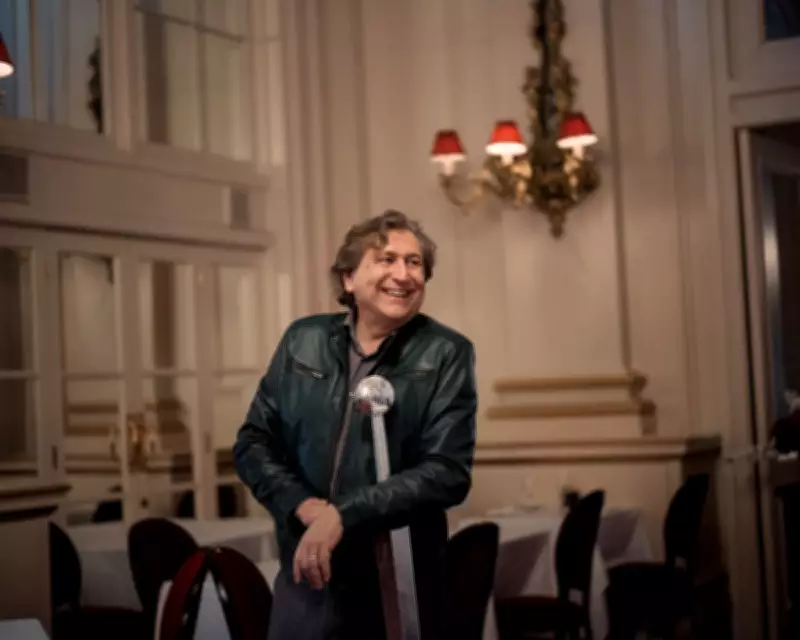
Andreas Schager bursts into a cluttered back office at London's Royal Opera House, his handshake firm and energetic. "Sorry I'm sweaty," he grins. "I've been forging Nothung!" For the world's most in-demand Wagnerian tenor, hammering out a magical sword is just part of a morning's work during rehearsals for Siegfried, the third instalment of Covent Garden's new staging of the Ring Cycle.
An Unconventional Rise to Operatic Stardom
At 54, Schager is an anomaly in the opera world. Unlike most Wagner singers, whose careers are built gradually over decades, Schager's ascent was meteoric. In 2013, he transitioned from performing Wagner roles in small houses to the Berlin State Opera. When the tenor scheduled for Siegfried went missing, Schager stepped in with only minutes' notice, delivering a stunning performance in Act I—90 minutes of intense power-singing that earned a roaring approval from the notoriously demanding audience and conductor Daniel Barenboim.
This accidental stardom set the stage for a rapid rise, with performances at Milan's La Scala and the BBC Proms solidifying his reputation. "There are not many Siegfrieds and Tristans around," Schager notes, "so my schedule quickly became very busy, very fast-paced."

From Farm to Operetta to Wagnerian Epic
Schager's journey began on a rural Austrian farm, where music was a family pastime but not a career path. He studied history and theology in Vienna before joining a chorus, which sparked his passion for singing. His early career focused on operetta, where he honed his skills in roles like Orpheus in Offenbach's Orpheus in the Underworld and Ottokár in Strauss's The Gypsy Baron.
"I never had sharp elbows, never thought: 'I've got to get to the top and be the best singer in the world,'" Schager reflects. However, in 2012, an invitation to audition for Siegfried—a five-hour epic with near-constant singing—changed everything. Despite initial surprise, he saw parallels to his operetta experience, particularly the role of Barinkay, and embraced the challenge.
Embracing Siegfried: More Hero Than Zero
Siegfried, often dismissed as a "bullying adolescent" by critics, is reinterpreted by Schager as a natural and sympathetic figure. "He's a young man full of emotions," Schager explains. "He discovers lies from his guardian Mime and faces psychological turmoil, but his nature is pure." Schager emphasizes the character's evolution from innocent to warrior, influenced by corrupt society in Götterdämmerung.
To portray this, Schager relies on emotional authenticity rather than forced technique. "It's important not to shape the tone, but to let the emotions produce it," he says, comparing it to a baby's cries conveying needs without words.
Collaborating with a Dream Team in London
Schager's Royal Opera debut benefits from the "dream team" of conductor Antonio Pappano and director Barrie Kosky. Kosky's staging, rich in symbolism and faithful to Wagner's text, allows the music and story to shine. Schager describes it as "old-fashioned in a very good way," providing a supportive environment for his performance.
With over a decade of Wagner experience and more than 10 Ring Cycles behind him, Schager works to bring fresh perspectives to each role. "Sometimes it gets harder when you know too much," he admits, but the collaboration in London helps him find new emotional depths.
A Gruelling Schedule Ahead
Schager's year is packed with Wagnerian commitments, including five different roles in six months. Notably, he will star in the first-ever staging of Rienzi at the Bayreuth festival theatre—an honour he acknowledges while distancing Wagner's work from its controversial political associations. "Wagner is not responsible for what other people have done with his music," Schager asserts.
As he dashes back to rehearsal, his sandwich untouched, Schager remains an accidental hero in the opera world. Yet, his dedication is unwavering: those dragons won't slay themselves. Siegfried runs at the Royal Opera House, London, from 17 March to 6 April, marking another milestone in Schager's extraordinary career.