BBC Faces 'Profound Jeopardy' Without Funding Overhaul, Tim Davie Warns
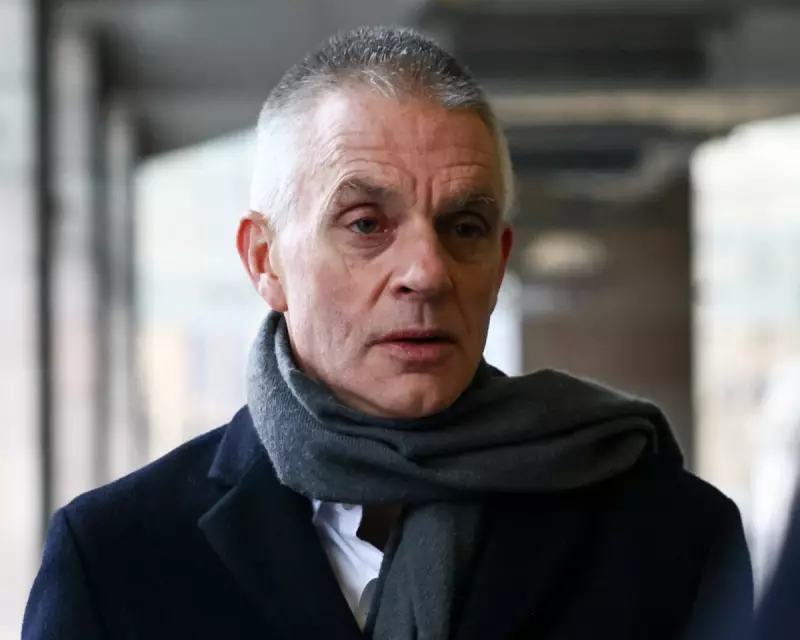
In an exclusive interview, Tim Davie, the outgoing director general of the BBC, has issued a stark warning that the broadcaster faces 'profound jeopardy' over its future unless it embraces significant changes to its funding model. Speaking to the Guardian, Davie signalled his support for an overhaul of the licence fee, emphasising that the BBC must reform to remain relevant and survive in an increasingly hostile media landscape.
Calls for Reform and Flexibility
Davie called on supporters of the corporation to 'stand up and fight' for it, amid heightened criticism from commercial rivals and political opponents. He stated that without serious adjustments to its funding structure and greater flexibility in the services it offers, the BBC would be 'in trouble'. However, he clarified that reform should not simply involve increasing the amount demanded from each licence fee payer, which currently stands at £174.50 annually.
'We do want reform of the licence fee,' Davie said. 'However, we're not just about driving the amount we get from households higher. My biggest fears are that we just roll on and think it's going to be OK. We don't reform enough. At that point, we don't get regulatory reform and more flexibility. That's my biggest worry. And I think, if we don't do that, we're in trouble.'

Rejection of Advertising and Subscription Models
Davie firmly rejected suggestions that the BBC should shift to advertising or subscription-based funding, options that were raised in a recent government paper on the broadcaster's future. He argued that such models would undermine the BBC's role as a universal service, stating, 'If you go to advertising or subscription, you're no longer a universal service. It's a societal choice.' This stance highlights the ongoing debate about preserving public service broadcasting in the face of digital disruption.
Exploring Progressive Funding Options
The BBC is currently examining ways to make the licence fee more progressive, potentially through a household levy collected via council tax, as previously suggested by BBC chair Samir Shah. This approach could remove the need for controversial enforcement visits and allow adjustments so that poorer groups pay less. However, it could also prove contentious by eliminating the ability for households to opt out of payment.
Davie also expressed opposition to a hybrid funding system, where licence fee payers fund services like BBC News while additional payments are required for content such as drama. 'What we're fundamentally opposed to is splitting the BBC up by genre,' he explained. 'If you did 'the drama is over there, the news is here,' local news, which I think is really important, suddenly becomes very small, very fast. That would be the end of public service broadcasting.'
Emphasis on Independence and Governance Reform
Following his resignation last November, which came amid fallout from the BBC's edit of a Donald Trump speech, Davie advocated for changes to enhance the broadcaster's independence. He noted that a survey of 40 million people indicated strong public support for an independent BBC. 'I'm a big fan of the independence of the BBC,' he said. 'We need governance reform. I believe in an independent BBC, and so do our audience.'
Davie further cautioned that attacks on the BBC over its errors have been 'weaponised' by opponents, stressing the importance of proportionality in criticism. His intervention comes as talks begin over the future of the BBC's royal charter and funding, with the current charter set to expire at the end of 2027.
Financial Pressures and Global Context
The BBC faces significant financial strain, with the licence fee losing about one-third of its real value since 2010, and non-payment rates slowly increasing. Davie indicated he is pushing for more leeway from the government and regulator Ofcom to allow innovation as media consumption shifts to digital platforms. Last year, plans for an outsourcing drive to cut costs were revealed, which could spark internal controversy.

Reflecting on the broader media landscape, Davie warned of a global decline in public service media, describing the situation as 'perilous'. 'We're seeing a thinning of public service media around the world,' he said. 'The whole thing coming together as one market has been brilliant for the UK. It is really important to who we are, from a societal point of view.'
Leadership Transition and Future Challenges
The BBC is now searching for Davie's successor, who will lead negotiations over the new charter. With the corporation facing intense competition and political hostility from figures like Donald Trump and Reform UK, some had hoped Davie might reconsider his departure. Potential successors include former BBC and Channel 4 executive Jay Hunt, now at Apple, former BBC chief content officer Charlotte Moore, and ex-Channel 4 chief executive Alex Mahon.
Davie concluded with a sobering assessment: 'The truth is, the jeopardy is high. The BBC has never really had profound jeopardy. What do I mean by that? It has, of course, had lots of drama and editorial crises in its time. But that's actually not deathly jeopardy for the BBC. What represents deathly jeopardy for the BBC is if it's not relevant ... If we're going to survive, we need permission to reform. It feels the jeopardy is high, and we have got to stand up and fight for it.'