Philharmonia's Canterbury Concert Muted by Challenging Marlowe Theatre Acoustics
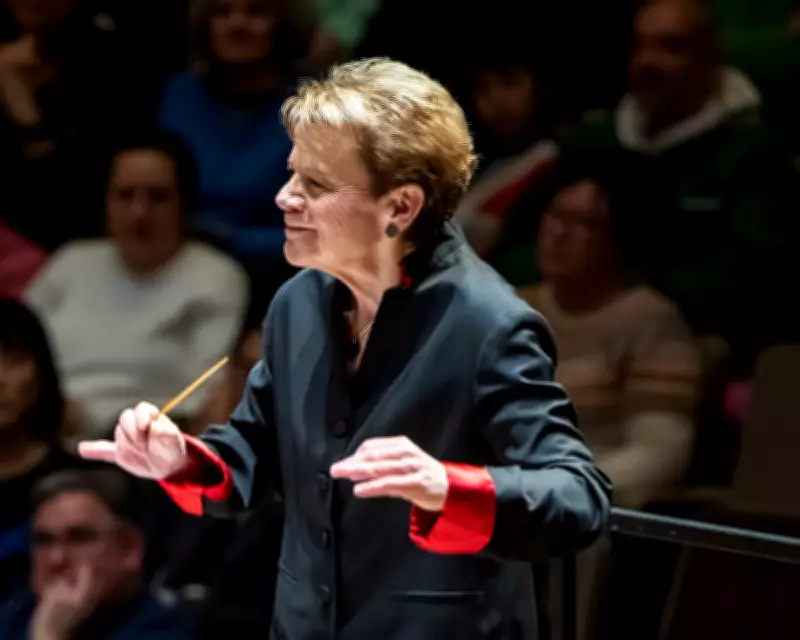
The latest concert in the Philharmonia Orchestra's residency at Canterbury's Marlowe theatre highlighted a significant challenge for performers and audiences alike. The venue's acoustic, described as desiccated rather than merely dry, exposed the slightest flaws and offered an atmosphere akin to an anechoic chamber. This setting proved a formidable obstacle for the orchestra's dynamo principal guest conductor, Marin Alsop, who was making her second appearance at the theatre after her local debut last year.
A Promising Start with Márquez's Danzón
The concert opened with a deliciously natty performance of Arturo Márquez's Danzón No 2. The initial episode featured a dusky clarinet, piano, claves, and string pizzicato, all delivered with a loose-limbed ease. A trumpet solo was served with outrageously slow vibrato, while the strings strutted precisely to order. This piece showcased the orchestra's ability to navigate rhythmic complexities, even within the challenging acoustic environment.
Weilerstein's Virtuosic UK Premiere of Ortiz's Cello Concerto
The music of fellow Mexican composer Gabriela Ortiz demanded a subtler approach. Her Cello Concerto "Dzonot" ("Abyss"), which has already won a 2026 Grammy, received its UK premiere from Alisa Weilerstein, the cellist for whom it was written. The performance was not without its moments of levity, including a hiatus for adjustments to Weilerstein's wobbling chair, prompting Alsop to grimace, "We worked on this earlier." An awkward moment ensued at the end when Alsop beckoned Ortiz from the audience, only to find there was no route onto the stage.

In between these incidents, the concerto unfolded as a veritable merry-go-round of effects and textures. It featured post-Romantic rhapsodising, flurries of solo scrubbing reminiscent of Led Zeppelin taking up the cello, eddies of minimalist repetition, and ethereally twinkling percussion. Weilerstein's virtuosity was abundantly clear, yet the acoustic kept the score's potential magic distinctly earthbound, muting its full dramatic impact.
Rimsky-Korsakov's Scheherazade Struggles in the Dry Space
None of this boded well for Rimsky-Korsakov's Scheherazade, a work where sonic drama is vital. Alsop gave solos generous space, and the chamber-music moments were beautifully intimate. Some of the louder passages surged compellingly, demonstrating the orchestra's power. However, elsewhere the strings were uncharacteristically scrappy, evidently unable to hear each other in the dry acoustic, which disrupted the cohesion essential for this piece.
A Frustrating Encore and Future Performances
By the time Alsop returned to conduct Anna Clyne's noisy, foot stamp-filled Restless Oceans as an encore, the work's performative frustration seemed all too real, mirroring the challenges faced throughout the evening. The Philharmonia Orchestra will continue its tour with performances at the Royal Festival Hall in London on 12 March and the Bridgewater Hall in Manchester on 13 March, where acoustics may offer a more favourable setting for their sonic explorations.