Dame Jenni Murray, Pioneering Woman's Hour Host, Dies at 75
Dame Jenni Murray, the legendary presenter of BBC Radio 4's Woman's Hour for 33 years, has died at the age of 75. Her final sign-off in 2020 featured Helen Reddy's feminist anthem I am Woman, a fitting farewell for a broadcaster who became a cheerleader for generations of British women.
A Voice for Women's Complex Lives
Murray wasn't merely a reassuring voice discussing the challenges facing female listeners—balancing work and family, caring for elderly parents, and carving personal time—she was a complex character who had lived through these issues herself. She spoke openly about weight problems, health struggles, and a difficult relationship with her mother, believing that discussing embarrassing or hidden topics would empower others to do the same.
As a Daily Mail columnist, she wrote stoically about ageing, even filing copy from a care home in 2023 while recovering from a spinal fracture and pneumonia. She offered astute, often amusing commentary on women's lives, questioning trends like the Kardashian-inspired "porn star look" among twenty-somethings or lamenting how Viagra meant women her age faced unwanted sexual pressure from frisky partners.

Woman's Hour: A Platform for Stars and Serious Issues
Under Murray's lively stewardship, Woman's Hour became a kaleidoscope of celebrity interviews and vital campaigns. Conversations with stars like Angelina Jolie and Nicole Kidman sat alongside discussions on domestic violence, childcare, and female genital mutilation. Colleagues noted her distinctive blend of disarming warmth and unnerving directness, which could lull interviewees before she asked the hard questions.
She asked Hillary Clinton why she stayed in her marriage despite humiliation, questioned Monica Lewinsky about keeping "that dress," and challenged Margaret Thatcher on being described by French president Francois Mitterrand as having "the eyes of Caligula and the lips of Marilyn Monroe." Men weren't spared either—she pressed Gordon Brown on whether he'd show his wife his tax returns.
Driven by Working-Class Roots and Feminist Fire
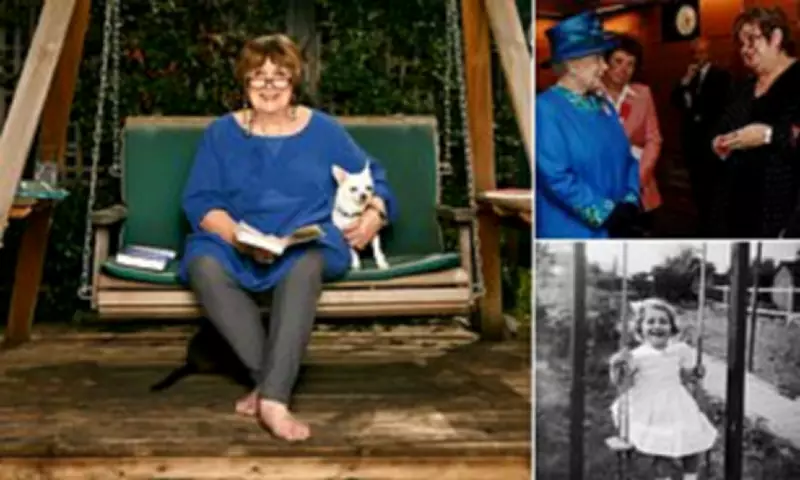
Murray proudly hailed from solid working-class roots in Barnsley, West Yorkshire, recalling childhood visits to her grandparents through a hole in her granny's hedge for freshly baked scones. Her personal style was simple yet iconic: short hair, discreet makeup, glasses perched halfway down her nose, and a wardrobe of 20 identical black tops and trousers with bright scarves—"Easy peasy," she said, "and black makes you look slimmer."
Her mother Winifred focused on her daughter's looks rather than intellect, calling her "ten-ton Tess" when she gained weight at university. This conflict persisted even as Murray interviewed influential figures on Newsnight, with her mother critiquing her appearance rather than her journalism. Only in Winifred's final year did they begin to reconcile their differences.
A Stellar Career in a Man's World
Murray carved a stellar journalism career when it remained very much a man's world. After joining BBC Radio Bristol in 1973, she became a reporter for South Today, then a Newsnight presenter by 1983—where she and the only other female presenter were dismissively called the "Newsnight wives." She spent a lifetime kicking against such casual sexism.
Veteran broadcaster Charles Wheeler praised her "most beautiful voice on radio," but Murray was far more than a presenter. She was a firebrand feminist campaigning for better pay, childcare, healthcare, and domestic equality. Her high-profile support made her a feminist icon, with writer Julie Bindel joking that a call from Murray was "like getting a phone call from God."
Personal Struggles and Uncompromising Standards
Murray's drive meant living apart from her Peak District family home during weekdays even when her sons were young. She joked about reducing Woman's Hour researchers to tears when they didn't meet her high standards. Even admired figures like Aung San Suu Kyi faced her wrath when they disappointed—Murray downgraded her cat's name from "Aung San" to "Soo" after Suu Kyi failed to stop attacks on Myanmar's Rohingya community.

Her personal life reflected similar forthrightness. When marrying second husband David Forgham, she instructed the registrar: "No flowers, no music, no romantic guff." Forgham became the primary caregiver for their sons Charlie and Edward while Murray pursued her BBC career, commuting to a gloomy Camden flat she nicknamed "Wuthering Depths."
Health Battles and Feminist Legacy
Murray faced significant health challenges, including breast cancer diagnosed after a 6cm tumor went unnoticed despite her advocacy for self-checks. She received hundreds of supportive cards from Woman's Hour fans. Later years brought hip replacements, spinal injuries, pneumonia, and other ailments, yet she continued writing her Daily Mail column until March 2024.
She wrote movingly about her sons caring for her in frailty, proving men could be as capable as daughters—though as an ardent feminist, she joked she'd have been a terrible mother to a daughter, expecting her to be "a high court judge by the age of six."
Murray's 2001 menopause book, Is it me or is it Hot in Here?, preceded mainstream discussion by nearly two decades. Her honors included an OBE and DBE in 2011, plus numerous honorary degrees. She stepped down from Woman's Hour in 2020, saying she'd listen to successor Emma Barnett "if only to say 'Oh, God, she made a mess of that.'"
Dame Jenni Murray's legacy as a pioneering broadcaster and uncompromising feminist voice will resonate for generations, having roared for women's rights with both warmth and unwavering directness.