The Unlikely Genesis of a Glam Rock Anthem
In a recent reflection on their iconic track Ooh La La, Alison Goldfrapp and Will Gregory have shared fascinating insights into its creation, revealing a song built on surprising minimalism and spontaneous creativity. The duo, who formed the electronic music project Goldfrapp, crafted a piece that has endured for decades, often finding its way into popular culture in unexpected contexts.
From French Inspiration to Robotic Vocals
Alison Goldfrapp recalls the moment she struggled to find lyrics for the chorus. "I couldn't think of a line for the chorus – but we had just been to France," she explains. This simple geographical coincidence led to the now-famous "Ooh la la" refrain. The duo initially questioned whether this was sufficient, but the phrase felt right, prompting them to build upon it with layered vocals and vocoder effects that created a distinctive synthetic robo feel alongside natural voice elements.
The lyrical content drew from personal experiences and visual metaphors. Goldfrapp describes how a breakdown section about breaking a heel on a shoe originated from an old 1950s film she had seen on television. "An image of a woman, walking along the road in a tight pencil skirt, limping because the heel had broken. That stuck with me," she notes. Further literary influence came from Charles Baudelaire, whose poetry book was nearby during the writing process, allowing her to incorporate his essence into the lyrics.

The Minimalist Musical Foundation
Will Gregory expresses astonishment at the track's simplicity upon revisiting it. "I was surprised at how little is actually in there," he admits. The entire composition hinges on claps, a bass line, vocals, and minimal synth and guitar stabs. Remarkably, the song became what Gregory describes as "a one-note piece" because every attempt to change chords felt unnecessary. This deliberate avoidance of complexity became a point of pride for the duo, who felt they had sidestepped typical songwriting complications.
An accidental recording moment also contributed to the final sound. Gregory left a microphone on while playing the riff, capturing both the bassline and the clatter of the keys. Unable to separate the sounds as they were on one track, this unintended texture remained in the final mix, adding to the song's unique character.
Creative Isolation and Studio Experiments
The recording environment played a crucial role in the song's development. The pair adopted a practice of renting slightly chintzy holiday homes during winter months for six-month periods, preferring these lo-fi settings over flashy studios. "Not being in London was important. A lot of great music comes from that isolation," Gregory reflects. This retreat from urban distractions allowed for focused creativity.
Collaboration brought additional dimensions to the track. Portishead's Adrian Utley contributed guitar parts, marking a departure from Goldfrapp's usual avoidance of guitars. His instinctive, lean playing style provided the perfect tone immediately. Later, mixing legend Mark "Spike" Stent became involved, with the duo camping in his studio during the mixing process while continuing to write. Gregory recalls feeling like an amateur during this intense period, yet describes it as "exciting, a real whirlwind."
Visual Imagination and Cultural Impact
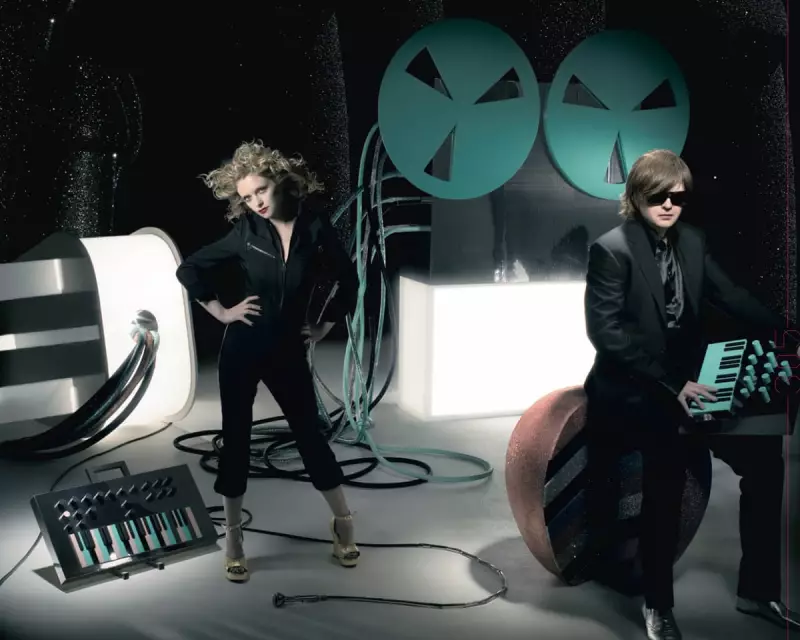
Alison Goldfrapp's visual creativity extended to the music video, which featured an imaginary glam rock band directed by Dawn Shadforth with styling by the late Cathy Edwards. "We had some good budgets back then, there was plenty of time to do it all carefully with detail, no rushing," she notes, contrasting with today's faster production schedules.
The song's enduring relevance stems from its mixture of synth elements and simplicity, avoiding strong ties to any particular era or genre. Its cultural footprint includes numerous licensing requests, many for sex scenes, which the duo finds amusing though they have declined many offers. A memorable performance moment occurred on US television when Simon Cowell, wearing a pink fluffy jumper, offered his trademark disapproving expression before remarking on their American breakthrough, leaving Goldfrapp frozen with nervousness.

Will Gregory humorously notes his absence from the video was probably mutual, suggesting he would have resembled Sparks' synth player Ron Mael, known for his stationary performances. "I always thought I could relate to that," he quips. The track's legacy continues with the recent release of the Supernature 20th Anniversary Deluxe Edition, celebrating Goldfrapp's influential career.