Harry Styles' Aperture: A Joyous Dancefloor Anthem Defying Modern Pop Trends
In a music industry increasingly dominated by fleeting social media moments and algorithmically-driven content, Harry Styles has once again demonstrated his ability to chart his own distinctive course. The lead single from his forthcoming fourth album, Aperture, arrives as a five-minute, eleven-second celebration of dancefloor unity that feels both refreshingly unhurried and quietly radical.
A Confident Departure from Mainstream Conventions
Now boasting an impressive collection of six Brit Awards, three Grammys, and seven UK Top 10 singles, Styles has navigated the transition from boyband member to solo superstar with remarkable grace. His well-earned confidence is evident in his approach to the gap between 2022's Harry's House and last week's announcement of Kiss All the Time. Disco, Occasionally. Rather than filling this period with one-off releases or curated social media moments, Styles essentially disappeared from the public eye, with his Berlin marathon participation last September providing the only notable exception.
This absence between album cycles feels deliberately old-fashioned, particularly for an artist who experienced the height of the music industry's content obsession during his One Direction years. Since launching his solo career with his 1970s soft-rock-influenced debut in 2017, Styles has consistently positioned himself as a cross-generational throwback, albeit one whose fashion choices frequently challenge gender norms.

Musical Evolution and Dancefloor Focus
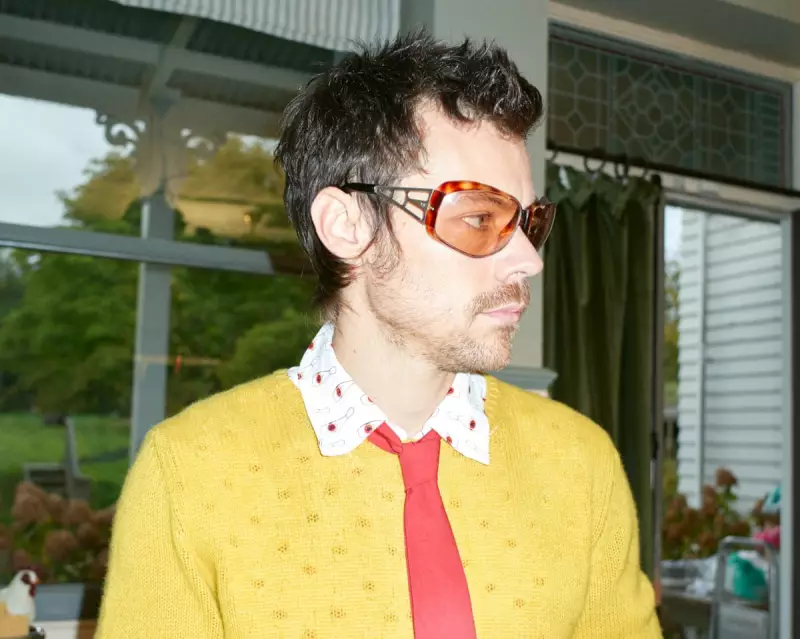
On the surface, the new album's title and cover image—featuring Styles in oversized 70s glasses beneath a suspended disco ball—suggest a continuation of his retro aesthetic. However, Aperture represents a significant evolution in his sound. Where his previous comeback single, As It Was, was tightly wound and metronomic, Aperture embraces a much looser, more expansive approach.
The track opens with a minimalist electronic pulse and a pretty, oscillating riff, gradually emerging from what feels like nightclub smoke. Styles' lightly filtered voice delivers lyrics about drinks going straight to his knees, while the arrangement builds from a skeletal throb reminiscent of LCD Soundsystem into increasingly layered electronic textures. A sunlit pre-chorus blossoms into the anthemic chorus, with Styles' chant of "We belong together" serving as a characteristically inclusive call for unity.
Contemporary Influences and Lyrical Themes
Musically, Aperture finds Styles exploring more recent influences than on previous albums. The track evokes the early 2010s sounds of bands like Vampire Weekend, Yeasayer, and MGMT, where electronic elements blended with psych, prog, and pop sensibilities. There are also echoes of the 00s techno-pop associated with Cologne's Kompakt label.
Lyrically, Styles adopts a relatively straightforward approach, reflecting his stated intention to spend more time experiencing nightlife as a participant rather than a performer. The song captures that transformative "goes-to-Berlin-once" feeling where people seem elevated, others are "going on clean," and strangers suddenly feel like best friends. This sense of communal euphoria reaches its peak during the excellent bridge, where lovely house-style pianos accompany Styles as he sings, "I wanna know what safe is... I don't know these spaces," momentarily sounding vulnerable amidst the celebration.
A Bold Statement in Contemporary Pop
Aperture ultimately finds its happy medium, grappling with uncertainty while creating its own safe space. While not so daring as to alienate his substantial fanbase, the track's shift in direction feels bold for one of pop's few consistently interesting male stars. The confidence that has characterised Styles' solo career remains undented, and Aperture promises to sound absolutely spectacular ricocheting around stadiums this summer.
In an era where mainstream pop often prioritises brevity and immediate impact, Harry Styles has delivered a track that rewards patience and immersion. Aperture stands as a testament to an artist comfortable enough to move at his own pace, creating music designed for genuine connection rather than algorithmic approval.