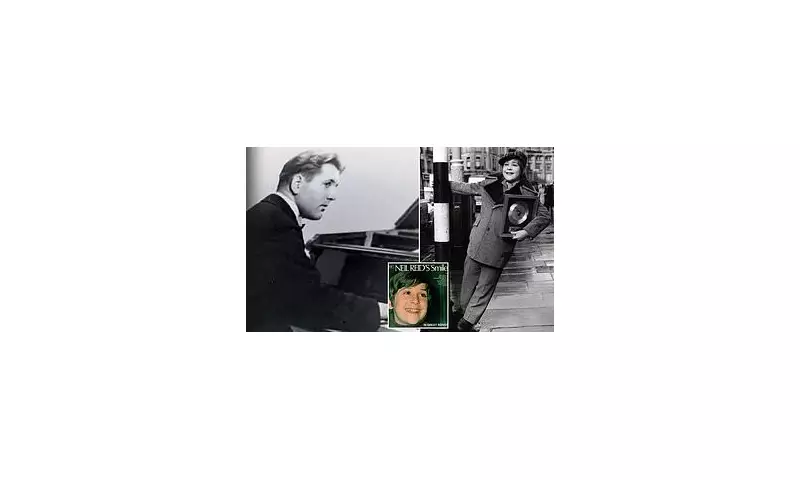
In a remarkable twist of fate, former Scottish child singing sensation Neil Reid has uncovered the extraordinary secret life of his old piano teacher, a man he knew only as a quiet, cardigan-clad tutor. Decades after his weekly lessons, Reid has learned that Walter Hambock was once the personal pianist to Adolf Hitler before suffering imprisonment in a Nazi concentration camp.
From Hitler's Salon to a Scottish Schoolroom
The astonishing connection has only come to light following the discovery of Hambock's unpublished memoirs, which were found gathering dust in a relative's attic. Neil Reid, now 66, shot to fame in 1971 at the age of 12 after winning the TV talent show Opportunity Knocks and selling millions of copies of his ballad Mother of Mine.
It was during this whirlwind period of early celebrity that the schoolboy received piano lessons from Walter Hambock in Lanarkshire. Reid recalls a gentle, unassuming man, vaguely aware of playground rumours that his teacher had suffered during the war. "There were rumours around the school that he had been imprisoned in a camp during the war. But I couldn’t ever have guessed the full details of his life," Reid told The Scottish Mail on Sunday.

The full details, as recorded in Hambock's own writings, are indeed staggering. Born in Vienna in 1909, Hambock was a child prodigy who gained international acclaim. In 1936, after performing for senior Nazis Joseph Goebbels and Hermann Göring, he was appointed as Hitler's personal pianist.
A Gift from the Führer and a Fateful Decision
Hambock's memoirs note that Hitler, a self-taught music enthusiast who loved Beethoven, enjoyed his playing so much that he gifted the pianist a signed copy of Mein Kampf inscribed "To my young pianist friend." However, this privileged position was shattered in 1940 when Hambock made a decision that would alter his life irrevocably.
Defying the Nazi regime's virulent anti-Semitism, he performed at a concert in Holland under a Jewish conductor. On the train home, he was arrested. Nazi official Martin Bormann reportedly screamed at him: "You play for our Führer and then you play for a Jew!" For this act of artistic integrity, Hambock was sent to the Flossenbürg concentration camp in Bavaria, where he endured five years of hell. An estimated 30,000 prisoners died there from execution, malnutrition, and overwork.
His survival in April 1945 was nothing short of miraculous. As the war ended and orders were given to execute all remaining prisoners, the camp commander—a fellow music lover—secretly gave Hambock an SS officer's uniform, allowing him to walk free through the main gates.
A New Life in Scotland and an Unlikely Pupil
After the war, Hambock met and married Scottish teacher Helen Weir, moving to Aberdeenshire and later Lanarkshire, where he worked as a church organist and piano tutor. It was through his wife, who taught at Coltness High School, that he met the young Neil Reid in 1971.
Reid took weekly lessons with Hambock for about 18 months before his burgeoning showbusiness career took him to a London stage school. At the time, Reid was making history himself; his album Smile made him the youngest person ever to have a UK No.1 album at just 12 years and nine months old.
Reflecting on the bizarre overlap of their lives, Reid said: "It’s astonishing to think I was playing the piano, sitting on a stool beside Walter – but if we’d rewound maybe 30 years, he would have been sitting in exactly the same position, playing piano and sharing the stool with Adolf Hitler."
Hambock, who died in 1979 aged 70, kept proud scrapbooks of his famous pupil's success, including newspaper cuttings and a Christmas card from Reid. In his memoirs, he remained unrepentant about his decision to play under a Jewish conductor, stating his love of music blinded him to the danger. "I did not debate, for a minute, if the conductor were Jewish... I simply went off and played," he wrote.

Neil Reid, who later left music for a career in finance and now runs a large food bank charity in Blackpool, expresses regret that he never asked more about his teacher's past. "Looking back, I can hardly begin to imagine the horrors that he saw... He lived a really extraordinary life," he said, acknowledging the profound and humbling legacy of the quiet man who taught him scales.