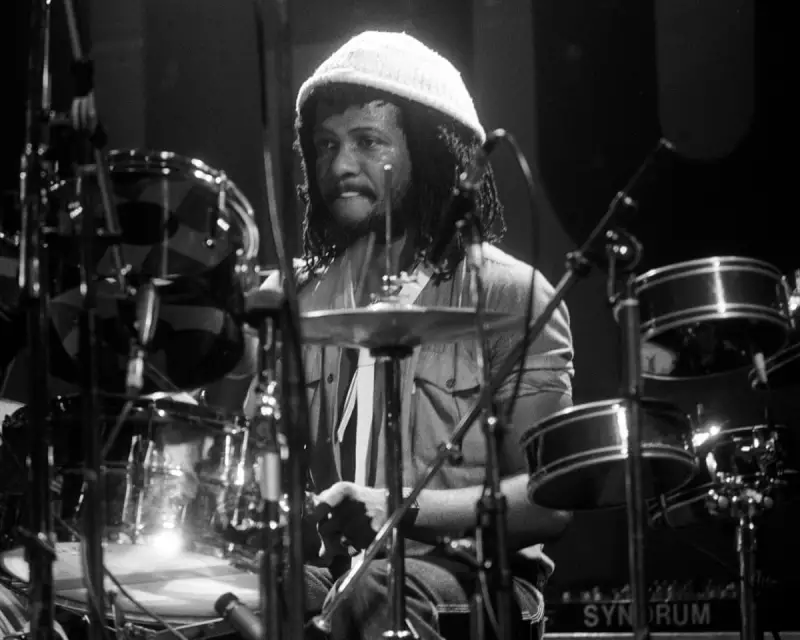
The world of music has lost a true pioneer with the passing of Sly Dunbar, the Jamaican drummer whose innovative approach fundamentally reshaped reggae rhythms. Dunbar, who died aged 73 after a long illness, was celebrated globally for his impeccable timing and boundless creativity behind the drum kit.
A Revolutionary Partnership
Alongside his bass-playing partner Robbie Shakespeare, Dunbar formed one of the most formidable rhythm sections in music history. Together, they provided the backbone for nearly every significant reggae artist and collaborated with an astonishing array of international stars. Their work spanned genres, backing artists from Peter Tosh and Black Uhuru to Bob Dylan, the Rolling Stones, Madonna, and Sinéad O'Connor.
Forging a Unique Sound
Dunbar's genius lay in his ability to craft non-standard reggae rhythms that drew heavily from funk, soul, and disco influences. This innovative fusion created a distinctive sound that propelled numerous artists to stardom, most notably Grace Jones. His powerfully driving beats emerged from what appeared as controlled chaos across the drum kit, a stark contrast to his easy-going personality.

From Kingston to Global Stages
Born Lowell Dunbar in Kingston, Jamaica, his musical journey began early. Obsessed with the Skatalites songs he heard on a jukebox during school lunch breaks, Dunbar would relentlessly practice rhythms on his desk. He decided to pursue music professionally at just 13 after seeing Ken Boothe and the Gaylads perform at his school.
His career took off through sessions with local acts and producers. An early collaboration with keyboardist Ansel Collins produced The Night Doctor, an organ instrumental that gained popularity with skinheads in Britain. Subsequent work on Dave Barker's Double Barrel saw the track top the British pop charts in 1971.
The Birth of Sly and Robbie
The legendary partnership with Shakespeare began in earnest when both were playing in Kingston nightclubs. Shakespeare recruited Dunbar for a session at Channel One studio, where Dunbar drummed on John Holt's adaptation of Too Good to Be Forgotten. Their bond strengthened significantly when both backed Peter Tosh on an overseas tour in 1977, leading to the creative exchange that would define their joint productions.
Defining an Era
As leaders of the Channel One house band, the Revolutionaries, Dunbar helped reconfigure the dominant reggae beat. Their Taxi label enjoyed considerable success with artists like Gregory Isaacs and Black Uhuru, with the latter becoming the world's most popular reggae act following Bob Marley's death.
Dunbar's complex patterns provided the striking rhythmic hooks for Grace Jones's biggest hits, including Private Life, Pull Up to the Bumper, and My Jamaican Guy. His versatility shone through collaborations on albums ranging from Bob Dylan's Infidels to Herbie Hancock's Future Shock.
Adapting to Changing Times
When Jamaican production values shifted in the mid-1980s, Dunbar seamlessly transitioned to become one of the most sought-after electronic rhythm builders. Using drum machines and synthesisers, he created significant hits for rising dancehall artists, including Chaka Demus & Pliers' Murder She Wrote and Tease Me.
A Lasting Legacy
Dunbar continued touring until Shakespeare's death in 2021 and remained active in the studio until recently. His contributions were recognised by the Jamaican government in 2015 when he was awarded the Order of Distinction. He is survived by his wife, Thelma, and their daughter, Natasha.
Sly Dunbar's legacy extends far beyond his technical mastery. He redefined what reggae rhythm could be, blending genres and influencing generations of musicians. From the clubs of Kingston to the world's biggest stages, his beats will continue to resonate through the music he helped create.