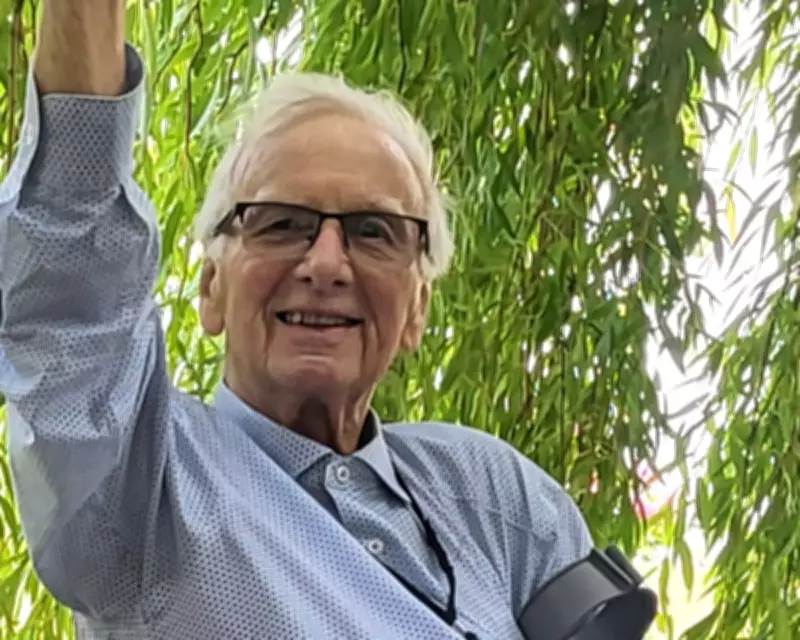
Remembering Michael Barton: The Architect of BBC Local Radio
The broadcasting world mourns the loss of Michael Barton, who has died at the age of 94. As the first and only controller of BBC Local Radio, Barton's visionary leadership shaped community broadcasting across England, leaving an indelible mark on the industry.
Pioneering Days at Radio Sheffield
Michael Barton's remarkable journey began in 1967 when he took the helm at BBC Radio Sheffield, the second station to launch in the BBC's groundbreaking local radio experiment following Radio Leicester. With no established programming template to follow, Barton faced the creative challenge of building a station from the ground up that truly reflected its community.
His innovative approach transformed local broadcasting. Barton introduced revolutionary formats including phone-ins and live magazine shows that engaged Sheffield residents directly. Perhaps most significantly, he championed ethnic-minority programming, launching Hindi-Urdu and Bengali language programmes to help immigrant communities navigate life in their new home city.

Building a National Network
The success of the initial eight stations under Barton's guidance led to authorisation for twelve more local stations. In 1974, his achievements were recognised with promotion to controller of BBC Local Radio in London, where he would spend thirteen formative years shaping the network's development.
Throughout his tenure, Barton fought tirelessly against what he termed "Toytown Radio" criticisms from sceptics within and outside the BBC. He successfully countered repeated threats of budget cuts, amalgamation with Radio 2, and even complete closure of the local radio network.
A Vision for Community Engagement
Barton's philosophy centred on genuine community representation. He encouraged local people to pursue their passions on air, whether that meant discussing fishing techniques or celebrating brass band traditions. This authentic approach created programming that resonated deeply with listeners.
Under his leadership, BBC Local Radio expanded significantly, with approval granted for twenty additional stations to cover most of England. Barton empowered his managers with considerable autonomy while nurturing talent that would eventually enrich all branches of BBC radio and television.
Early Life and Career Foundations
Born in Cottingham, East Riding of Yorkshire, to parents Marjorie and Harold Barton, an insurance inspector, Michael was educated at Hymers College in Hull. After working as a copywriter and completing national service in Germany, he joined the BBC's North Region in 1953.
There he developed his broadcasting skills as a studio manager, producer, and broadcaster while indulging his love for music and acting through leading roles in Brecht and Chekhov productions with Manchester University's stage society.
Later Career and Personal Life
1967 proved a significant year for Barton, marking both the launch of Radio Sheffield and his marriage to teacher Jill Nelson, whom he met through amateur dramatics. Their partnership lasted until Jill's death in 2022.
In 1986, Barton strongly opposed proposals to decentralise BBC Local Radio control to regional centres, arguing this would prove costly and subordinate local radio interests to regional television priorities. Though he lost this argument and his position, his passion for local broadcasting never diminished.
Barton remained with the BBC until 1991, enjoying retirement filled with travel, tennis, theatre, opera, play-reading groups, and musical pursuits as an accomplished pianist and choir singer.
He leaves behind sons Daniel and Chris, and two grandsons, George and Cory, along with a broadcasting legacy that continues to influence community radio across Britain today.