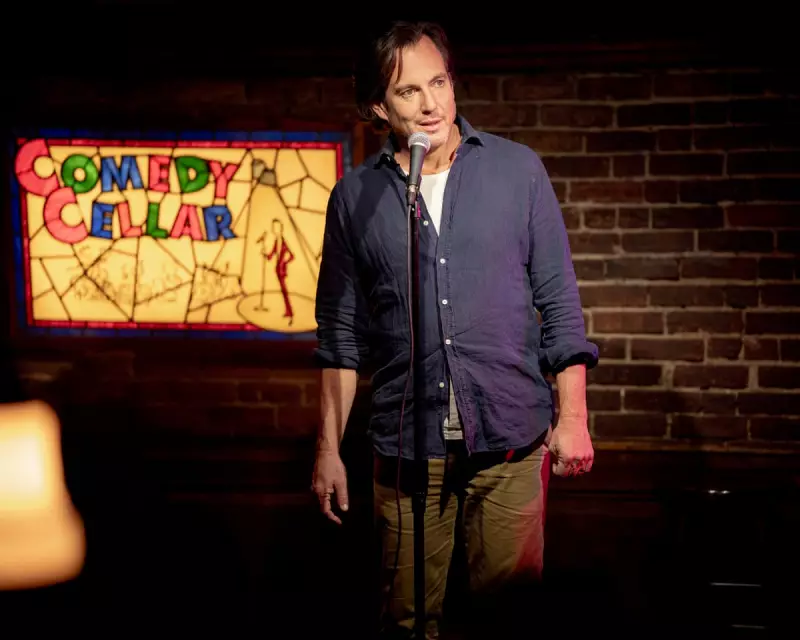
When it comes to origin stories, stand-up comedians often have some of the most unexpected and compelling tales. Far from a calculated career move, many find their way to the microphone through life's twists, turns, and personal challenges. A new wave of British comics has shared the unique motivations that spurred them to step into the spotlight for the first time, revealing journeys marked by resilience, rebellion, and raw human experience.
Aarian Mehrabani: A Lifesaving Decision After a Brain Tumour Diagnosis
For Aarian Mehrabani, the path to comedy emerged from a life-threatening crisis. After graduating from drama school in 2020, he co-founded FlawBored, a disabled-led theatre company. Their debut show, It’s a Motherf**king Pleasure, became a multi-award-winning satire, touring internationally after winning the Untapped award at the Edinburgh Fringe in 2023. However, in early 2024, his life took a dramatic turn.
Returning from an off-Broadway run in New York, Mehrabani fell gravely ill, leading to a shocking diagnosis: an 8cm brain tumour with a low survival prognosis. Facing five surgeries in five days, his thoughts turned to legacy. "I wanted to be remembered for my work," he recalls. In that moment, he resolved to pursue stand-up comedy upon recovery, seeing it as a way to leave an indelible mark. After surviving surgery and undergoing proton beam therapy and chemotherapy, he secured a development commission from the Lowry theatre. His first gig, amidst chemo sessions in London, was terrifying but transformative. Winning a "clap off" with a mini plastic trophy, he found his calling. "This is what I am meant to do," he says, now preparing for his Edinburgh Fringe debut in 2026 with a good prognosis.

Lee Ridley: Finding a Voice Through an iPad
Lee Ridley, known as Lost Voice Guy, never considered stand-up an option due to his inability to speak. A friend's casual suggestion changed everything, treating his disability as a minor detail rather than a barrier. "He talked about comedy as if it were something I might enjoy, not something I should be protected from," Ridley explains. His first gig in Sunderland used an iPad with an automated voice, and he quickly embraced the format, naming himself Lost Voice Guy to acknowledge the awkwardness. For Ridley, comedy flipped a lifetime of being spoken over, giving him control and a true voice for the first time.
Amanda Hursy: Proving a Boss Wrong in Glasgow
Amanda Hursy's comedy career began as an act of defiance. Growing up in Glasgow's working-class areas, she pursued corporate sales but was denied a promotion in favour of a relative of a board member. When her manager criticised her presentation skills, she signed up for a comedy course to prove him wrong. "In true Glaswegian style, I thought: 'Is that fucking right?'" she says. Her debut led to a paid gig within a year, and she soon performed for 3,000 people at Glasgow's Armadillo arena. Hursy sees humour as a vital tool for working-class communities, turning a one-off revenge act into a thriving career.
Lydia Cashman: A Fiver Bet and a Sexy Clown Costume
Lydia Cashman's entry into comedy started with a £5 bet with a friend to do a stand-up gig by the end of 2022. She naively signed up for The Gong Show at London's Comedy Store, performing on Halloween in a "sexy" clown costume. Unaware of the brutal format—where comics are gonged off for poor reception—she panicked and was removed after 46 seconds. "I realised nothing could be worse than that Gong Show," she reflects. Despite the humbling start, she continued gigging, while her friend still owes her the fiver.

Richard Stott: Impressing a Girl Leads to Edinburgh Fringe
Richard Stott never imagined himself as a comic until a relationship pushed him into it. In 2017, his girlfriend, a stand-up comedian, needed someone to share Edinburgh Fringe rent, so he agreed to perform a one-person show he hadn't written. His first gig at Comedy Virgins in London went well, earning him a plastic trophy, but the Fringe was a struggle with a poor venue and time slot. "It was completely naive... given my lack of experience, it was stupid," he admits. However, persistence paid off, and by 2019, he returned with a successful hour-long show, proving that starting for the wrong reasons can still build a career.
Noor Sobka: A Pact to Dump a Boyfriend
Noor Sobka was studying biomedicine, disillusioned with gastroenterology, when her best friend suggested stand-up. In exchange, Sobka demanded her friend dump an awful boyfriend. "She agreed to dump her boyfriend if I would try standup," she says. After a comedy workshop, she debuted at Manchester's Frog & Bucket, terrified but ultimately exhilarated. Her process remains the same: pre-gig dread, mid-gig joy, and post-gig dreams of arena tours. The boyfriend was dumped, and Sobka found her true calling.
The Bigger Picture: Comedy as a Catalyst for Change
These stories highlight how stand-up comedy serves as more than entertainment—it's a vehicle for personal transformation, empowerment, and connection. From health scares to social barriers, these comics turned adversity into art, demonstrating the universal appeal of laughter. As Bradley Cooper's film Is This Thing On? explores similar themes, releasing in the UK on 30 January, it underscores the enduring power of comedy to reshape lives and communities.