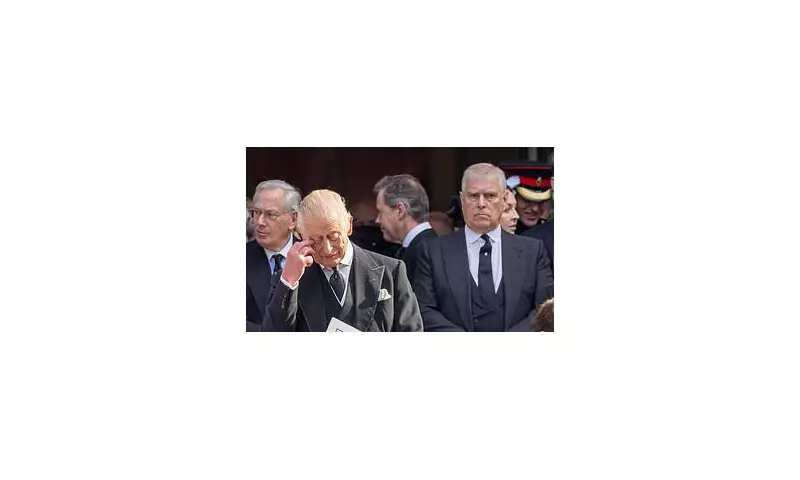
In a dramatic royal purge last autumn, King Charles III formally removed his younger brother from the Royal Family with ceremonial finality. The King's actions, announced with considerable pomp in November 2025, stripped Andrew Mountbatten-Windsor of his princely status, his Knight of the Garter honour, and his position within the royal hierarchy. Furthermore, he lost his long-term residence at Royal Lodge, the Windsor home he had occupied for twenty-two years.
The Title That Remains
However, the Daily Mail can exclusively reveal that the disgraced royal retains one significant vestige of his former life: the title Duke of York. Despite the comprehensive nature of the King's sanctions, this ancient ducal dignity persists. Andrew may still legally use the name, have it embossed on personal stationery, and display the associated coat of arms. Crucially, not even the monarch possesses the authority to unilaterally revoke this peerage title.
A 'Tinpot' Title with Potential Value
While the Duke of York title may carry diminished prestige within the United Kingdom following the Epstein scandal, experts suggest it could retain substantial value abroad. This enduring status may influence where the ousted royal chooses to spend his later years. The title's international cachet, particularly in regions that hold hereditary honours in high regard, could offer Andrew a pathway to a comfortable exile far from British scrutiny.

The Limits of Royal Authority
The official announcement from Buckingham Palace was unequivocal in its domestic consequences. Letters Patent declared that Andrew "shall no longer be entitled to enjoy the style, title or attribute of 'Royal Highness' and the titular dignity of 'Prince'." Subsequently, he was removed from the official roll of the peerage in the House of Lords, and his honorary military rank as Vice Admiral was rescinded. To the public, this appeared to render him a commoner.
Yet, according to Michael Rhodes, a leading authority on the peerage and editor of Peerage News, this administrative removal is misleading. "It's quite clear that Andrew's removal from the Roll was done to deceive and bamboozle the public," Rhodes states. He argues that the action creates the false impression that Andrew has lost his subsidiary titles as Earl of Inverness and Baron Killyleagh, and his principal title as Duke of York, when in fact he retains them all.
Parliamentary Action Required
Rhodes emphasises a critical constitutional point: a peerage cannot be removed by royal authority alone. Only an Act of Parliament can legally strip a title. He notes that not being listed on the official Roll does not equate to losing a title, citing numerous peers—including the Earl of Harewood and Lord Fermoy—who are not on the Roll but continue to use their titles legitimately.
"If Andrew were barred from styling himself Duke of York, then shouldn't fellow dukes like the Duke of Argyll and Duke of Atholl be similarly stripped of their titles?" Rhodes questions. He confirms that Andrew could continue to use a coat of arms, albeit one modified to reflect the loss of his royal princely status and Garter knighthood—a process he describes as achievable with relative ease.
Implications for Sarah Ferguson and Future Exile
The situation also clarifies the status of Andrew's ex-wife. As the legally divorced wife of a peer, Sarah Ferguson remains entitled to use the title Sarah, Duchess of York. With both holding these dubious but legally persistent titles, speculation mounts about their future. The Middle East, where royal titles command significant social weight regardless of scandal, emerges as a potential retirement destination.
Reports suggest that at the height of the Epstein controversy, Andrew and Sarah were offered a grand mansion in Abu Dhabi by Sheikh Mohamed bin Zayed Al Nahyan, reportedly in gratitude for Andrew's past work as a UK trade envoy. For a former playboy prince whose life in Britain seems increasingly untenable, the affluent Gulf states could provide a discreet and comfortable refuge.

Why the King Stopped Short
Observers believe King Charles, despite evident anger over the damage Andrew inflicted on the monarchy, deliberately avoided seeking parliamentary action to remove the dukedom. Initiating an Act of Parliament would open the Royal Family to potentially damaging debate in the Houses of Parliament—a scenario Buckingham Palace is keen to avoid. It would also evoke the precedent of 1917, when King George V stripped his German cousins of their British titles during World War I, a comparison the modern monarchy likely wishes to sidestep.
Michael Rhodes underscores the legal principle: "No peer has lost his title or Garter without having first been convicted of serious crime." Unless Andrew is convicted of a crime, the law currently protects his right to the Duke of York title.
A Remote Constitutional Possibility
In a final, startling revelation, it emerges that Andrew's fall from grace has not altered his place in the line of succession. He remains eighth in line to the throne. In the highly unlikely event of the deaths of both King Charles and Prince William within the next five years, Prince George would become monarch but could not exercise constitutional powers until he turns eighteen in 2031. The next eligible candidate to serve as Regent, Prince Harry, might be disqualified due to his residence abroad. This would leave Andrew, the Duke of York, as a potential Regent.
As Andrew prepares to leave Royal Lodge for a more modest life at Marsh Farm in North Norfolk, he departs with more than just memories. He retains a title, a distant claim to constitutional relevance, and the knowledge that, for now at least, not even the King can take everything away.