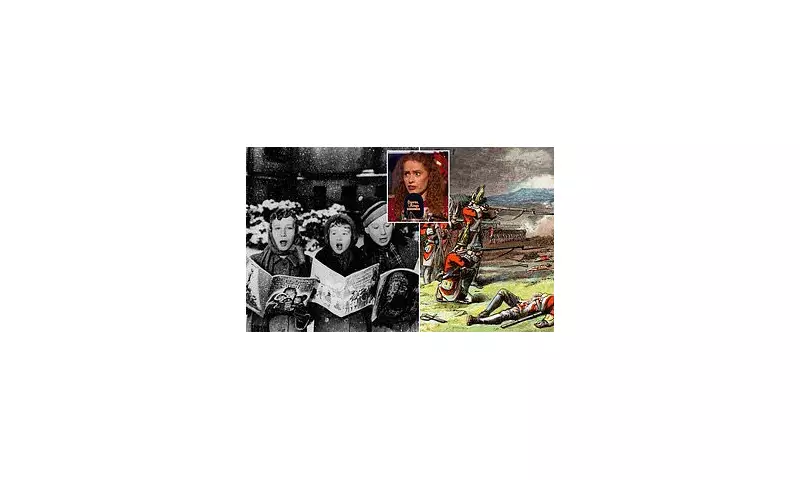
One of Britain's most cherished Christmas carols may be far more than a simple hymn. In a festive special of the Queens, Kings and Dastardly Things podcast, historians Kate Williams and Robert Hardman explore how royalty has shaped our holiday traditions, unveiling a startling theory about 'O Come All Ye Faithful'.
A Carol Coded With Rebellion
According to research discussed by Professor Kate Williams, the classic carol 'O Come All Ye Faithful' is now believed by some scholars to be a covert call to arms. The song, originally written in Latin around 1743 by English Catholic John Francis Wade, may contain a hidden plea for violent rebellion to restore the exiled Stuart monarchy to the British throne.
Wade, a music teacher and manuscript copier, fled to France after the crushing of the Jacobite rebellion in 1745. His beautifully crafted music books were often adorned with Jacobite symbols like roses and oak leaves. The theory, first proposed by a Durham University music professor in 1996, suggests the Latin lyrics hold a seditious double meaning.

The Hidden Message in the Latin Lyrics
The carol's key Latin phrase, 'Venite adoremus, Regem Angelorum' (Come and behold Him, born the King of Angels), is central to the argument. Historians posit that 'Angelorum' (of the Angels) could be a deliberate pun on 'Anglorum' (of the English). This would subtly change the call to 'Come and behold the King of the English.'
Furthermore, the opening line 'Adeste Fideles' (O come all ye faithful) is interpreted not as an invitation to all Christians, but exclusively to faithful Jacobites. Williams explains the intended message: "Effectively, Wade is saying - keep your iron chaps, we'll get those Stuarts back on the throne." The 'true King' referenced would be the Stuart exile, Bonnie Prince Charlie.
Historical Intrigue vs. Scholarly Debate
However, the compelling Jacobite theory is not without its critics. Significant problems challenge the narrative:
- The true authorship of the carol remains uncertain.
- There is no historical evidence that any contemporary Jacobite recognised the song as referring to their cause.
- The timeline is puzzling; creating a call to rebellion years before the major Jacobite uprising of 1745 seems counterintuitive.
Despite the debate, Williams notes a poignant historical twist: "Funnily enough, the Jacobites will get their wish this century. Prince William is partly Stuart through Princess Diana... So, we will have a Stuart King again." Whether a rebel anthem or a holy hymn, the carol's true origins may be lost to time, adding a layer of intrigue to every Christmas performance.
To delve deeper into how royalty has influenced festive traditions from carols to Christmas trees, you can listen to the full episode of Queens, Kings and Dastardly Things on Apple Podcasts, Spotify, YouTube, or wherever you get your podcasts.