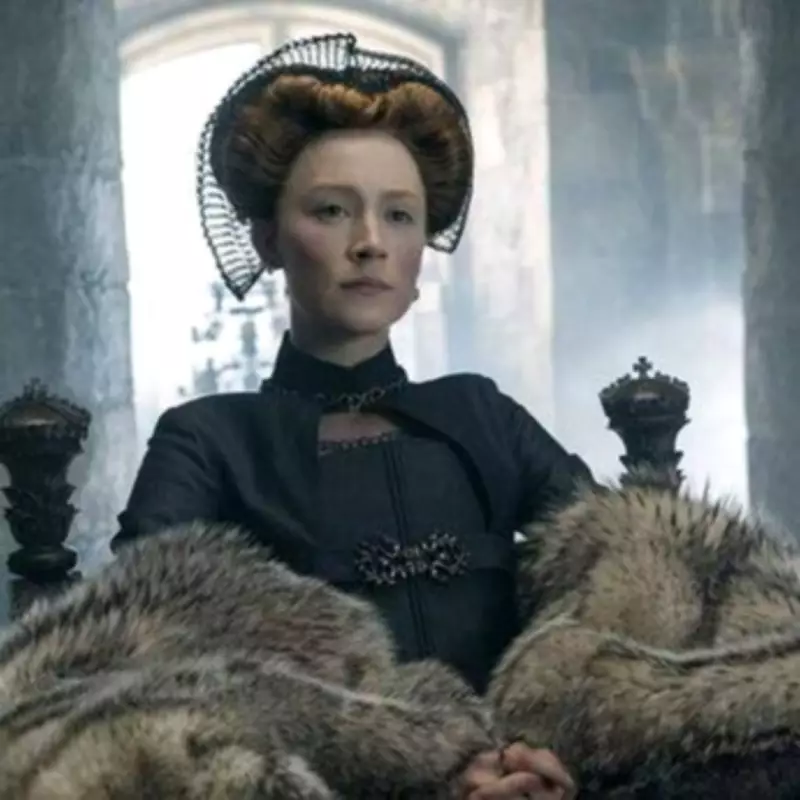
One of British history's most tragic and controversial monarchs is said to make an annual spectral return this month to a historic hotel constructed from the very stones of the castle where she met her brutal end.
The Tragic Execution That Echoes Through Centuries
Mary, Queen of Scots faced her execution at Fotheringhay Castle in Northamptonshire on February 8, 1587, following a reluctant death sentence authorised by her cousin, Queen Elizabeth I. The English monarch signed the warrant for Mary's execution for treason after she became implicated in a plot to overthrow Elizabeth, with spymaster Francis Walsingham intercepting the Scottish queen's correspondence with conspirators.
Despite clear evidence of her involvement, Elizabeth I feared establishing a dangerous precedent by executing another anointed monarch, recognising that such an action could potentially justify similar treatment against herself in future political turmoil.

Architectural Connections to a Doomed Queen
The legend of Mary Queen of Scots has never faded, with annual spectral appearances reported at The Talbot Hotel in Oundle, Northamptonshire, around the anniversary of her death. Oundle, positioned just three miles from Fotheringhay, is an ancient market town featuring a Grade I-listed building with deep historical connections to the ill-fated monarch.
An inn has occupied the hotel's location since the 1500s, spanning the entire Tudor period, though the current structure visible on the town's high street was reconstructed in 1626. Numerous historical accounts suggest that masonry from the demolished Fotheringhay Castle was incorporated into the hotel's construction.
Local legend maintains that the bedroom panelling, great horn window, and staircase all originate from the historic castle, which also served as the birthplace of King Richard III. Today, Fotheringhay Castle exists only as a grassy mound after falling into disuse and being completely dismantled in 1628.
Paranormal Phenomena and Historical Trauma
Marian Pipe, author of Northamptonshire Ghosts and Legends, has documented numerous sightings at The Talbot Hotel. "The tragic queen is said to haunt the upper stairs and two of the bedrooms at the top," Pipe explained. "Many people have seen the ghostly figure of a woman in a long black dress, standing at the foot of a bed in one of the rooms. She is sometimes seen gazing sadly through the mullioned windows on the stairs."
Paranormal investigators frequently propose that the trauma of Mary's final walk to execution became somehow 'recorded' within the physical materials of the staircase, which were subsequently transplanted into the hotel during its reconstruction. This theory attempts to explain why the haunting persists centuries after the original events.
Recurring Spectral Manifestations
Over the centuries, witnesses have reported several consistent paranormal phenomena at the historic establishment:
- Guests in the designated 'Mary Queen of Scots Room' at the top of the stairs frequently report hearing persistent, mournful sobbing through the walls that continues for hours
- Sleeping visitors on that floor have been awakened by a woman's weeping that seems to originate from no visible source
- The most famous apparition involves a ghostly figure in a long black dress - the colour Mary wore to her execution, though she famously stripped to blood-red undergarments on the scaffold itself
- Manifestations often occur following building alterations or renovations within the historic structure
An intriguing physical remnant exists on the staircase's bannister: a distinct indentation in the wood that legend attributes to Mary's heavy signet ring as she gripped the rail to steady herself during her final walk to execution. Further adding to the macabre history, local tradition claims that Mary's executioner lodged at The Talbot the evening before performing his grim duty, reportedly consuming pigeon pie during his stay.
The enduring legend of Mary Queen of Scots' haunting at The Talbot Hotel continues to fascinate historians, paranormal enthusiasts, and visitors to Northamptonshire, preserving the memory of one of Britain's most tragic monarchs through architectural remnants and spectral sightings that bridge four centuries of history.