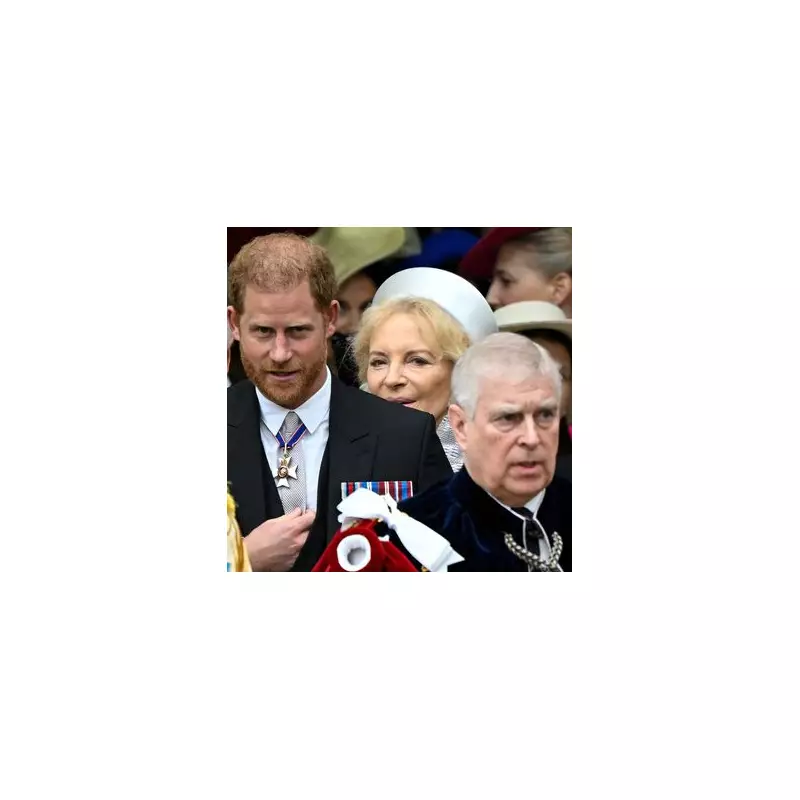
A leading royal expert has issued a stark warning to the House of Windsor, cautioning that its handling of the Prince Andrew and Prince Harry sagas risks creating a damaging public perception of favouritism towards the disgraced Duke of York.
The Andrew Problem: A Reputational Quagmire
The controversy surrounding Prince Andrew has reached a new nadir, with recent polls indicating a mere three percent of the British public now view King Charles's younger brother favourably. The ongoing fallout from his and Sarah Ferguson's connections to the convicted sex offender Jeffrey Epstein, detailed in the released Epstein Files and recent biographies, has cemented his status as a major liability.
In response, King Charles has taken decisive, some say ruthless, action. Andrew was stripped of his royal and military titles in a move widely seen as an attempt to protect the monarchy from further reputational harm. The accompanying palace statement notably expressed support for "survivors of any and all forms of abuse", a gesture welcomed by observers like author Andrew Lownie.

Despite this ostracism, Andrew has not been left entirely destitute. He is poised to leave his long-term Windsor home, Royal Lodge, for a reportedly smaller property on the King's private Sandringham Estate, a move described as a "very neat solution".
The Sussex Contrast: Eviction vs. Accommodation
This provision of a royal home for Andrew stands in stark contrast to the treatment of the Duke and Duchess of Sussex. Dr. Tessa Dunlop, writing in the Independent, highlights the problematic optics: Prince Harry and Meghan were effectively evicted from their UK base, Frogmore Cottage, in 2023, shortly after the publication of Harry's memoir, Spare.
Harry himself noted the disparity in his book, expressing bewilderment that his police protection was removed in 2020 while Andrew retained his, despite the serious sexual abuse allegations against his uncle. "People may have a lot of grievances towards us, but sexual offences weren't one of them," Harry wrote.
This contrasting approach, Dr. Dunlop argues, creates a perilous narrative for the monarchy as the Sussexes plan a potential UK return for events like next year's Invictus Games in Birmingham. "Going forward, the House of Windsor cannot be seen to favour Andrew over not-so-bad Harry," she asserts.
A Shift in Public Perception?
While the Sussexes' popularity in the UK has also waned—with Meghan's approval rating recorded at just 19 percent—the expert suggests Andrew's dramatic fall has inadvertently cast them in a "more benign light". In today's climate, the transgressions of a former actress and a royal who stepped back seem less severe compared to associations with a convicted paedophile.
The monarchy now faces a delicate public relations tightrope. It must maintain a firm, visible distance from Andrew while navigating its fractured relationship with Harry and Meghan, ensuring its actions are not perceived as punishing the latter more harshly than the former. The coming months, particularly any Sussex visit, will test whether the Firm can successfully manage these "challenging optics" and protect the institution's cherished reputation.