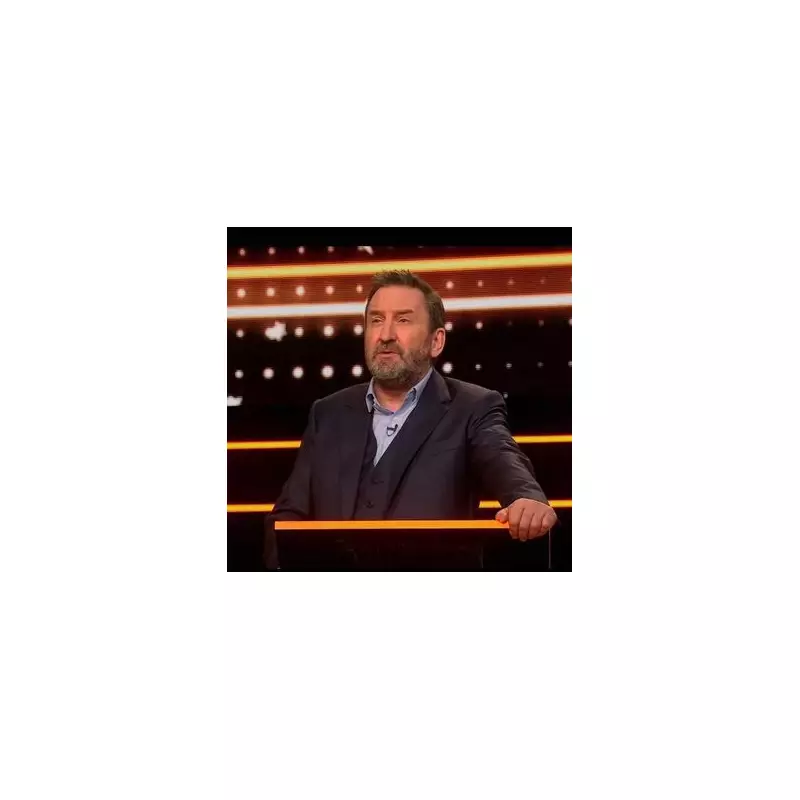
ITV's popular quiz programme The 1% Club is renowned for its challenging brainteasers, but a recent episode has left audiences perplexed by what appeared to be a straightforward question. Fans have identified a cunning linguistic trick embedded within the query, turning an apparently easy puzzle into a source of widespread confusion and debate.
The Devious Wording of a Seemingly Simple Puzzle
Hosted by the quick-witted comedian Lee Mack, The 1% Club employs a unique format where questions are ranked by difficulty based on the percentage of the population expected to answer them correctly. The show begins with accessible puzzles that 90% of people should solve, gradually progressing to the notoriously difficult 1% questions that stump the vast majority of contestants.
However, a question from a recent broadcast has proven particularly divisive. The official The 1% Club social media account shared the puzzle over the weekend, presenting an image of nine national and regional flags labelled A through I. The flags represented Algeria, Trinidad and Tobago, the United Kingdom, Scotland, Aland (an autonomous region of Finland), Bangladesh, Japan, Senegal, and Tanzania.

The Question That Caused the Confusion
The quiz question posed to viewers read: "If you take away all the flags that have stars, circles, red crosses, black stripes, and the colour green, which one is left?" On the surface, this directs participants to eliminate flags based on specific design elements, ostensibly leaving a single correct answer.
Following the logic intended by the show's producers, the solution is the flag of Scotland. This flag does not contain stars, circles, a red cross, black stripes, or the colour green, thereby satisfying all the stated conditions for remaining after the elimination process.
Viewers Uncover a Potential Linguistic Loophole
Despite the show's official answer being Scotland, sharp-eyed fans in the comments section highlighted a critical nuance in the question's phrasing. The use of the conjunction "and" instead of "or" introduces a significant ambiguity.
As several viewers pointed out, interpreting the question literally means removing only those flags that possess all the listed features simultaneously: stars, circles, red crosses, black stripes, and the colour green. Since none of the nine flags displayed contain every single one of these elements, an argument can be made that, under this strict reading, no flags should be eliminated, meaning all of them remain.
One social media user explained the pedantic perspective: "All of them because none of them have stars, circles, red crosses, black stripes and the colour green." Another added, "Being a pedant, isn’t the answer all of them, as the question lists all the options and the word AND, which suggests you need to remove all flags that have all those things."
The Show's Intended Answer Versus Viewer Interpretation
This revelation has sparked a lively discussion about quiz design and the precision of language. While the programme's intended answer remains the flag of Scotland, the alternative interpretation based on the wording's technicality presents a valid, if pedantic, counter-solution. It underscores how a single word choice can dramatically alter the perceived correctness of an answer in a high-stakes quiz environment.
The incident serves as a reminder of the clever traps often set by shows like The 1% Club, where even seemingly simple questions can contain hidden complexities. For those who deduced Scotland as the answer, congratulations are in order for following the show's intended logic. Yet, for the linguistically meticulous viewers, the debate over the "true" answer, fueled by that one devious trick, continues.