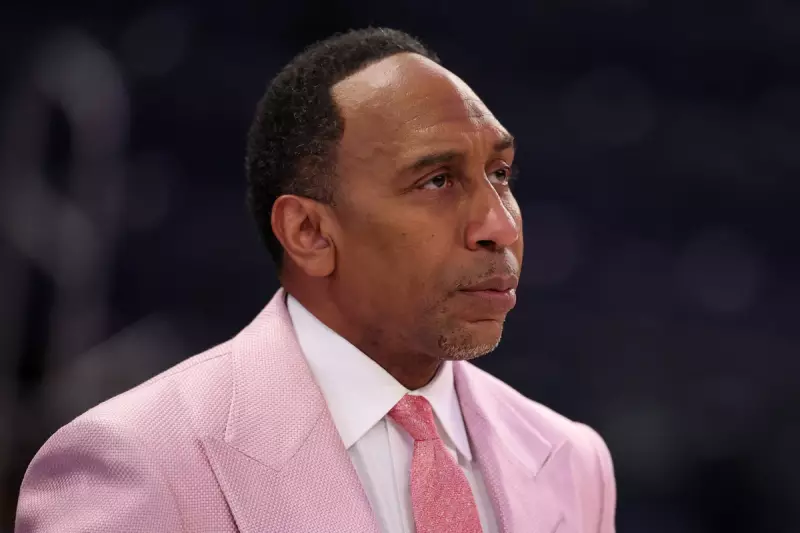
In a live television moment that has since captivated sports and media audiences, prominent ESPN commentator Stephen A. Smith committed a significant on-air blunder, mistakenly naming the late conservative activist Charlie Kirk instead of Houston Texans wide receiver Christian Kirk.
The On-Air Mix-Up
The incident took place on Wednesday, 14 January 2026, during an episode of ESPN's flagship debate show, First Take. Smith was analysing the Houston Texans' playoff victory over the Pittsburgh Steelers, specifically highlighting the impressive performance of player Christian Kirk. However, in a slip of the tongue, Smith referred to him as "Charlie Kirk."
The error was swiftly pointed out by the show's host, Shae Peppler Cornette, who prompted Smith for a correction. Smith immediately acknowledged the mistake live on air, offering an apology for the confusion. The gaffe stemmed from a discussion about Kirk's pivotal role in the Texans' win, making the mistaken identity all the more jarring for viewers familiar with American football.

Rapid Viral Reaction and Context
The clip of Smith's verbal stumble spread rapidly across social media platforms, garnering significant attention. Many viewers found humour in the mix-up, given the starkly different public profiles of an NFL athlete and a polarising political commentator. However, the mistake also drew criticism from some quarters, who questioned the analyst's focus.
The blunder inadvertently brought to light Smith's own past commentary. It recalled his previous remarks concerning the assassination of Charlie Kirk and even sparked renewed discussion about Smith's own hinted-at political aspirations. This layered context added a deeper dimension to what might otherwise have been a simple slip of the tongue, connecting the worlds of sports broadcasting and political discourse in an unexpected way.
Implications for Broadcast Media
This incident underscores the high-pressure, live nature of sports broadcasting, where split-second mistakes can become global talking points. For a figure as prominent as Stephen A. Smith, whose opinions carry weight with millions, such errors are magnified. The event serves as a reminder of the intense scrutiny faced by media personalities and the rapid pace at which content can circulate online, often detached from its original context.
While Smith corrected himself, the viral nature of the blunder demonstrates how a momentary lapse can dominate the conversation around a major sporting event. It highlights the ever-present challenge for analysts to maintain precision under pressure, especially when discussing subjects that intersect with broader cultural or political narratives.