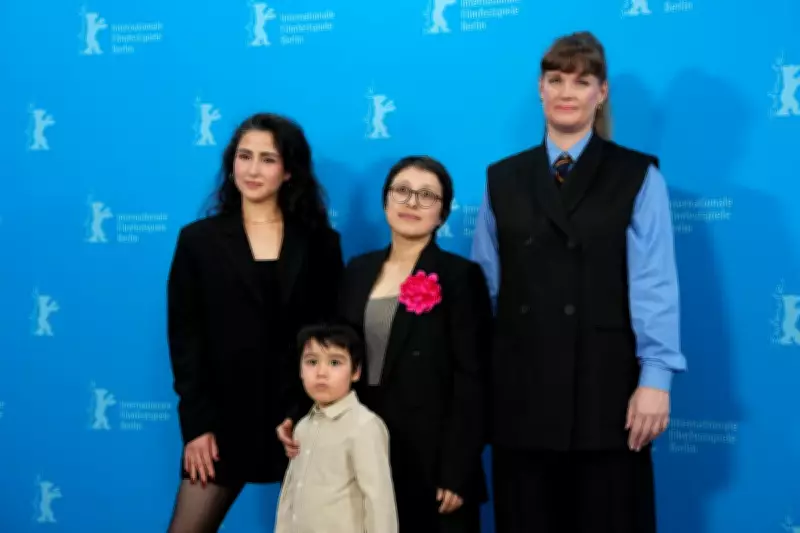
Berlin Film Festival Highlights Love in Unexpected Settings
The 76th Berlin Film Festival opened with a surprising focus on romance emerging from regions typically associated with conflict and political turmoil. Two standout films, an Afghan political rom-com and a French-Lebanese production about a Palestinian widow, use love stories to humanise characters and challenge stereotypes, offering audiences a glimpse into universal emotions beyond the headlines of war.
Afghan Rom-Com Breaks Taboos with Historic On-Screen Kiss
"No Good Men," directed by Shahrbanoo Sadat, premiered at the festival and is noted for featuring what is believed to be the first ever on-screen kiss in an Afghan movie. Set in a Kabul newsroom in 2021, as the Taliban prepared to return to power, the film follows camerawoman Naru, who is navigating a separation from her cheating husband while fighting for custody of her young son and building a career in a male-dominated, patriarchal society.
Sadat revealed that the kissing scene proved so controversial that it cost her the lead actor three weeks before shooting began, forcing her to step into the role herself. "The joke was everyone who wanted to play Naru, they didn't want to do the kissing, I wanted to do the kissing, I didn't want to do the rest of the film," she explained.

The director faced additional resistance from funders who questioned the appropriateness of supporting a rom-com given Afghanistan's political situation. Sadat received multiple letters of complaint, to which she responded with frustration. "For me it was like, wait a minute, what? I feel offended that you feel offended about my project," she said. "I'm coming from a war country, and this is my way of expressing myself, to go through the oceans of unprocessed feelings, not only personal but also historical and also social, and trying to make a lighter film."
Sadat emphasised that her goal was to humanise Afghan characters and tell a universal story rooted in local context. She dedicated the film to the "good men" in Afghanistan who stand by women despite patriarchal privileges. "No matter what, they are standing next to the women in their life, I really wanted to tell them, I see you, I admire you, I respect you," she said, adding emotionally, "Now I'm going to cry... because women's situation is not going to change alone."
Palestinian Widow Finds Love in Beirut in Feminist Tale
Elsewhere at the festival, French-Lebanese filmmaker Danielle Arbid presented "Only Rebels Win," which opens the Panorama section. The film tells the story of a Palestinian widow who finds romance in Beirut with an undocumented Sudanese man forty years her junior, using humour and love to address themes of exile and identity rather than focusing solely on war and unrest.
Arbid described the film as feminist, challenging societal norms about age and love. "It's the idea that women can also fall in love at 70. It's not only old rich men who can fall in love with young women. ... This is my way of thinking. I hope we are not out of the market," she joked. While her films often face criticism in Lebanon for sexual references, this one contains no explicit scenes, though the mere concept of the relationship is considered provocative.
Starring "Succession" actor Hiam Abbass as Susanne and Amine Benrachid, a Sudanese-Chadian refugee, as Osmane, the film benefits from authentic performances. Abbass, a Palestinian living in exile in France for thirty-seven years, noted the significance of such stories at the festival. "We're a mixture of a lot of things, and to the contrary of what a lot of people think, we are very rich, but not in the sense of money. We're very rich because we are very rich in humanity," she said.
Abbass added that these narratives resonate universally. "Today if we talk about things that happen in our own country, our language is very universal and basically what we say of the world corresponds to what a lot of people live today, and what a lot of people suffer from." Arbid reflected on her own teenage years in Lebanon, stating, "I was obsessed about falling in love with the neighbour. I wouldn't care. And I wanted the West to see me as a human being. I want to make the characters in my films human enough that you can love them and feel you can be like them."

Together, these films at the Berlin Film Festival demonstrate how romance can serve as a powerful lens to explore complex social and political issues, offering hope and humanity in the face of adversity.