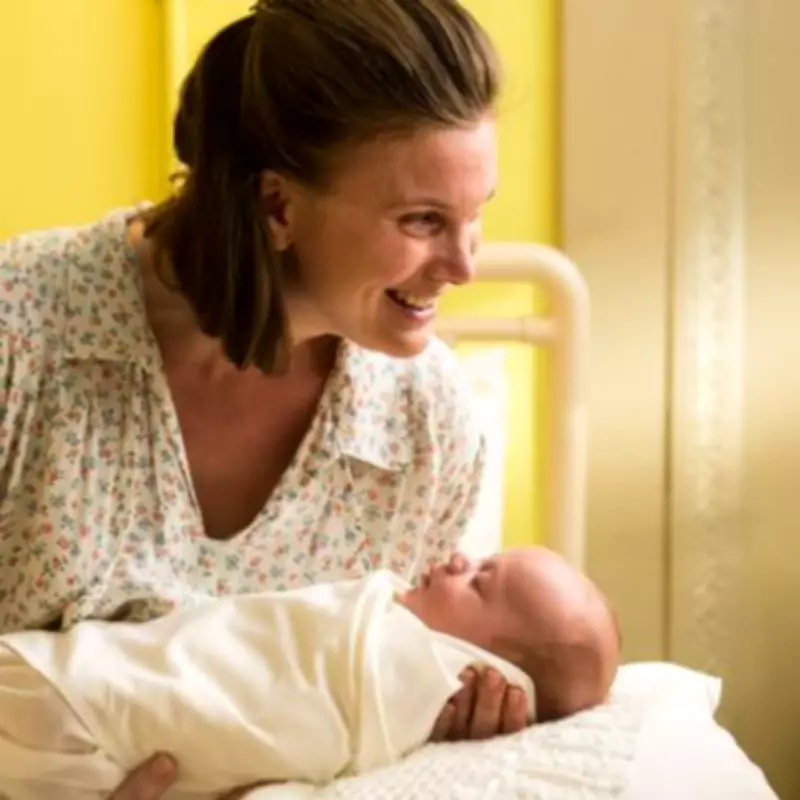
The acclaimed BBC period drama Call the Midwife is set to revisit one of its most emotionally charged and historically significant storylines this weekend, as the Mullucks family returns to our screens. A decade has passed since the heartbreaking birth of baby Susan Mullucks, whose story brought the Thalidomide scandal into millions of living rooms.
A Decade of Development for the Mullucks Family
In the upcoming episode airing Sunday, March 1, viewers will be reunited with Rhoda and Bernie Mullucks, and their now ten-year-old daughter Susan. This return marks a poignant full-circle moment for a narrative that first unfolded in 2016. In that original storyline, Rhoda Mullucks, portrayed by Liz White, gave birth to Susan after being prescribed the drug Thalidomide by Dr. Turner, played by Stephen McGann.
The birth was immediately traumatic, as nurses discovered the newborn was struggling to breathe and had been born without properly developed arms and legs due to the medication's devastating effects. The initial shock and grief experienced by parents Rhoda and Bernie, played by Chris Reilly, formed the core of a deeply moving plot about parental love, adaptation, and societal prejudice.

The Long Road of the Thalidomide Storyline
The show's engagement with the Thalidomide tragedy did not end with Susan's birth. The narrative was revisited in series six, catching up with the family eighteen months later. This episode showed Dr. Turner helping to fit young Susan with prosthetic limbs and the family preparing for her to start nursery school. It poignantly depicted Bernie's profound struggle to accept his daughter's condition, a journey that saw him evolve from initial rejection and cruel language to becoming an over-protective father fearful of the world's cruelty.
The family made another appearance in 2022, allowing viewers to see Susan as a young girl and explore the ongoing impact on her parents' mental health as they welcomed another child into their family. This consistent follow-up has made the Mullucks' story one of the drama's most sustained and authentic character arcs.
Heidi Thomas on the Importance of the Story
Series creator and writer Heidi Thomas has consistently highlighted the Thalidomide plot as one of the programme's most vital contributions. In a recent statement, she reflected on its significance, calling it "one of our most important storylines." Thomas emphasized the profound responsibility felt by the production team to handle the subject with care and accuracy, noting the show's relationship with Thalidomide survivors.
"When it became known publicly that we were going to do the Thalidomide story, I think it made me realise in a way the power of Call The Midwife," Thomas explained. "Also, the responsibility of Call The Midwife, because we were expected to do this story well by the people whose story we were telling. The Thalidomide community have an informal saying - nothing about us without us."
One of Television's Most Harrowing Scenes
The Thalidomide narrative also produced one of the series' most unforgettable and devastating moments. In a previous season, Sister Julienne, portrayed by Jenny Agutter, discovered a Thalidomide baby abandoned on a draining board next to an open window. Told the child had no hope, Sister Julienne defied this grim prognosis by tenderly picking up the newborn, wrapping it in a blanket, and cradling it while offering a blessing.
This scene, which Thomas cites as one of her most memorable in terms of performance, laid bare the societal neglect and medical fatalism faced by many Thalidomide children and their families. It underscored the show's commitment to giving voice to historical injustices with compassion and dramatic force.
The Legacy of the Thalidomide Scandal
By weaving the Mullucks' personal story into the broader historical context, Call the Midwife has educated a new generation about the Thalidomide scandal, which affected over 10,000 babies. The drama first introduced the topic at the end of its fourth series and has returned to it periodically, ensuring the issue remains in the public consciousness.

The return of the Mullucks family a decade on promises to be another powerful chapter. It offers a chance to reflect on Susan's journey, her family's resilience, and the ongoing relevance of a medical tragedy that changed drug regulation forever. For fans of the series, it represents a key moment in the show's final episodes of the current series, blending historical drama with timeless themes of family, adversity, and hope.