David Lynch's Unique Filmmaking Style Would Face Modern Challenges
According to close collaborators, the distinctive cinematic vision of David Lynch would encounter significant difficulties emerging in today's Hollywood landscape, primarily due to evolving audience attention spans and the pervasive influence of social media on concentration.
The Digital World's Impact on Cinematic Storytelling
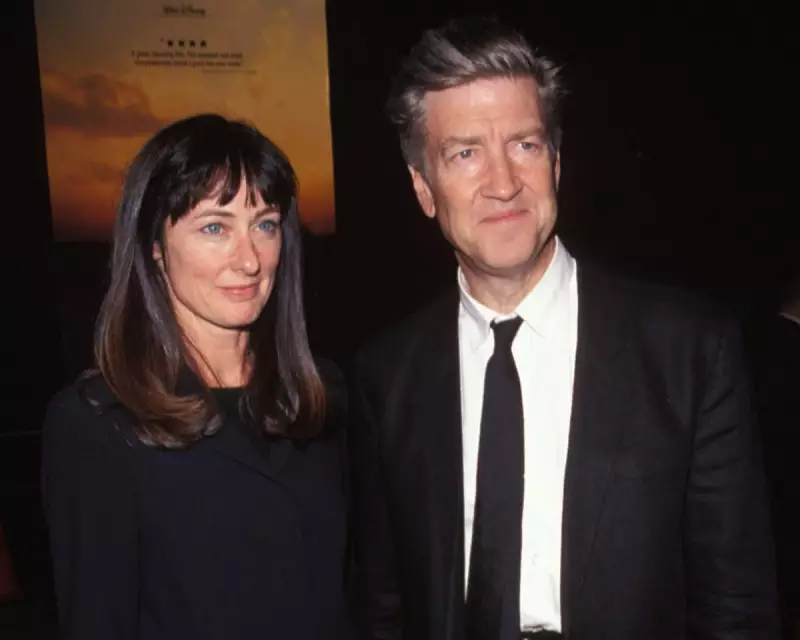
Mary Sweeney, who worked extensively with Lynch as an editor and was briefly married to the director, offered particularly poignant insights. She suggested that Lynch's unique approach to storytelling might struggle to find its audience in the contemporary digital environment.
"He had his own logic and his own way of telling stories: it was very funny, very scary and deeply connective in terms of psychology and emotion with the audiences," Sweeney explained. "I think that the dissipation of our concentration and the way the digital world has permeated people's lives whether educationally, emotionally, socially, or sexually – that is really functionally different in terms of our cognition."

Sweeney expressed uncertainty about whether Lynch, who passed away in January 2025 and would have celebrated his eightieth birthday recently, could have succeeded with his distinctive style if starting his career today. She emphasized that appreciating filmmakers like Lynch requires audiences to reconnect with their "analogue life and their sensory life" rather than remaining immersed in digital experiences.
A Celebrated Career of Distinctive Vision
Lynch established himself as one of cinema's most original voices with his surreal debut feature Eraserhead, followed by numerous acclaimed works including Blue Velvet, Wild at Heart (which won the Palme d'Or at Cannes in 1990), and the television phenomenon Twin Peaks.
His career earned him three Oscar nominations for Best Director and an honorary lifetime achievement Academy Award in 2019. Despite this recognition, Lynch's work sometimes divided critics – most notably when Gene Siskel and Roger Ebert gave Lost Highway their infamous "two thumbs down" rating, which Lynch ironically used on promotional posters around Los Angeles.
The Enduring Mystery of Lynchian Cinema
Sabrina Sutherland, who collaborated with Lynch on Twin Peaks and Inland Empire, highlighted the deliberate ambiguity that characterized his work. "David left it open to the viewer to come up and formulate their own ideas, and whatever it means to you is the meaning of the piece," she explained. "Nobody has the answer."
This openness to interpretation created devoted followings who obsessively analyzed his films, seeking to "solve" their complex puzzles – an engagement style that contrasts sharply with today's faster-paced media consumption habits.
Contemporary Cinema Context
The reflections on Lynch's potential challenges in the modern era coincide with broader industry conversations about film length and audience engagement. Clare Binns, creative director of Picturehouse Cinemas, recently encouraged directors to consider shorter films to create better audience experiences, noting that recent critically acclaimed works have frequently exceeded three hours.
Meanwhile, Lynch's cinematic legacy continues to be celebrated through retrospectives like the British Film Institute's David Lynch: The Dreamer season, featuring screenings of Lost Highway, Inland Empire, and Eraserhead.
Sweeney shared a personal memory from shortly before Lynch's death from emphysema, revealing that during a Zoom call he acknowledged her attempts to encourage him to quit smoking. "You know, you tried to make me stop and I wouldn't listen to you," he told her – a moment she described as heartbreaking.
Beyond his filmmaking, Lynch was known as an advocate of transcendental meditation, establishing the David Lynch Foundation for Consciousness-Based Education and World Peace in 2005. His multifaceted career and distinctive artistic vision continue to spark discussion about how such unique creative voices might navigate today's rapidly changing media landscape.