Leonardo DiCaprio's Third Act: How Hollywood's Former Heartthrob Found His Sweet Spot
In a fortuitous twist of cinematic timing, the first two acts of Leonardo DiCaprio's illustrious career are currently back on the big screen. The 30th anniversary reissue of Romeo + Juliet (1996) runs alongside a commemorative IMAX presentation of The Revenant (2015), offering audiences a vivid retrospective of the actor's journey. Yet, as these films remind us of his star-making and Oscar-winning peaks, DiCaprio himself has quietly entered a third, more confounding, and infinitely more interesting phase of his professional life.
The Oscar Night That Forgot a Star
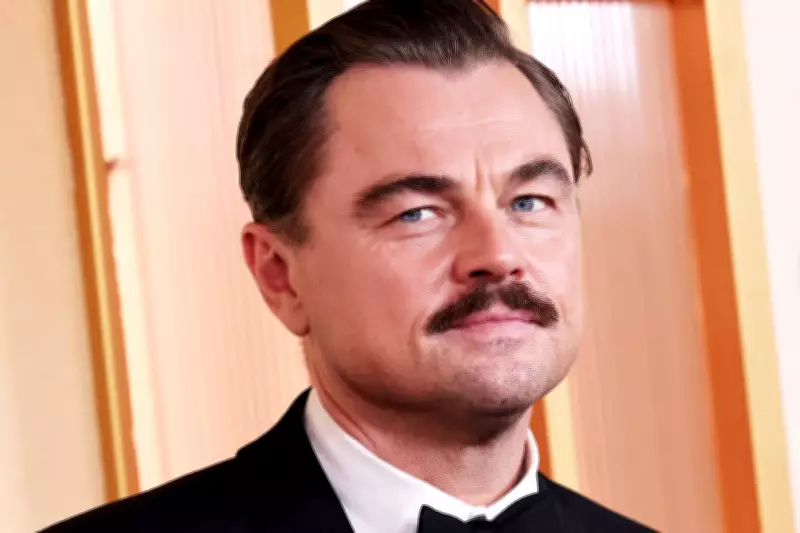
The recent Academy Awards ceremony presented a stark tableau of Hollywood's brutal hierarchy. In that Darwinian environment, where seat numbers dictate status and the envelope's opening divides winners from losers, Leonardo DiCaprio found himself in an unfamiliar position. As the headline star of Paul Thomas Anderson's critically acclaimed One Battle After Another, he had little to do but sit, clap, and occasionally twitch his matinee idol moustache. Even his closest collaborator seemed to overlook him.
"I really blew it when I won the Best Director award," Anderson confessed as the ceremony concluded. "I forgot to thank my cast." For DiCaprio, this oversight mirrored his role in the film itself, where he portrayed Bob Ferguson—a forgettable, paunchy, middle-aged dad who shuffles through scenes in a plaid dressing gown, seemingly just rolled out of bed.
From Leading Man to Master of Subtlety
F. Scott Fitzgerald famously declared there are no second acts in American lives, but DiCaprio is now well into a third that defies easy categorization. This phase is characterized by a deliberate shift from traditional leading roles to more nuanced, often peripheral characters. In Quentin Tarantino's Once Upon a Time in Hollywood (2019), he played second fiddle to Brad Pitt. In Martin Scorsese's Killers of the Flower Moon (2023), he served as Robert De Niro's half-bright lapdog. Even in Don't Look Up (2021), where he's officially the star, he disappears into an ensemble cast.
Bob Ferguson, therefore, is no outlier. He represents DiCaprio's latest creation in a series of C-list characters inhabiting an A-list actor's body—a humdrum supporting player in the form of a leading man. This strategic pivot involves playing flawed stumblebums leading unheroic, small lives, a high-risk approach that must give his agent conniptions. Stars who go unnoticed rarely remain stars for long, yet DiCaprio's reputation paradoxically grows stronger each year.
The Evolution of an Actor
Revisiting Romeo + Juliet and The Revenant today highlights the immense distance DiCaprio has traveled. He's a more interesting actor than the fresh-faced lover who swaggered through Verona Beach, and arguably better than the dogged performer who muscled through the Dakota mountains. DiCaprio's boyish prettiness lasted a little too long, forcing him through an awkward adolescence on screen, struggling to convince as a foursquare adult in films like Body of Lies (2008) and J Edgar (2011).
Now 51, he works at an unhurried, almost glacial pace—eight films in ten years, where most actors manage twenty. He's drawn to characters that allow him to be sombre yet playful, prosaic yet mysterious. By the end of One Battle After Another, Bob Ferguson accepts his role as a semi-retired legend, happy to pass the torch. One might wonder if DiCaprio views himself similarly—a Gen-X relic applauding from the sidelines as 39-year-old Michael B. Jordan takes his crown.
A Different Game Entirely
But that interpretation feels like a stretch. More likely, DiCaprio is lying in the long grass, weaponizing his perceived decline until it no longer feels like a decline at all. He didn't lose the Best Actor Oscar for the simple reason that he was never really in the hunt; he was off playing a different game of his own devising. The fact that he made his own director forget him speaks volumes about the power of Bob Ferguson and the skill of the actor who brought him to life.
Third-act DiCaprio has found his sweet spot. He's no longer the man of the moment, and he's a better actor for it. In embracing characters that are simultaneously central and peripheral, he has crafted a late-career narrative that is far more confounding and interesting than it gets credit for. As Romeo + Juliet returns to cinemas on 27 March, we're reminded not just of where he started, but of the intriguing path he's chosen to follow.