Emerald Fennell's Wuthering Heights Adaptation Criticised as Hollow Misfire
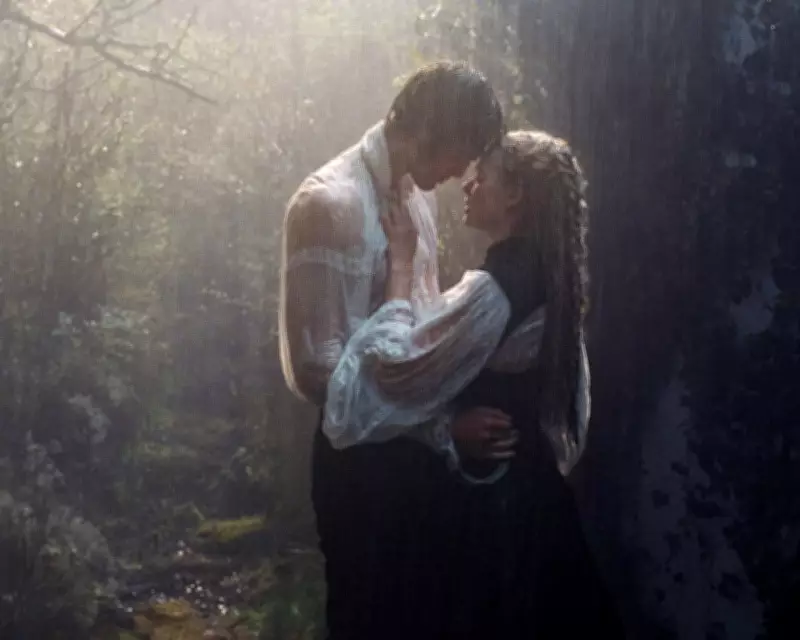
Emerald Fennell's highly anticipated adaptation of Emily Brontë's classic novel Wuthering Heights has been met with significant criticism, described as an emotionally hollow and camp misfire that misuses its star-studded cast. The film, featuring Margot Robbie as Cathy and Jacob Elordi as Heathcliff, transforms the windswept Yorkshire moors into what critics call a twenty-page fashion shoot of relentless silliness.
Star-Studded Cast Underutilised in Campy Reimagining
Margot Robbie's portrayal of Cathy Earnshaw presents her as a primped belle who quivers in the presence of Heathcliff, played by Jacob Elordi as a moody, long-haired outsider reminiscent of Charles Manson rather than a romantic hero. The adaptation includes bizarre elements such as Cathy secretly heading to the moor for self-pleasuring, while Heathcliff's character undergoes a dramatic transformation later in the film, sporting a shorter hairstyle and perpetually damp gossamer-thin shirt.
Martin Clunes nearly steals the entire film as Cathy's roistering, twinkly-eyed father, Mr Earnshaw, while the character of Hindley Earnshaw has been completely eliminated from the narrative. Fennell reassigns Hindley's ruinous boozing and gambling habits to the father character and follows traditional adaptation practice by omitting the second half of Brontë's novel concerning the next generation of characters.

Controversial Creative Choices and Narrative Simplifications
The film makes several controversial creative decisions, including erasing the issue of Heathcliff's dark skin from the original text and presenting the title in inverted commas, suggesting a postmodern irony that critics find pointless. The adaptation begins with young Cathy Earnshaw, played by Charlotte Mellington, as a pert miss indulged by her father, who rescues a young scallywag from Liverpool's streets and adopts him as Heathcliff.
As adults from different social classes, Cathy and Heathcliff struggle to consummate or acknowledge their feelings, leading Cathy to marry wealthy neighbour Edgar Linton, played by Shazad Latif. Heathcliff storms off heartbroken, returns wealthy years later, and engages in a passionate affair with Cathy before spitefully marrying Edgar's sister Isabella, portrayed by Alison Oliver.
Structural Changes and Character Reinterpretations
Fennell makes light of Heathcliff's cruelty to Isabella by casting her as a smirkingly consenting submissive, while the crucial character of housekeeper Nelly Dean, played by Hong Chau, undergoes significant reinterpretation. In Brontë's original, Nelly serves as English literature's queen of unreliable narrators and the deadpan witness-instigator of the central catastrophic misunderstanding that destroys the main characters' happiness.
Interestingly, Fennell does include a scene where Cathy confronts Nelly about this narrative role, though the film eventually descends into what critics describe as a tsunami of tears presented in an exhaustingly Baz Luhrmann-esque style. The movie begins to resemble a 136-minute music video for Charli XCX songs featured on the soundtrack.
Comparison to Previous Adaptations and Fennell's Filmography
This adaptation lacks the live-ammo impact of Fennell's earlier films Saltburn and Promising Young Woman, nor does it match the flawed brilliance of Andrea Arnold's 2011 primitivist take on Brontë's novel, which genuinely believed in the passionate truth of Cathy and Heathcliff's love. Critics describe Fennell's version as a luxurious pose of unserious abandon that feels quasi-erotic, pseudo-romantic, and ultimately ersatz-sad.
The film represents what one review calls a club night of mock emotion, failing to capture the emotional depth and complexity of Brontë's original work while misusing its talented cast in service of camp aesthetics rather than genuine storytelling. Wuthering Heights is scheduled for release on 12 February in Australia and 13 February in the UK and United States.