Emerald Fennell's Wuthering Heights Adaptation Faces Criticism for Prioritising Style Over Substance
When tourism officials in Yorkshire witness the relentless downpours depicted in Emerald Fennell's new film adaptation of Wuthering Heights, they may well convene an urgent meeting. The London premiere last Thursday was drenched, both on screen and outside the Odeon in Leicester Square, where the weather seemed to echo the wild, windswept moors immortalised by Kate Bush's iconic song decades ago.
A Radical Reimagining of a Literary Classic
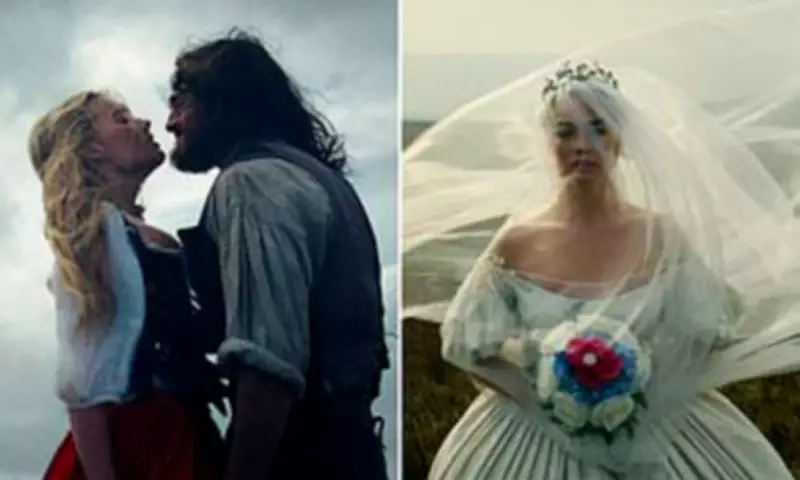
Fennell, who undoubtedly knows Emily Bronte's 1847 novel intimately, has chosen to reinterpret the story as a dark fairy-tale, incorporating unsubtle references to Snow White, Cinderella, and Little Red Riding Hood. This reinterpretation is further amplified by the addition of explicit sexual content, leading some critics to describe it as less Wuthering Heights and more Fifty Shades of Grimm.
Margot Robbie and Jacob Elordi take on the roles of Catherine Earnshaw and Heathcliff, literature's famously star-crossed lovers whose turbulent relationship rivals that of Romeo and Juliet. However, while their love remains unconsummated in Bronte's original text, Fennell's version leaves little to the imagination, with the pair engaging in frequent intimate encounters.

Questionable Casting and Character Depth
At 35, Margot Robbie is arguably too mature to portray Bronte's complex teenage heroine, a character who, in the Victorian era, might have been a grandmother by that age. Despite this, both Robbie and Elordi are visually compelling, though their performances render Cathy and Heathcliff as irredeemably shallow and selfish individuals, making it difficult for audiences to invest in their emotional turmoil.
The film has been heavily marketed as a romance ahead of Valentine's Day, yet the central characters' lack of likability undermines this narrative. Fennell has significantly pared back the original story, altering or removing various characters and sub-plots, a decision that would likely cause the author considerable distress.
Stylistic Excess and Narrative Emptiness
Fennell is not the first to adapt a classic novel with substantial alterations; the 1939 version famously imposed a happy ending. However, that adaptation remains more satisfying than this visually handsome but ultimately hollow exercise. The film prioritises cinematography and style over emotional depth and soul, with some elements verging on pastiche.
Martin Clunes portrays Mr. Earnshaw as a one-dimensional, gin-soaked tyrant, while Alison Oliver's Isabella Linton serves primarily as comic relief until subjected to degrading treatment. The servant Joseph, traditionally a God-fearing figure, is reimagined with overtly lustful behaviour that would embarrass even the most ardent sex maniac.
Anachronistic Elements and Audience Disconnect
Further stylistic choices include deliberately anachronistic music by Charli XCX and costume and design flourishes reminiscent of Yorgos Lanthimos's The Favourite. While these elements are creatively executed, they serve a love story between two characters that fails to resonate emotionally.
Cathy's incessant weeping, combined with the film's pervasive rain, creates a notably watery atmosphere. Yet, as the credits rolled, not a single damp eye was observed in the audience, highlighting the adaptation's failure to evoke genuine sentiment. Wuthering Heights arrives in cinemas this Friday, offering a bold but divisive take on a beloved classic.