Once Upon A Time In Harlem: A Timeless Documentary Revival
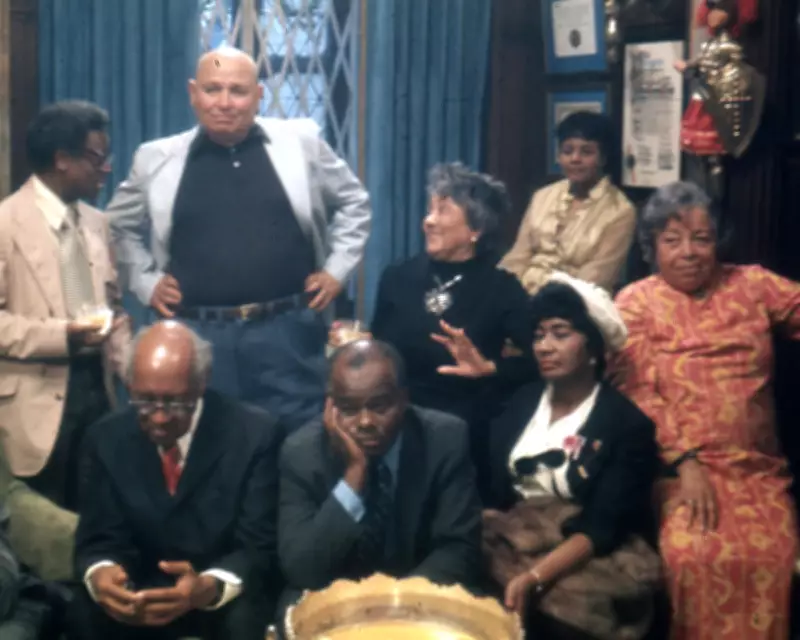
In the summer of 1972, a truly extraordinary gathering took place at Duke Ellington's townhouse in Harlem. The experimental film-maker William Greaves orchestrated a once-in-a-lifetime dinner party that brought together the surviving luminaries of the Harlem Renaissance. This watershed African American cultural movement of the 1920s was celebrated and reconsidered through the voices of its most influential – and often under-appreciated – musicians, performers, artists, writers, historians, and political leaders, all in their later years.
The Remarkable Footage and Its Journey
Over four hours of conversation, accompanied by untold glasses of wine, the discussion flowed freely from vivid recollections to moments of consternation, from lively anecdotes to contemplations of ongoing struggle. Greaves, already niche-renowned for his innovatively meta documentary Symbiopsychotaxiplasm: Take One, lightly directed the conversation but otherwise allowed the energy to flow organically. He would later consider this the most important footage he ever recorded.
You could probably release that remarkable footage in full, completely unedited and unstructured, and still have a compelling documentary. Every piece now, fifty years later – the same distance to us as the Harlem Renaissance was to them – serves as a bridge to a time no living person can remember. Each face and gesture is informed by decades of aftermath that no straightforward nonfiction film on the period could possibly capture.

A Family Legacy Brought to Life
But Once Upon a Time in Harlem, directed by Greaves's son David, who was one of four cameramen present that day, manages to seamlessly clip and contextualize the party into one hundred mesmerizing minutes. It's both a sublime hang-out film and a celebration of individual achievements, serving as a fascinating map of a long-ago scene and a referendum on legacy.
That this sumptuous footage, allowed room to breathe, exists at all feels like a miracle. That it takes shape here as a coherent, inventive yet straightforwardly informative film is an intergenerational feat. Originally shot but not used for his 1974 film From These Roots, William Greaves always intended to shape the footage – comprising fly-on-the-wall observations and direct interviews – into a Harlem Renaissance retrospective. Unfortunately, he fell ill before he could complete it. When he died in 2014 at the age of eighty-seven, the project passed to his widow Louise, who continued the work until her own death in 2023 at ninety. Now David, along with his daughter Liani Greaves as producer, serve as stewards of William's archive, supplemented by grants and community funding.
The Structure and Conversations
They smartly stay out of the way, merely adding nametags and archival photographs as footnotes to the discussions at hand. The structure of the film, which premiered at the Sundance film festival, follows the arc of the party itself. Tentative, polite greetings and warm memories eventually give way to impassioned discussions and even arguments – should they still use the loaded word negro even though it was demeaning, or convert to Afro-American? – as well as tipsy crosstalk, all within a relaxed atmosphere of hard-won camaraderie.
Occasionally, the Greaveses include welcome clips of William lightly prompting conversation with the more tentative guests on subjects like the revolution that was jazz music. "It would be considered a revolution in relation to other music," says the painter Aaron Douglas. "It was not a revolution to us."
The Luminaries and Their Stories
One is tempted to keep quoting extensively from the many subjects, whose personal histories, stories, and inside jokes need no summary. Among the remarkable attendees were:

- The musicians Eubie Blake and Noble Sissle, whose 1921 musical Shuffle Along was one of the first all-Black Broadway shows
- The historians Nathan Huggins and John Henrik Clarke
- The poets Arna Bontemps and Frank Horne (uncle of Lena Horne)
- The actors Leigh Whipper and Irvin C Miller
- The photographer James Van Der Zee
- The librarians Regina Anderson and Jean Blackwell Hutson
- The society page editor Gerri Major and Ida Mae Cullen, the widow of poet Countee Cullen
They speak of departed friends and figures – some long gone, such as controversial Pan-Africanist Marcus Garvey, and some, such as the poet Langston Hughes, only a few years past. Some, like the ninety-six-year-old Whipper, had parents who were enslaved, their inclination toward the arts a profound expression of liberation.
Grappling with Legacy in Real Time
To watch them grapple, in real time, with what happened then and what it means now is a faultless, captivating experience. The participants, being somewhere between their sixties and Whipper's ninety-six years, amusingly consternate the ignorance of the youth. The Harlem Renaissance, says Major, was the first time Black people were recognized as creative people. According to Bontemps, it was a "prism" of the Black experience from all time. Schuyler viewed it as not a renaissance at all but an "awakening".
Whatever the view, it eventually looped back to concerns of ongoingness – whether the cultural flourishing died on the vine or carried forward into the fraught present. "The Harlem Renaissance isn't dead," Huggins argues, "because the Harlem Renaissance lives with everybody." Fifty years later, with every person at the party now gone, Once Upon a Time in Harlem keeps that flame alight. The film is currently screening at the Sundance film festival and is actively seeking distribution.