Industry Episode Title 'Habseligkeiten' Meaning Explained
WARNING: This article contains spoilers from Industry Season 4, Episode 3.
Industry season four, episode three, titled 'Habseligkeiten', marks a sharp return to the high-stakes corporate arena after last week's emotionally charged countryside interlude. The narrative swiftly shifts back to the boardrooms and deal-making that define the show's core, leaving behind the tragic events of Henry Muck's 40th birthday celebration.
Return to Corporate Machinations
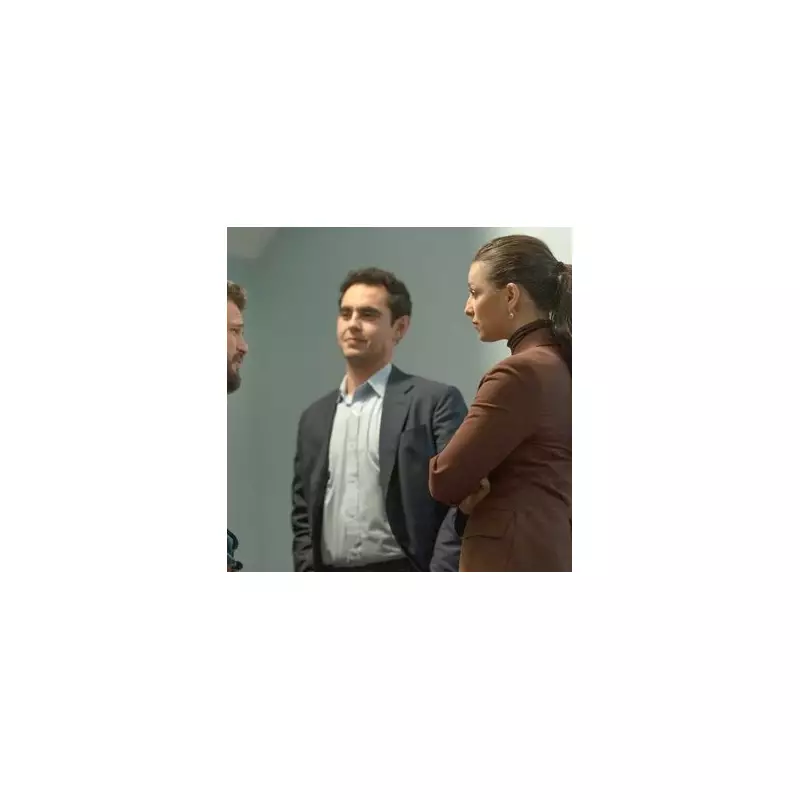
Following the mental health decline of Henry Muck, portrayed by Kit Harington, during his lavish birthday festivities, the focus pivots to business pursuits. Yasmin Muck, played by Marisa Abela, and Henry are now entrenched in Tender's boardroom, aggressively pursuing a crucial banking licence and negotiating the purchase of an Austrian financial institution.

They advance Whitney Halberstram's ambitious vision of creating a revolutionary "bank killer", all while navigating probing media inquiries about potential money laundering activities. Simultaneously, they must persuade the stringent British banking regulator to approve their controversial plans.
The episode culminates with Whitney and the Mucks travelling to Austria for direct negotiations with the bank's owners, who are revealed to have fascist leanings and historical ties to the Nazi regime during World War II.
Decoding 'Habseligkeiten'
Many viewers have been intrigued by the episode's German title, 'Habseligkeiten', and its significance within the storyline. The term is introduced when Princess Johanna Bauer, played by Susanne Wuest, informs Yasmin that she has been accommodated in an opulent room described as containing "habseligkeiten".
Johanna elaborates that the phrase translates to "possessions closest to your soul," a definition that resonates deeply with Yasmin's character. This poignant moment is later complicated when Yasmin discovers a painting in the bedroom depicting the Bauers' castle, bearing a signature that appears to belong to Adolf Hitler.
Linguistic Ambiguity and Historical Context
According to the Cambridge Dictionary, 'habseligkeiten' is the plural form meaning simply 'belongings'. The dictionary provides an illustrative example: "The few belongings the refugees had with them," implying the term refers to a limited collection of personal items, often of modest value.
However, the word carries a contested history. In 2004, the Goethe Institute and the Council for the German Language selected 'Habseligkeiten' as the most beautiful word in the German language. This designation was based on an interpretation combining 'hab' (to have) with 'Seligkeit' (blessedness or happiness), suggesting cherished possessions.
This decision faced criticism from linguistic experts who argued the etymology likely derives from 'habsal', denoting possessions of little worth, with the suffix 'keit' added. Wikipedia further supports this interpretation, defining the term as the belongings of a nearly penniless individual.
Thematic Relevance to Industry
The dual meanings of 'habseligkeiten' create a rich layer of ambiguity that mirrors the central tensions in Industry. Characters like Whitney and the Mucks are desperately striving to amass wealth and power, yet they often operate with limited resources or face significant financial pressures.
The contrast between Johanna's romanticised explanation and the dictionary's more pragmatic definition underscores the show's exploration of value, both monetary and emotional. This linguistic duality heightens the suspense regarding the future trajectories of the main characters as they navigate treacherous financial waters.
Industry season 4 continues to air on HBO and HBO Max in the United States every Sunday, while UK audiences can watch on BBC iPlayer and BBC One each Monday.