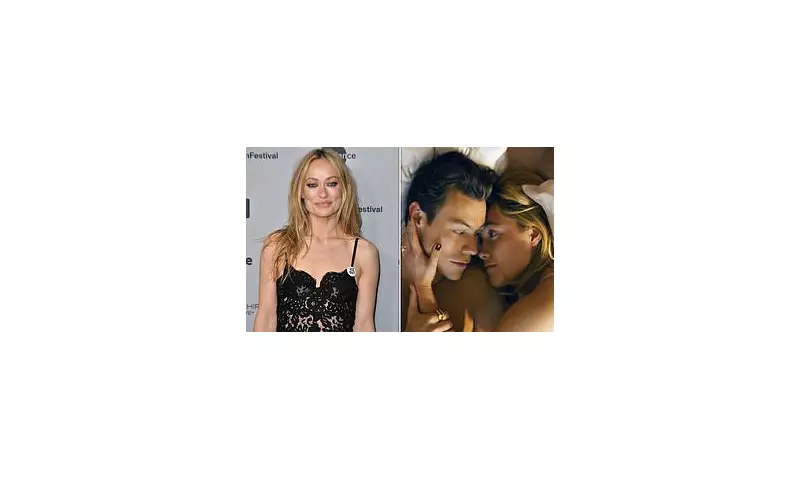
Olivia Wilde has sparked a significant conversation about the portrayal of intimacy in modern cinema, suggesting that contemporary films often lack authenticity in their approach to sex. This critique comes despite her own directorial project, the 2022 psychological thriller Don't Worry Darling, being filled with a series of raunchy and explicit moments that divided audiences and critics alike.
A Divisive Film with Notable Casting
The release of Don't Worry Darling was notable for several reasons beyond its intimate content. The film featured pop star Harry Styles in a leading acting role, marking a significant casting choice that drew considerable attention. Additionally, Styles' offscreen romance with Wilde during production became a major talking point in entertainment circles. The onscreen chemistry between Styles and co-star Florence Pugh was central to the film's narrative, with their intimate sex scenes becoming a focal point for discussion and controversy.
Gen Z's Perspective on Cinematic Intimacy
Wilde, aged 41, believes that intimacy has been watered down in contemporary filmmaking to such an extent that younger audiences no longer perceive it as authentic. Responding to recent polling data suggesting many young cinema-goers no longer wish to see sex depicted in films, Wilde offered her interpretation to Variety magazine.

'I think Gen Z's pretty smart, I would never dare say they don't understand anything,' Wilde stated. 'I think they understand a lot more than the rest of us, so I don't know where that's coming from.'
She continued with her analysis of the statistical findings: 'It's interesting. I think that the way sex has been portrayed in film for a long time hasn't been particularly realistic. I think there's been this movement now towards authenticity, which is really good, so I choose to interpret that statistic as Gen Z saying we don't want to see inauthenticity anymore.'
The Push for Genuine Representation
Wilde elaborated on what she believes younger audiences are actually seeking from cinematic portrayals of relationships and intimacy. 'We want to see real relationships and we want to have things that feel more genuine,' she explained, suggesting that the problem isn't sex itself in films, but rather how it's typically presented to viewers.
Don't Worry Darling was indeed underpinned by a series of explicit scenes that pushed boundaries, including one particularly notable sequence where Harry Styles performs oral sex on Florence Pugh as she reclines across a kitchen table. These moments were integral to the film's narrative and thematic exploration of relationships within its dystopian setting.
Production Challenges and Industry Constraints
Wilde, who made her directorial debut with the critically acclaimed comedy Booksmart in 2019, previously discussed the complications of making Don't Worry Darling during the COVID-19 pandemic. She revealed to Variety that the health crisis significantly affected the filmmaking process.
'It definitely affects that exact ingredient in the process, that camaraderie,' Wilde explained. 'It definitely makes it more difficult. You have to really focus on everybody’s eyes. Everyone is communicating so differently, and there’s a lot of gesticulating.'
Despite these challenges, the film generated substantial industry interest, sparking a bidding war among eighteen different studios all keen to acquire the project. New Line Cinema ultimately won the auction, securing distribution rights for the provocative thriller.
Censorship and Societal Puritanism
Wilde faced additional hurdles with the Motion Picture Association, which forced her to cut some scenes from the film's first theatrical trailer to gain approval. She expressed her frustration about this censorship to the Associated Press.
'There's a lot that had to be taken out of the trailer,' Wilde revealed. 'The MPA came down hard on me and the trailer at the last second and I had to cut some shots, which I was upset about because I thought they took it up another notch.'

She connected this experience to broader societal attitudes toward sexuality in American cinema: 'But of course we still live in a really puritanical society. I do think the lack of eroticism in American film is kind of new. Then when it comes to female pleasure, it's something that we just don't see very often unless you're talking about queer cinema.'
Provocative Storytelling and Audience Reception
Wilde expanded on her observations about different cinematic approaches to intimacy, noting: 'You know, it's interesting because in a lot of queer films, the female characters are allowed to have more pleasure. Audiences aren't as puritanical as corporations think they are.'
The director acknowledged that her film's explicit content had already generated controversy and strong reactions from some viewers. 'And yet people get upset. I mean, people are upset with me already over this,' she admitted. 'I think it's a testament to the film. We want to be provocative. The idea is not to make you feel safe.'
Wilde's comments highlight an ongoing tension in contemporary filmmaking between artistic expression, commercial considerations, and evolving audience expectations regarding the portrayal of intimacy and sexuality on screen.