The animated feature Stitch Head, based on Guy Bass's popular children's book series, arrives in UK and Irish cinemas from 13 February, presenting a rather sombre and loosely assembled adaptation. Directed by Steve Hudson, whose career has pivoted from social dramas to family entertainment, this film represents a notable shift but struggles to stand out in a densely populated animation landscape.
A Radical Career Pivot for Director Steve Hudson
Steve Hudson, who first gained attention with the 2006 migrant drama True North starring Peter Mullan, has taken a sharp turn into animation after directing episodes of primetime television's Cranford. This move into pixels with Stitch Head feels like a tentative initial foray, sutured together from ideas and imagery that have been executed with greater confidence in other, more accomplished productions.
Voice Cast and Character Design
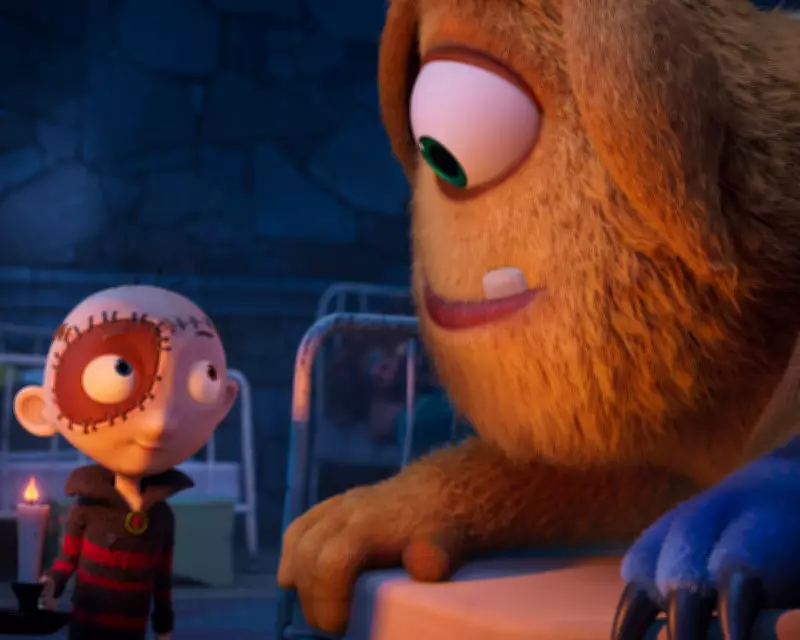
The film features a Brit-populated voice cast led by Asa Butterfield as the eponymous hero, a boy with Bowie-esque heterochromatic eyes and a baseball-like head. Rob Brydon provides the voice of the mad professor conducting Frankenstinian experiments in a castle overlooking the small town of Grubbers Nubbin. Joel Fry voices Creature, Stitch Head's furry cyclops companion.

While the lead character design is solid enough that accompanying adults might find themselves knitting replicas of Stitch Head's onesie, the surrounding menagerie feels uncomfortably derivative of Pixar aesthetics. Creature in particular appears conspicuously as a hybrid of Mike and Sully from Monsters, Inc.
A Melancholy Showbiz Narrative
The plot follows Stitch Head and Creature as they abscond to join a travelling freak show, venturing into a rather melancholy and misshapen showbiz story. Much like the film itself, the protagonist simply wants to be loved and accepted in a harsh and uncaring world.
Compared to the whizzbang endeavours of animation giants like Pixar and Sony, which come armed with the full box of audiovisual fireworks, Stitch Head suffers from noticeable dead air swirling around its minor-celebrity voice cast. The backgrounds prove more detailed and persuasive than the script itself.
Visual Style and Influences
With its free-floating, slightly macabre imagery, the entire production suggests a watered-down Saturday morning variant of 1993's The Secret Adventures of Tom Thumb, as if undertaken by bolexbrothers, Aardman's dark-side splinter group. The European-financed, Indian-manufactured animation brings together diverse production elements that never quite coalesce into a satisfying whole.
Audience Considerations
Stitch Head emerges as one of those films to test on your children rather than treat them to outright. Sensitive youngsters may run screaming from certain scenes, while their elders may develop that familiar glazed look indicating they've sat through much of this material before. The film's melancholy tone and derivative elements make it a challenging recommendation for family viewing.
As an adaptation of Guy Bass's kid-lit series, Stitch Head represents an ambitious but ultimately flawed attempt to translate beloved literary characters to the big screen. The film's strengths in character design cannot compensate for its narrative weaknesses and derivative visual elements, leaving it hanging loosely together rather than forming a cohesive animated experience.