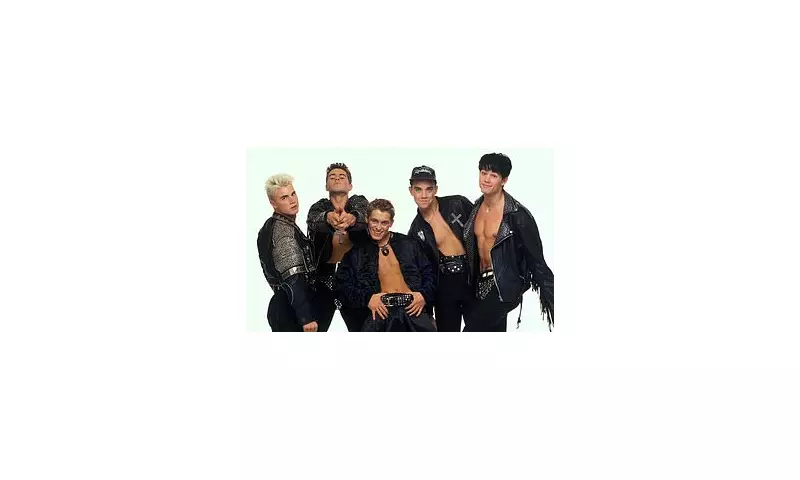
Take That's Netflix Documentary Exposes Boy Band's Hidden Struggles
A new three-part documentary series on Netflix offers a compelling and often shocking reappraisal of Take That's journey from teenage sensations to enduring pop icons. The series cleverly juxtaposes now-hackneyed early footage with previously unseen material, highlighting just how young these boys were when first thrown together in 1990.
Early Days and Unseen Footage
Viewers are transported back to the band's formative years through shaky handheld video footage shot by Howard Donald, whom a 16-year-old Robbie Williams dubbed "Steven Spielberg." These intimate moments show the budding stars forming genuine friendships before tasting success. We see 19-year-old Gary Barlow being mocked for his Calvin Klein pants in a dingy dressing room, while 22-year-old Howard proudly drives the Hyundai van that transported them to early gigs where they simply danced and sang along to tapes in school halls.
The documentary begins streaming almost exactly thirty years after the band's initial breakup, providing timely reflection on their extraordinary journey.

Dark Personal Struggles Revealed
Now in their fifties, the three remaining members—Gary Barlow, Mark Owen, and Howard Donald—open up about how being in one of history's most successful groups nearly destroyed them. Howard recalls his darkest moment after the 1996 breakup when, at just twenty-seven, he drove to the Thames intending to end his life.
"It hit me the hardest," Howard confesses. "I was seriously thinking of jumping in the Thames and thinking I wanted to kill myself, but I am just too much of a s***bag to do it."
Gary reveals his own harrowing battle with binge eating and bulimia as he attempted to "kill the pop star" within himself. For years after the band's split and his subsequent record label dismissal in 1999, he would retreat to his home studio, staring at the piano that once produced hits.
"I'd literally sit there watching the piano thinking: 'I used to write big hits on that thing.' Now, the piano was the enemy," Gary admits. "It's awful and it went on for years."
Formation and Meteoric Rise
The documentary traces the band's origins to Manchester-based impresario Nigel Martin-Smith, who placed an advertisement seeking to create a British version of American boy band New Kids On The Block. Jason Orange, Howard Donald, Mark Owen, and Robbie Williams all arrived as strangers for auditions, while Gary Barlow—already an established songwriter and performer—was talent-spotted and became the group's foundation.
Martin-Smith initially envisioned the band breaking on the gay scene, but a pivotal moment occurred when they performed for young teenagers and were mobbed by screaming adolescent girls. Success followed slowly at first, with several singles failing to chart before RCA signed them and instructed members to leave their day jobs.
Howard recalls his mother's fury when he quit his car-painting job, but a string of number one hits—including Pray, Relight My Fire, Babe, Everything Changes, Sure, and Back for Good—soon justified the risk.
Cracks and Breakup
Even at their peak, tensions simmered beneath the surface. Howard observes that Robbie appeared to be "in the grip of something" on stage, with "bulbous eyes and energy" suggesting substance issues. Robbie's departure in July 1995 at just twenty-one shocked the band, though he later revealed he was already a "raging alcoholic" consuming a bottle of vodka daily by age nineteen or twenty.
The remaining members continued without him, but announced their breakup at a February 1996 press conference after selling twenty million albums. Footage shows one devastated fan being carried away in an ambulance after collapsing upon hearing the news.
Reunion and Reconciliation
A turning point arrived in 2005 when the band—minus Robbie—reunited for ITV's Take That: For The Record documentary. Robbie sent a video message apologizing for how things ended and for insulting Gary. Positive audience reaction prompted the four to reform without manager Martin-Smith, whom Gary reflects "played on all our insecurities to keep us in line."

After a sell-out 2006 tour, they began work on Beautiful World—the first album where all four members received writing credits. Gary believed that to keep Jason Orange, they needed Robbie Williams back, leading to a twenty-five minute meeting at Robbie's Los Angeles home where the two sworn enemies reconciled.
Robbie officially returned in 2010 for the Progress album and tour, arranged after he unexpectedly attended Mark's stag do in New York. All members cherished performing as a five-piece again, though they recognized the magic would end with the tour.
Enduring Legacy
Howard expresses sadness when Jason Orange decided to leave after the final show, describing him as "like my brother." Mark Owen reflects that the trio has now existed longer than any other band configuration, stating "I can't imagine my life without it. At the heart of my world is Take That."
The documentary distinguishes itself through its innovative format, avoiding traditional talking head interviews in favor of voiceovers layered over archival footage. With more music than typical boy band documentaries, this slickly produced three-part series offers both nostalgic entertainment and profound insight into the price of pop stardom.