Channing Tatum Delivers Career-Best Performance in Shattering Sundance Drama
Beth de Araújo's stunning second feature film 'Josephine' has emerged as the standout drama of this year's Sundance Film Festival, with Channing Tatum delivering what critics are calling a career-best performance. The taut and emotionally intelligent film follows the devastating aftermath of an eight-year-old girl witnessing a horrifying sexual assault in San Francisco's Golden Gate Park.
A Harrowing Incident That Shatters Innocence
The film introduces us to Josephine, played by remarkable newcomer Mason Reeves, who shares a tender, playful bond with her father Damien, portrayed by Tatum. Their crisp, near-wordless opening scenes establish a supportive father-daughter relationship before the narrative takes a devastating turn.
Unlike many post-MeToo films that employ ellipsis when depicting sexual assault, de Araújo makes the bold decision to show exactly what Josephine witnesses from her position behind a tree. Cinematographer Greta Zozula captures both the brutal crime and the child's cherubic face in equally naturalistic light, creating an arresting sequence that underscores how baffling such violence appears to a young mind.

The Inadequate Adult Response
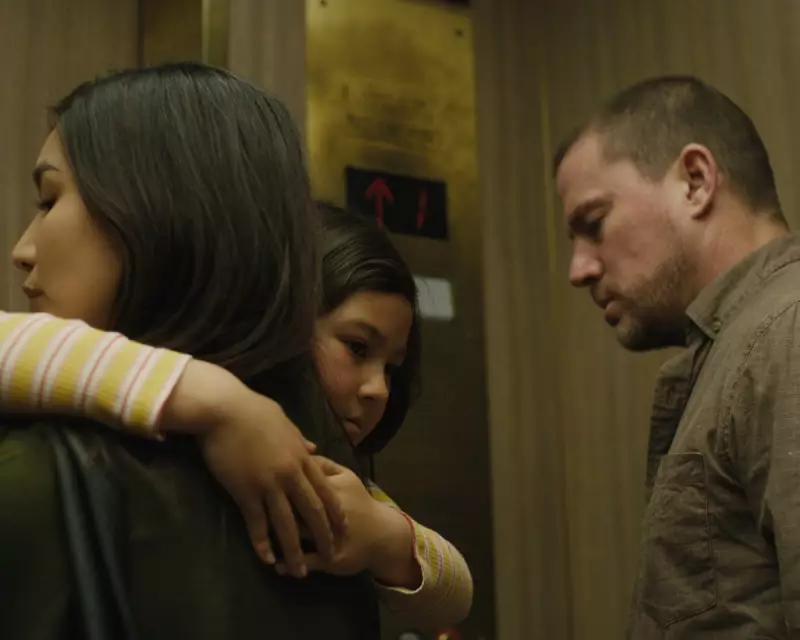
The film's power lies in its exploration of aftermath, with Tatum and Gemma Chan portraying well-meaning but ill-equipped parents struggling to help their traumatised daughter. The intensity of the opening incident highlights the inadequacy of every adult response that follows:
- Police immediately responding to Damien's 911 call ignore Josephine
- Her mother attempts vague platitudes and distractions
- Her father, a self-described "physical guy," takes her to self-defense classes
- Neither parent explains to Josephine what she witnessed
De Araújo demonstrates a keen ear for the maxims parents use to defend themselves, such as Damien's unhelpful reassurance that "that will never, ever happen to you" when Josephine asks if it will happen to her.
Tatum's Transformative Performance
Channing Tatum delivers what may be the most fascinating paternal character in recent cinematic memory, playing a father whose good and bad parenting instincts often coexist within the same sentence. As a movie star typically embodying aspirational American masculinity, Tatum's transformation into a father far out of his depth is simply astonishing.
His performance captures a man whose confidence crumbles in inverse relation to his daughter's trauma, who must reckon with his own limitations and fear. From another actor of his stature, a late-stage scene in which he finally erupts on Josephine could seem menacing, but Tatum grounds the viewer in his abject bewilderment and pain.
A Haunting Exploration of Trauma
The film maintains a tricky balance between sketching the stymied adults' triggered responses and hewing closely to Josephine's perspective. In an effectively creepy flourish, Josephine sees the man from the park in her room at night, especially after being called as a trial witness.
While the film's final third occasionally feels overstretched, and Gemma Chan's character is not given many notes beyond varying degrees of concern, de Araújo largely succeeds in believably steering the bruised family through near-horror into a bravura final courtroom scene.
The film's power rests significantly on Mason Reeves' performance as Josephine – a rare natural able to both hold her own and disappear into herself as her inchoate anger boils over in increasingly erratic, alarming ways.
A Lingering Disquiet
What makes 'Josephine' particularly remarkable is how its disquiet lingers with viewers long after the credits roll. For its audience, as for its meticulously rendered subject, the film creates a haunting resonance that continues to reverberate.
Currently screening at the Sundance Film Festival and seeking distribution, 'Josephine' represents a significant achievement in contemporary cinema – a film that handles difficult subject matter with sensitivity while delivering powerhouse performances that will be discussed long after the festival concludes.