The award-winning medical drama The Pitt has returned to HBO Max for its second season, continuing its unflinching and critically acclaimed examination of the United States' fractured healthcare system. The show, which premiered earlier this month, remains a terrifyingly accurate mirror for the millions of Americans who navigate this complex and often cruel world.
A Hospital as a Microcosm of America
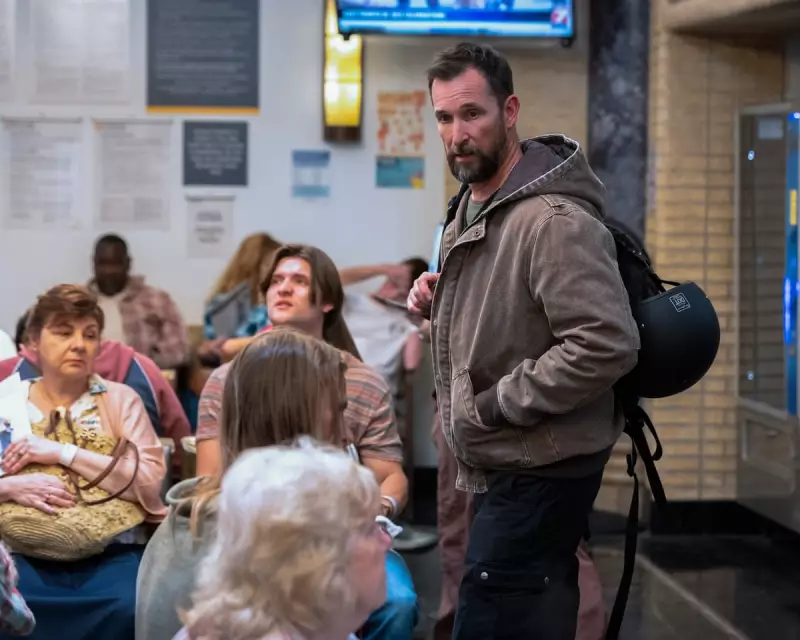
Set in the fictional Pittsburgh Trauma Medical Center (PTMC), the series immerses viewers in the chaotic, under-resourced reality of an urban emergency room. The environment, affectionately and accurately nicknamed "the Pitt" due to its basement location, is a masterclass in stressful authenticity. From the warning signs about aggressive behaviour aimed at curbing violence against staff, to the memorial for victims of a mass shooting explored in season one, the set design tells a story of a system under constant strain.
This season introduces a new element: "patient passports". These leaflets, designed by the tech-savvy and norm-challenging new attending physician Dr Baran Al-Hashimi (Sepideh Moafi), are meant to guide patients through procedures and wait times. They serve as a direct point of contention with the show's anchor, the recently Golden Globe-winning Noah Wyle, who plays the traditional, by-the-books Dr Michael "Robby" Robinavitch. This conflict seeds a larger thematic battle between innovation and tradition within the crumbling walls of the Pitt.

Gritty Realism and a Wider Ecosystem
Hailed as the most medically accurate drama ever developed for US television, The Pitt refuses to sacrifice scientific realism for easy entertainment. Executive produced by ER veteran John Wells and created by R Scott Gemmill, it successfully adapts the network procedural for the streaming era, incorporating graphic detail, strong language, and mature themes. Recent episodes have depicted everything from the draining of a prolonged erection to the discovery of maggots under a cast.
Yet the show's power lies less in these shocking moments and more in its dedication to the mundane realities of healthcare work. It expands its focus beyond doctors to include the nurses, administrators, custodians, EMS drivers, and social workers who form the complete ecosystem of care. It devotes time to explaining complex, unglamorous medical procedures with compassion, capturing the psychological weight carried by all hospital staff.
Confronting Systemic American Failings
While the pressures of healthcare work are universal, The Pitt is fundamentally a show about the United States. It operates against the backdrop of a uniquely profit-driven system, the most medicalised on Earth, which spends vastly more per capita while excluding millions and suffering worse health outcomes. The show's second season arrives as insurance premiums soar for millions following the withdrawal of federal subsidies.
This season sharpens its critique on two looming issues: health insurance and the rise of generative AI in medicine. The former is embodied by case manager Nurse Noelle Hastings (Meta Golding), who battles the Kafkaesque task of finding hospitals that will accept patients' coverage. The latter is championed by Dr Al-Hashimi, who sees AI as a tool to combat physician burnout, though Dr Robby fears it will simply be used to demand doctors see more patients.
For viewers, particularly in the UK where the NHS provides a stark contrast, The Pitt acts as a terrifying and cathartic window into a neighbouring system in crisis. It simplifies and dramatises, but the core anxiety it channels—of financial ruin, bureaucratic indifference, and heroic labour within a broken machine—is hyper-real. The show doesn't just entertain; it issues a stark diagnosis of a nation's deepest ailments.