The latest instalment in the critically acclaimed 28 Days Later franchise, titled 28 Years Later: The Bone Temple, has sparked an unexpected cultural controversy. While the film has been praised for its bold storytelling and Jack O'Connell's compelling performance as cult leader Jimmy, a disturbing parallel has emerged that is causing significant discomfort among British audiences.
The Unsettling Similarity to a Notorious Figure
Executive producer Danny Boyle and lead actor Jack O'Connell have both confirmed that the character Jimmy is intentionally designed to resemble Jimmy Savile, one of Britain's most notorious paedophiles. The character's distinctive long blonde hair, colourful tracksuit, and particular mannerisms create what British viewers immediately recognise as uncomfortable similarities to the disgraced television presenter.
Within the film's dystopian timeline, Britain collapsed in 2002, meaning the shocking revelations about Savile's predatory crimes that emerged in 2012 following his death would never have come to light. This creates a disturbing narrative where the sex offender remains remembered as a beloved children's television personality rather than the monster he was revealed to be.

American Fans Embrace the Character Unaware
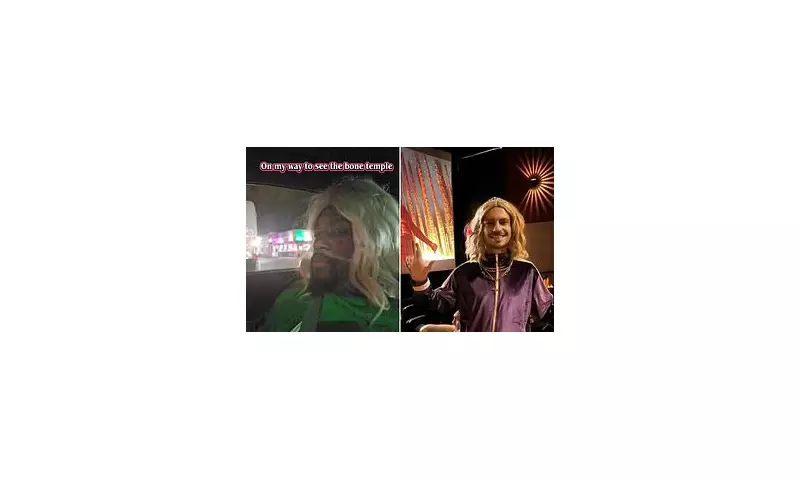
Now, across the Atlantic, American fans are enthusiastically embracing the character's distinctive look, seemingly unaware of its troubling inspiration. On social media platforms, numerous users have shared images and videos of themselves dressed in colourful tracksuits with blonde wigs, preparing to watch the horror film.
One TikTok user named Kildros posted a video wearing a green tracksuit and blonde wig with the caption 'On my way to see the Bone Temple'. When other users quickly pointed out the connection to Savile, Kildros claimed he went into the film 'blind' and was 'beside myself afterwards' upon learning the truth.
Similarly, Canadian user Ronan attended an early screening in Toronto wearing a purple tracksuit and blonde wig. When confronted by British users who expressed how 'unhinged' the costume appeared from their perspective, Ronan defended his actions to Ladbible, stating he was 'aware of the controversy' but didn't 'mean any offence' by dressing as the character.
Creative Intent Behind the Character
The film's creators have been open about their intentions with the Jimmy character. Danny Boyle explained that Savile represents a twisted element of British culture, stating: 'He's as much to do with pop culture as he is to do with sportswear, to do with cricket, to do with the honours system. It's all kind of twisting in this partial remembrance, clinging onto things and then recreating them as an image for followers.'
Jack O'Connell offered his interpretation to the Hollywood Reporter: 'I think he sort of models himself on the memory of this figure that was always on TV. I think what Alex [Garland, screenwriter] means behind that, and I can't speak for him, but my take was unchecked power. I think it totally exists in the story to unsettle.'
British Cast Members' Awareness
For the British actors working alongside O'Connell as fellow cult members, the Savile connection was immediately apparent. Robert Rhodes, who plays Jimmy Jimmy, revealed at the film's premiere: 'So, when I signed on, I knew I was called Jimmy. However, in my costume fitting, I kind of had an inkling, I kind of left it going, "Um, am I dressed as Jimmy Savile?"'
The film itself continues the franchise's tradition of brutal, survivalist horror, set 28 years after a monstrous virus turned Britain's population into flesh-eating zombies. Daily Mail film critic Brian Viner awarded the film five stars in his review, noting that while it's 'brutally, horribly, gruesomely violent', it also represents 'bold, brilliant, bravura story-telling'.
This cultural disconnect highlights how certain references remain deeply embedded within national consciousness while becoming lost in translation across international audiences. As the film continues its theatrical run, the unintended consequence of American fans embracing a character inspired by one of Britain's darkest figures serves as a stark reminder of how cultural context shapes our understanding of art and entertainment.