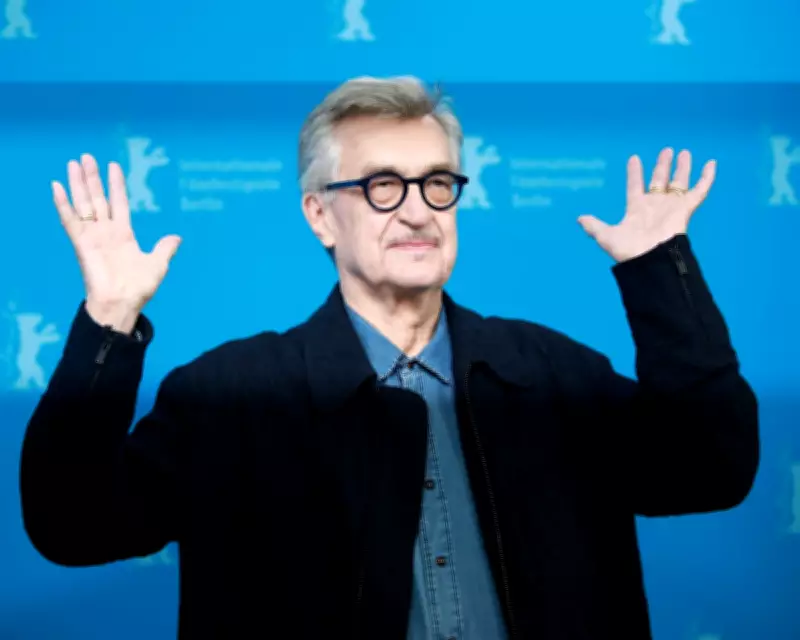
Veteran film-maker Wim Wenders has passionately championed the profound, empathetic power of cinema to help mend a fractured world, even as he firmly rejected the notion that movies should engage directly in political activism. Speaking as jury president at the opening of the 76th Berlin International Film Festival, the acclaimed director behind classics like Wings of Desire and the Oscar-nominated Perfect Days articulated a vision of film as a vital counterweight to politics, focusing on human connection rather than policy change.
The Role of Cinema in Times of Conflict
At a press conference in the German capital, Wenders was asked about the potential for movies to influence the current climate of war and social upheaval. He responded by emphasising cinema's unique capacity for bridge-building and fostering empathy. "Yes, movies can change the world," Wenders declared. "Not in a political way. No movie has really changed any politician's idea, but we can change the idea that people have of how they should live." He elaborated that film-making serves as an act of compassion, contrasting it with the often impersonal nature of news and political discourse.
Navigating Political Questions
The discussion turned pointed when a question was raised about German support for Israel during the Gaza war and perceived "selective" solidarity with besieged populations globally. Wenders pushed back against the idea that the film industry or the festival should take overt political stances. "We have to stay out of politics because if we make movies that are dedicatedly political, we enter the field of politics," he argued. "But we are the counterweight of politics, we are the opposite of politics. We have to do the work of people, not the work of politicians."

Polish producer Ewa Puszczyńska, a member of Wenders's jury, supported this view, calling the question's framing "unfair." She noted, "Of course, we are trying to talk to people and make them think, but we cannot be responsible for what their decision would be, to support Israel or to support Palestine." Puszczyńska highlighted the complexity of global conflicts, pointing out that many wars involving genocide receive less attention, making it a challenging issue for filmmakers to address uniformly.
Berlinale's Programme and Prizes
The festival, now in its 76th year and ranking alongside Cannes and Venice as one of Europe's premier film events, will showcase approximately 200 feature films and documentaries. Wenders observed that much of the programme emphasises the impact of geopolitical tumult and rights struggles worldwide, reflecting cinema's role in exploring human experiences. The event opens with No Good Men by Shahrbanoo Sadat, billed as Afghanistan's first romantic comedy, screening out of competition.
A seven-member jury led by Wenders will select winners from 22 international features for the top Golden and Silver Bear awards, to be presented at a gala ceremony on 21 February. The red carpet will welcome stars such as Amy Adams, Channing Tatum, Pamela Anderson, Ashley Walters, Callum Turner, Ethan Hawke, Gemma Chan, and Charli XCX, adding glamour to the politically charged atmosphere.
Cinema's Enduring Duty
In closing, Wenders reiterated his belief in film's transformative potential. "Cinema has an incredible power of being compassionate and empathetic," he said. "The news is not empathetic. Politics is not empathetic, but movies are. And that's our duty." This perspective underscores the Berlinale's commitment to storytelling that prioritises human empathy over political rhetoric, aiming to inspire audiences in an era of global uncertainty.