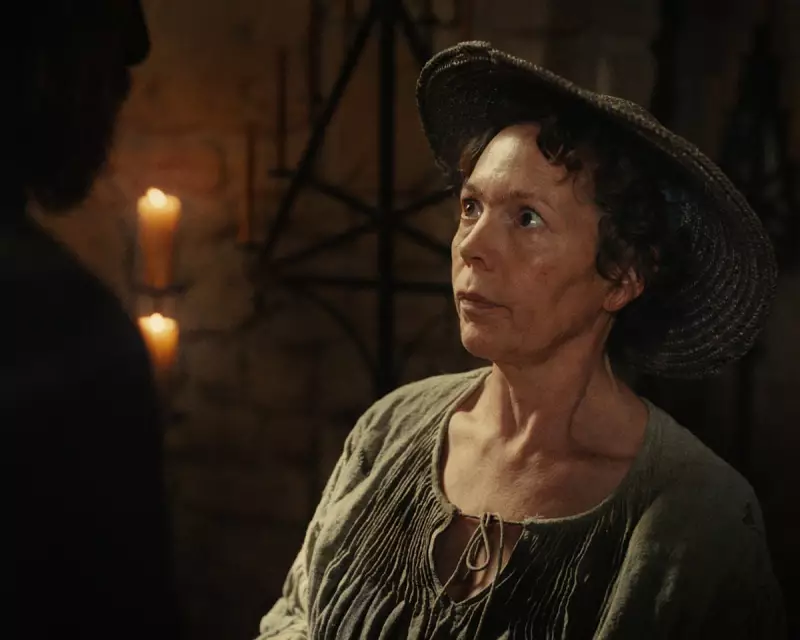
This year's Sundance Film Festival has delivered its fair share of attention-grabbing premises, from body horror Saccharine to midnight movie Buddy. Yet the annual "wait, what?" prize undoubtedly goes to the offbeat fantasy fable Wicker, which features Oscar-winner Olivia Colman as a malodorous spinster fisherwoman who commissions herself a husband crafted entirely from wicker.
A Premise With Promise That Falters In Execution
Writer-directors Alex Huston Fischer and Eleanor Wilson, previously known for the alien invasion comedy Save Yourselves!, use their far-out concept to explore weighty themes. The film attempts to critique patriarchal marriage structures and the societal fury directed at those who dare to live outside accepted norms. In brief, effective flashes, it succeeds in touching upon these real-world issues.
However, Wicker ultimately struggles to blend its disparate elements into a cohesive whole. The film presents a tonally uneven mix of largely unfunny bawdy humour, dark fantasy, and unlikely romance. There's an abundance of wood in its construction, metaphorically speaking, but not enough narrative fire to sustain emotional engagement.

Colman's Committed Performance Anchors An Unstable Vessel
Olivia Colman, whose Sundance appearances have ranged from The Father to Jimpa, plays the central Fisherwoman. Her character's pungent aroma receives as much commentary as her unmarried status within the village. Colman portrays a woman largely immune to insults, contentedly removed from the archaic gender roles that constrain her community.
After enduring yet another comically dreadful wedding ceremony, the barbs begin to penetrate her defences. Rather than laughing them off, she approaches the local basket-maker, played by Peter Dinklage with his characteristic musical undertones, and commissions a husband. One month later, her wicker spouse arrives, brought to life through impressive effects work and portrayed by Alexander Skarsgård in remarkably handsome woven form.
An Intricately Built World With Societal Commentary
The film-making demonstrates admirable ambition in constructing an intricate world that blends old and new elements. Like many classic fairytales, this society revolves around male importance and female deference. Men are defined by their professions, while women are identified through their relationships to husbands.
The wedding ritual involves men placing collars upon their wives rather than offering rings. Fisherwoman's flagrant refusal to conform, her determination to serve as her own breadwinner, throws the entire community into disarray. The women, led by Elizabeth Debicki's spiralling queen bee character, react with horror, jealousy, and perhaps even arousal towards her unconventional marriage.
Meanwhile, the village men grow anxious about what this sexually and domestically perfect wicker husband means for their own standing and how their wives perceive them in comparison. The film raises pertinent questions about happiness and conformity within rigid social structures.
Relationship Development That Leaves Viewers Wanting More
The central relationship between Fisherwoman and her commissioned husband is treated with enough seriousness to make audiences crave deeper exploration. His arrival prompts numerous questions about consciousness, desire, and emotional needs that remain largely unanswered.
Instead of meaningful development, their early scenes focus predominantly on comically vigorous sexual encounters, leaving practical questions about splinters unaddressed. While he's designed to love her unconditionally, the film neglects to examine what this manufactured devotion means for their dynamic or any agency he might desire.
When conflict emerges, it tends toward simplistic, soap-operatic territory—has he been unfaithful with other villagers? Colman delivers a powerfully effective breakdown scene where she articulates the difficulties of sharing a previously solitary life, reminding viewers why she remains one of cinema's great emotional performers. Yet this moment arrives too late to salvage the emotional connection.

Missing The Emotional Core Of Fantastical Romance
We learn little about the wicker husband's reaction to the world or his true identity beyond blind devotion. When tragedy inevitably strikes, there's insufficient attachment to either character to make the impact resonate deeply. The film invites comparison to more successful fantastical romances like The Shape of Water, which managed to create profound emotional investment between Sally Hawkins and the fish man despite minimal verbal communication.
Fischer and Wilson demonstrate that there are established methods to make audiences care within unconventional love stories, but Wicker fails to implement them effectively. The film looks visually striking and boasts committed performances, particularly from Colman, but lacks the substantive emotional foundation necessary to make its fantasy truly compelling.
It's difficult to imagine many contemporary actors besides Olivia Colman embracing the fisherwoman role with such complete dedication. While her recent film choices haven't always resonated perfectly with critics, she remains entirely devoted to even the most unconventional material. Colman masterfully oscillates between broad comedy and heart-wrenching drama, but the surrounding film proves less adept at balancing these elements.
Much like the dream husband at its centre, Wicker presents an eye-catching exterior but reveals troubling hollowness beneath its meticulously crafted surface. The film screens as part of the Sundance Film Festival programme, offering festival-goers an ambitious if ultimately uneven cinematic experience that sparks more intellectual curiosity than emotional connection.