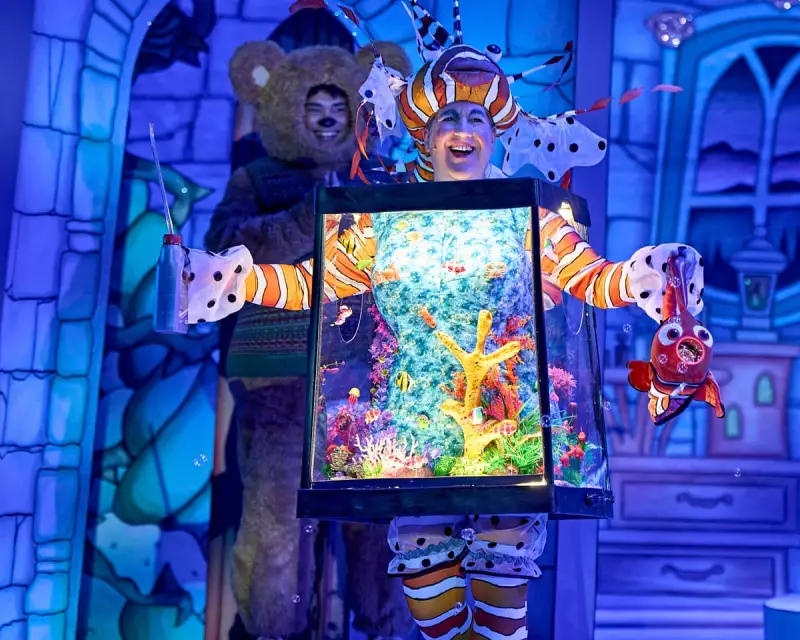
While the festive tinsel has been packed away and the new year's resolve is waning, the riotous world of British pantomime is refusing to bow out. Far from being over, productions across the country are extending their runs deep into January, with one London venue even launching its show in late January for a run until March, proving that the demand for booing villains and shouting "he's behind you!" lasts well beyond Twelfth Night.
Keeping the Energy Alive Post-Christmas
At Nottingham Playhouse, Sleeping Beauty is entertaining audiences until this weekend, narrowly avoiding the clutches of the notoriously gloomy Blue Monday. John Elkington, who has been the Playhouse's dame for nearly three decades and plays Nelly the Nanny, emphasises the cast's mission to maintain high spirits. "Our job is to keep up the energy, not let it slip," he states, noting that for many families, the January performance is a cherished extension of holiday fun.
Elkington observes that while the pre-Christmas audiences are larger and more animated, the loyal post-holiday crowds still provide a vibrant atmosphere. The theatre also schedules more relaxed performances in January. A beloved tradition is the riotous final night, where the crew play pranks on the cast—a event so popular it draws audiences back for a second viewing. The Playhouse's production, directed by Adam Penford, is also available to stream on demand.

A Vital Financial Lifeline for Theatres
The importance of pantomime to a theatre's annual health cannot be overstated. At Liverpool's Royal Court, The Scouse Christmas Carol has proven so popular that its run has been extended until 24 January. Executive producer and writer Kevin Fearon reveals the staggering impact of the show: it accounts for more than half of the venue's annual ticket revenue, bringing in around £1.4 million in sales plus crucial income from food and drink.
"It's our perfect show of the year," Fearon says, describing it as "100% of everything" the theatre stands for. Despite broader economic pressures, families remain committed to this annual tradition, viewing it as a essential festive outing. The venue's unique offering of a meal served at your table in the stalls continues to be a major draw, turning a trip to the panto into a full celebratory evening.
Creating a New Tradition: The Post-Christmas Panto
Some venues have successfully carved out a niche by scheduling pantomime entirely outside the Christmas period. The Brick Lane Music Hall in east London is a prime example, opening Jack and His Giant Stalk on 22 January for a run that continues until 7 March.
Writer and director Lucy Hayes explains the logic behind this calendar shift. "Christmas is such a busy period... people may have more time afterwards," she says, adding that audiences in the new year often "need more cheering up, lifting out of the blues." The show, described as "a pantomime for grownups" but not excessively risqué, has become "its own tradition" for its loyal audience, with many combining the performance with an afternoon tea or evening meal at the 180-seater venue.
Hayes, who is directing her father, venue founder Vincent Hayes, recalls the unique magic of panto from her own childhood—the thrilling interactivity that sets it apart from other theatre. By staging their production after the December rush, Brick Lane Music Hall has effectively "made our own market," facing less competition and catering to those seeking joy in the bleakest months.
This extended panto season demonstrates the enduring power of this uniquely British art form to combat winter gloom, support regional theatres financially, and foster community through shared, unabashed silliness long after the last mince pie has been eaten.