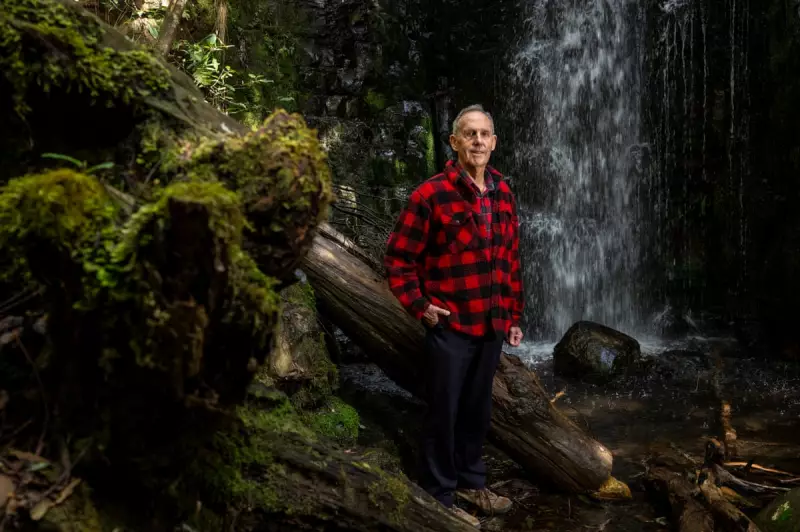
Legendary environmentalist and former Australian Greens leader Bob Brown is walking again, just weeks after a serious health scare that forced him to confront his own mortality. Now 80, the trailblazing campaigner remains as committed as ever to the cause of planetary defence, channeling his reflections into what he says will be his final significant book, Defiance.
A Brush with Mortality on the Tasman Peninsula
In July, while staying at a friend’s cabin on the Tasman Peninsula with his partner, Paul Thomas, Brown experienced a sudden medical emergency. Rising from bed one morning, he found himself gasping for air, unable to draw a proper breath. He also noticed a soreness in his left calf. Drawing on his medical training from over fifty years ago, Brown quickly self-diagnosed a pulmonary embolism—a life-threatening condition where a blood clot travels to the lungs.
Rather than panic, he chose to stay in the serene setting overlooking Stewarts Bay, near Port Arthur, to collect his thoughts. It was not until the following Monday that he sought medical help in Hobart, where he was immediately hospitalised for three days of treatment. Remarkably, Brown describes feeling relaxed throughout the ordeal, his perspective shaped by a lifetime of contemplation about death and the natural cycle of life.
Defiance: The Antidote to Complacency
Brown’s new book, Defiance, serves as a sequel to his 2014 work, Optimism, and collects his reflections on a life spent campaigning for societal and environmental change. He argues that mere compliance is a path to planetary collapse, and that defiance is now a necessary rational response. The book highlights celebrated campaigns like the fight to save the Franklin River, but is equally focused on inspiring others through stories of resistance.
He is sharply critical of what he terms ‘clicktivism’—the signing of online petitions that he believes are ineffective. Brown calls for genuine, non-violent activism, citing Martin Luther King Jr. to illustrate his point that lukewarm acceptance from well-meaning people is often more hindering than outright opposition. He believes that engaging just 3.5% of the population in a mass movement can lead to transformative success, much like the suffragettes achieved.
A ‘Beam of Sunlight’ in Tasmanian Politics
Despite his criticisms of mainstream politics, Brown finds reason for hope. He points to the recent Tasmanian state election results as evidence of a shifting tide. The election entrenched five Greens MPs and several progressive independents, with environmentally focused candidate Peter George receiving significant support.
Brown sees this as a ‘little beam of sunlight’, a sign that public sentiment is moving towards stronger environmental representation. He describes the current crossbench in Tasmania, which is now larger than the Labor opposition, as a phenomenon reminiscent of his own election following the Franklin campaign. For Bob Brown, even at 80, the fight continues, driven by defiance and an unshakable belief in the next generation.