Brazil's Hydropower Strategy Under Scrutiny After Amazon Dam Rulings
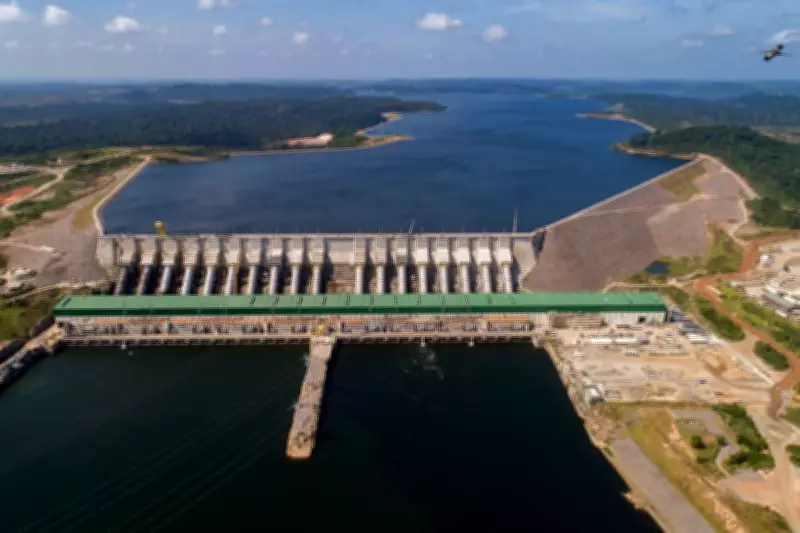
Brazilian courts have delivered significant legal setbacks against the Belo Monte hydropower plant in the Amazon, finding it failed to meet crucial environmental and social requirements. These rulings are raising fundamental questions about Brazil's continued reliance on large-scale hydropower projects for its national electricity supply.
Court Findings Confirm Longstanding Concerns
After years of legal battles, authorities originally approved the Belo Monte project in the southwestern part of Para state with one critical condition: it must not threaten ecosystems and Indigenous communities along the Xingu River. A decade after operations began in 2016, Brazilian courts have now determined the plant failed to meet this fundamental requirement, with environmental and social impacts proving far greater than originally forecast.
"They were just confirming what we already knew," said Ana Laíde Barbosa, a member of Movimento Xingu Vivo, an advocacy group that has been fighting the Belo Monte project since 2008. "There was research, experience. There was ancestry and inherited knowledge."

Compensation and Remedial Orders Issued
The legal consequences have been substantial:
- In December, the Supreme Court ordered the federal government to pay 19 million reais ($3.6 million) in compensation to Indigenous communities affected by the dam
- A local court ordered Norte Energia, the company that built and operates Belo Monte, to supply clean water to communities whose natural sources dried up
- A federal judge ordered Norte Energia to reassess how much water it diverts from the Xingu River to run its turbines, potentially reducing power output
Norte Energia responded that the water management review would have no immediate effect, noting any changes could only occur after all appeals are exhausted. The company maintains its current model balances environmental concerns with energy security and consumer costs.
Broader Implications for Brazil's Energy Policy
Belo Monte, the world's second largest hydropower plant, supplies approximately 10% of Brazil's electricity. Originally planned during the military dictatorship in the 1970s, it wasn't pushed forward until decades later by President Luiz Inácio Lula da Silva in 2010 during his second term.
The legal setbacks come at a critical moment for Brazil's infrastructure development approach. Starting in February, new legislation passed by Congress last year will fast-track approval of strategic infrastructure projects, potentially reducing environmental scrutiny.
"Licensing processes that until now took six or seven years will now be completed within 12 months," explained Suely Araújo, a policy coordinator at the Climate Observatory. "That clearly means less rigorous scrutiny of social and environmental impacts."
Indigenous Communities Document Devastating Impacts
The Juruna people, among more than two dozen Indigenous and traditional communities affected along an 80-mile stretch of the Xingu River, describe catastrophic consequences since the plant began operating. To function, Belo Monte diverts 70% to 80% of the river's flow, which Indigenous leaders say marked "the end of the world" for their communities.
- Fish died in large numbers, devastating traditional food sources
- Navigation became nearly impossible, restricting access to neighboring communities
- Access to schools and healthcare was severely limited
- Traditional diets shifted from fish to processed foods
Josiel Jacinto Pereira Juruna, a 33-year-old Indigenous leader, described the psychological toll: "Some people, like my father, suffered deeply in ways I had never seen before."
Scientific Monitoring Strengthens Legal Case
Indigenous communities began organizing monitoring efforts in 2013 before the river was dammed. The Indigenous monitoring group, known as MATI, later partnered with scientists from Brazilian universities and research institutes to collect evidence demonstrating Belo Monte's impacts were far greater than Norte Energia had acknowledged.

Daily monitoring by Indigenous and riverine residents tracks water levels, groundwater, fish spawning areas and catches using mobile apps and field notebooks. This data is digitized and jointly analyzed with researchers, providing crucial evidence for prosecutors.
Climate Change Complicates Hydropower Future
Natalie Unterstell, president of Talanoa, a Brazilian climate think tank, noted that Belo Monte illustrates how impacts such as altered river flows—including those intensified by climate change—are often underestimated.
"Belo Monte is a reminder that climate leadership is not just about curbing deforestation," said Unterstell. "It is also about how the state plans, operates and corrects infrastructure in an era of climate change."
Recent studies show that because of the Xingu River's characteristics and intensifying droughts, the plant rarely operates at full capacity. Norte Energia has warned that revising water diversion could increase electricity prices and force greater reliance on thermal power plants, potentially leading to higher carbon emissions.
Looking Forward: A Learning Process Required
While shutting down Belo Monte is not currently under discussion, environmental advocates argue that future renewal of its operating license should depend on measures to reduce impacts to people and the environment.
"Brazil's history with hydropower must be a learning process," emphasized Araújo from Climate Observatory. "We can't accept that social and environmental impacts are ignored. They must be assessed with the highest level of rigor."
The legal rulings against Belo Monte represent more than just a setback for one project—they signal growing judicial recognition of the complex trade-offs between energy development, environmental protection, and Indigenous rights in Brazil's pursuit of sustainable development.