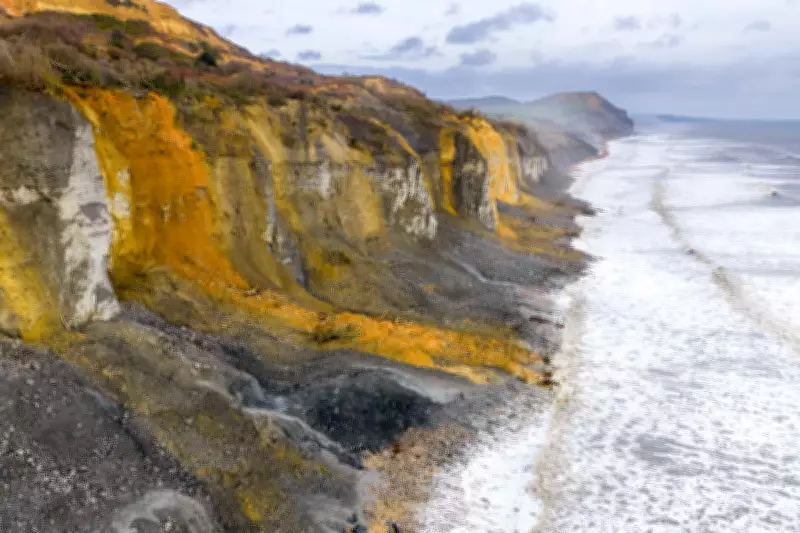
Major Landslide Reshapes Iconic Jurassic Coastline
A substantial and dramatic landslip has fundamentally altered a prominent section of the Jurassic Coast in Dorset, resulting in the immediate closure of part of England's most-visited National Trail. The incident, which occurred at Stonebarrow Hill near Charmouth, saw thousands of tonnes of rock and mud cascade onto the beach below, obliterating a segment of the popular South West Coastal Path.
Cliff Collapse Compared to Arcade Game
Geological movement has caused a 30-foot wide section of the 450-foot tall cliff to detach from the mainland, now resting approximately 20 feet lower than its original position. Fossil hunter Chris Moore vividly described the event, noting it resembled a 'push-penny arcade game' where the top layer slips and propels everything below it downward. This action created massive mudflows that surged to the beach, rendering the area completely impassable for walkers and visitors.
This landslide represents the latest in a series of significant rockfalls along this rapidly eroding coastline. Experts attribute the dramatic movement in these 175-million-year-old cliffs directly to weeks of relentless and heavy rainfall, which has saturated the ground and destabilised the ancient rock formations.

Public Warnings and Path Closures
Coastguard teams are urgently advising the public, particularly fossil hunters, to avoid the base of the cliffs entirely, as another substantial landslip could occur without warning at any moment. Authorities have proactively closed the stretch of coastal path at Stonebarrow and the beach below to prevent potential tragedies, emphasising the ongoing and active nature of the geological instability.
Dorset Council had been monitoring the area for movement for an extended period after a large crevice appeared at the cliff top several years ago. A council spokesperson confirmed, "There's been a large cliff fall and mudflow at Stonebarrow, Charmouth. The coastal path is currently closed and we are working on a diversion." They further explained that rockfalls and landslips are inherent to the dynamic nature of this Unesco World Heritage Site, which is recognised globally for its outstanding rocks, fossils, and unique landforms.
Ongoing Instability Along the Coast
The instability is not isolated to Charmouth. A few miles west at Lyme Regis, boulders continue to tumble from delicate clay cliffs onto Monmouth Beach, which has also been closed off. Coastguards are closely monitoring an 'active and ongoing' landslip on the 150-foot cliffs above that beach. A spokesperson for Lyme Regis coastguard issued a stern warning: "We strongly advise all members of the public to stay well clear of this area. Do not attempt to climb the slip or walk near the base of the affected cliffs. The cliffs along the Jurassic Coast are naturally unstable and can crumble without warning."
This event tragically echoes past incidents, notably the 2012 death of 22-year-old holidaymaker Charlotte Blackman, who was crushed by a rockfall while walking under cliffs at Burton Bradstock further along the coast. The current situation underscores the persistent and dangerous reality of coastal erosion along this iconic 95-mile stretch of coastline in Dorset and Devon, where the very forces of weather and sea that shape its unique beauty also pose significant risks.