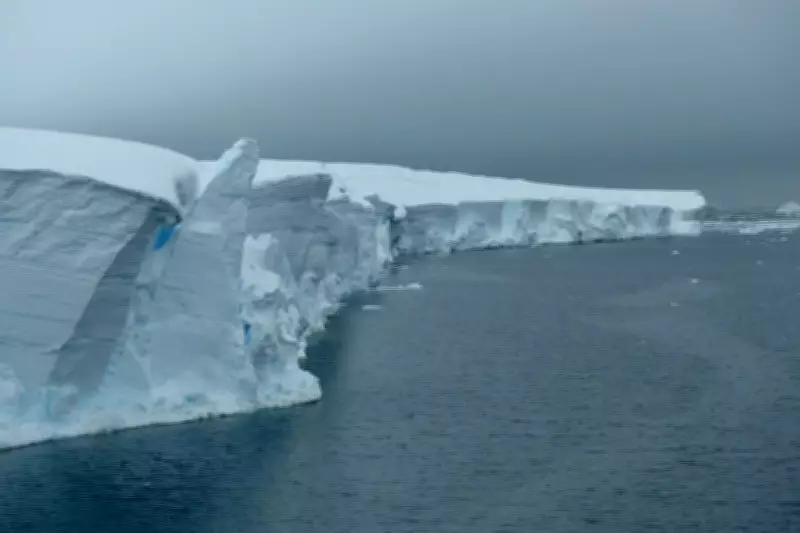
In a groundbreaking scientific endeavour, researchers are preparing to drill one kilometre deep into Antarctica's Thwaites Glacier, ominously nicknamed the 'Doomsday Glacier', to investigate its rapid melting processes. This critical mission, led by teams from the British Antarctic Survey (BAS) and the Korea Polar Research Institute (KOPRI), aims to shed light on the glacier's vulnerability and its potential catastrophic impact on global sea levels.
Unprecedented Exploration of a Vulnerable Ice Mass
The expedition will focus on the glacier's main trunk, an area previously unexplored where the ice lifts off the seabed, making it particularly susceptible to melting. Using a specialised hot water drill, scientists will bore through the thick ice to directly observe how warm ocean water interacts with the glacier's base. This interaction is a key driver of the glacier's instability and accelerated retreat.
Investigating 'Underwater Tsunamis' and Melting Mechanisms
A primary objective of the research is to study so-called 'underwater tsunamis', which are powerful currents that mix deep, warm waters with colder surface layers. These phenomena are believed to play a significant role in eroding the glacier from below, contributing to its thinning and potential collapse. By gathering direct measurements from this remote and harsh environment, researchers hope to improve climate models and predictions of future sea level rise.

Global Implications of the Thwaites Glacier's Fate
The Thwaites Glacier, which is nearly the size of the United Kingdom, holds enough ice to raise global sea levels by approximately 65 centimetres if it were to collapse entirely. Such an event would have devastating consequences for coastal communities worldwide, potentially submerging low-lying areas and displacing millions of people. The glacier's instability also threatens to destabilise surrounding ice sheets, leading to even greater sea level increases over time.
International Collaboration in Polar Research
This mission underscores the importance of international cooperation in addressing climate change. The collaboration between British and Korean scientists leverages expertise and resources from both nations to tackle one of the most pressing environmental challenges of our time. The data collected will be shared globally to inform policy decisions and mitigation strategies aimed at curbing the effects of climate change.
As the drilling operation commences, the scientific community watches with bated breath, hoping that the insights gained will provide a clearer understanding of the processes driving the glacier's melt and help avert a potential environmental catastrophe.