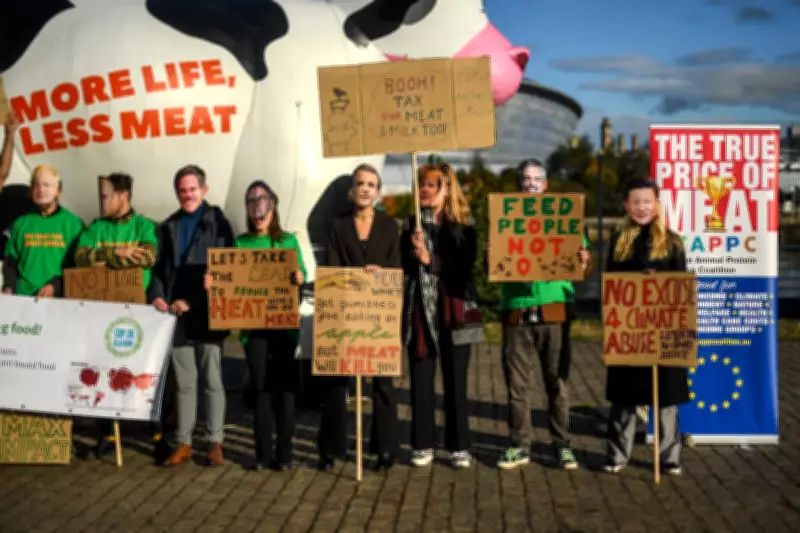
Systematic Study Uncovers Rampant Greenwashing in Meat and Dairy Sector
A groundbreaking investigation published in the journal PLOS Climate has exposed widespread greenwashing practices among the world's largest meat and dairy corporations. Researchers from the University of Miami conducted the most comprehensive analysis to date, examining sustainability reports and corporate websites of 33 industry giants including Nestlé, Danone, Tyson Foods, Arla, Fonterra and Danish Crown.
Alarming Statistics Reveal Systematic Deception
The study's findings are particularly damning, revealing that nearly 98 percent of environmental claims made by these companies between 2021 and 2024 failed to withstand scrutiny. Out of 1,233 claims examined, only three were supported by verifiable scientific evidence. This represents a systematic pattern of misleading communications in an industry responsible for at least 16.5 percent of global greenhouse gas emissions and 57 percent of total food production emissions.
"Greenwashing was rampant in the sustainability reports of the world's largest meat and dairy companies, which can create the illusion of climate progress," stated Maya Bach, lead author of the study. "We are concerned that these claims can mislead the public, influence consumers, and reduce pressure on policymakers to take climate action."

Case Studies Highlight Problematic Practices
The research provides numerous examples of questionable environmental claims. JBS, the world's largest meat company, pledged to reach net zero by 2040 while simultaneously expanding production facilities in Brazil and Missouri. The company's own sustainability documents acknowledged that achieving this goal would depend on "numerous factors outside of the company's control," yet JBS raised $1 billion in sustainability-linked bonds based on this commitment.
Arla Foods, the fourth-largest dairy company globally, cited installing solar panels covering just 12 percent of one cheese packaging site's electricity needs as evidence of climate action. The company also launched a "regenerative agriculture pilot" on 24 farms, representing a mere 0.0019 percent of its total global operations.
Tyson Foods framed its net-zero commitment not as a concrete target but as something the company "continually aspires to achieve," according to researchers. Meanwhile, the company opened two new facilities and announced a $200 million plant expansion in 2022.
Industry Response and Legal Consequences
Arla Foods strongly disputed the study's findings. "We fundamentally disagree with the conclusions in this report and stand firmly behind our data," said Bjarke Munk Kamstrup, head of global media relations at Arla. "Our climate goals and plan have been approved by the Science Based Targets initiative since 2019, and our annual climate reporting is rigorously validated by external auditors."
Legal pressure is mounting against companies making questionable environmental claims. The New York Attorney General filed a lawsuit against JBS in 2024, alleging the company's net-zero claims were misleading due to the absence of a clear, achievable path to the 2040 target. Similar cases are being pursued against Danish Crown, Tyson, Arla and Fonterra.
Patterns Mirroring Fossil Fuel Industry Tactics
Researchers identified troubling parallels between meat and dairy companies' sustainability claims and those historically made by the fossil fuel industry. More than a third of all claims studied (467 total) were future promises with no clear implementation plans. Nestlé made 55 such promises, Danone 49, and Danish Crown 34.
The number of companies with net-zero commitments has quadrupled since 2020, from four to seventeen. However, researchers found these commitments appeared to rely heavily on offsetting emissions rather than implementing substantial reductions.

"Meat and dairy companies are talking a lot about climate change, which makes sense because animal-based foods lead to more emissions and other environmental impacts than other kinds of foods," explained Jennifer Jacquet, professor of environmental science and policy at the University of Miami and the study's corresponding author. "But when so much of what these companies say seems to be empty promises that are not backed up with evidence or investments, it starts to look more like a public relations exercise rather than caring for the planet."
Broader Implications for Climate Policy
The consequences of this widespread greenwashing extend beyond public perception. Sustainability reporting strengthens corporate images with investors and can broaden social and financial operating licenses. For a sector responsible for a disproportionate share of global emissions, researchers warn that greenwashing may be doing exactly what it accomplished in the fossil fuel industry for decades—delaying meaningful climate action.
Regulatory responses are emerging, with California implementing new emissions reporting requirements for large companies doing business in the state in 2023. The study's authors emphasize that without greater transparency and accountability, corporate sustainability claims risk becoming empty public relations exercises rather than genuine commitments to environmental stewardship.